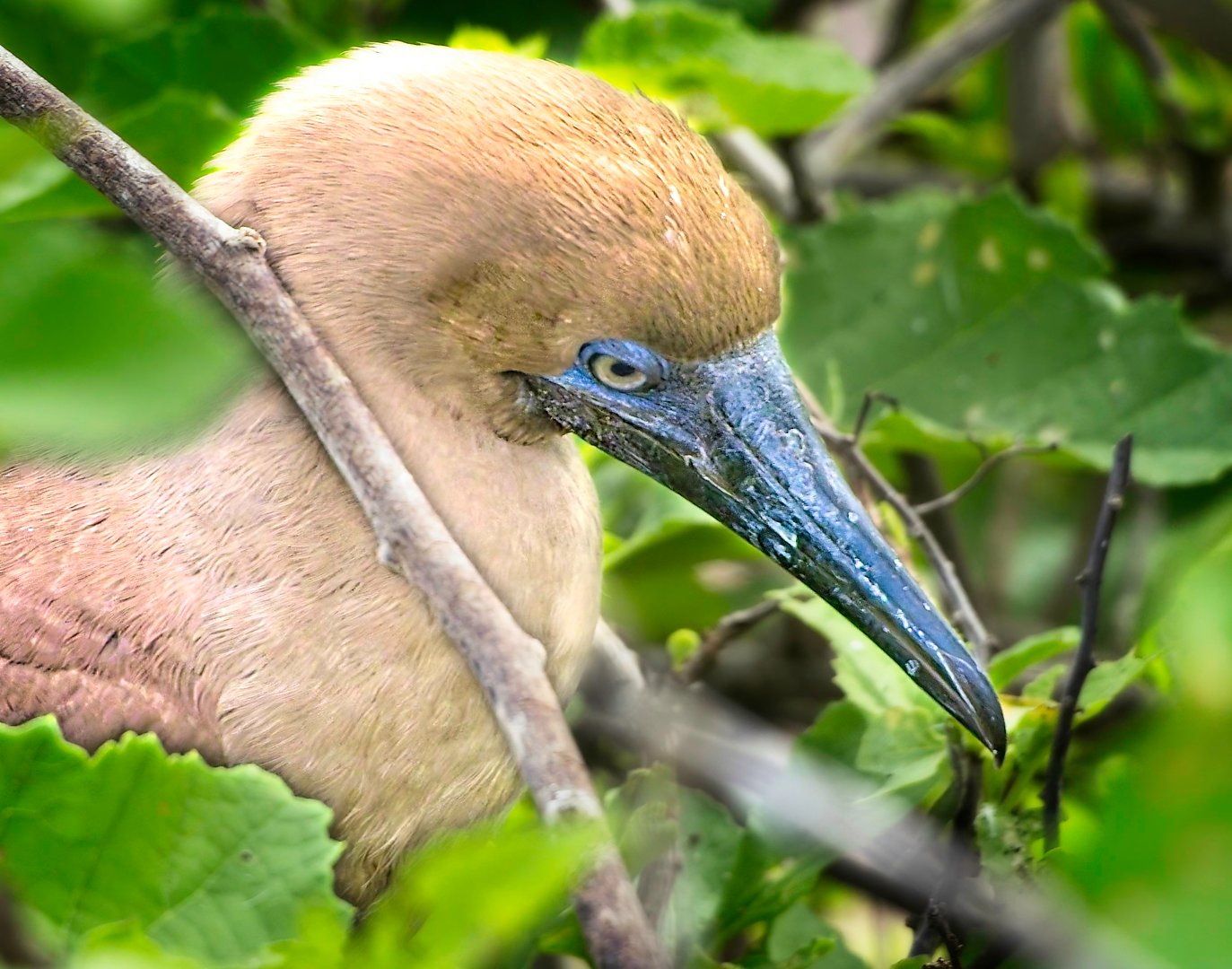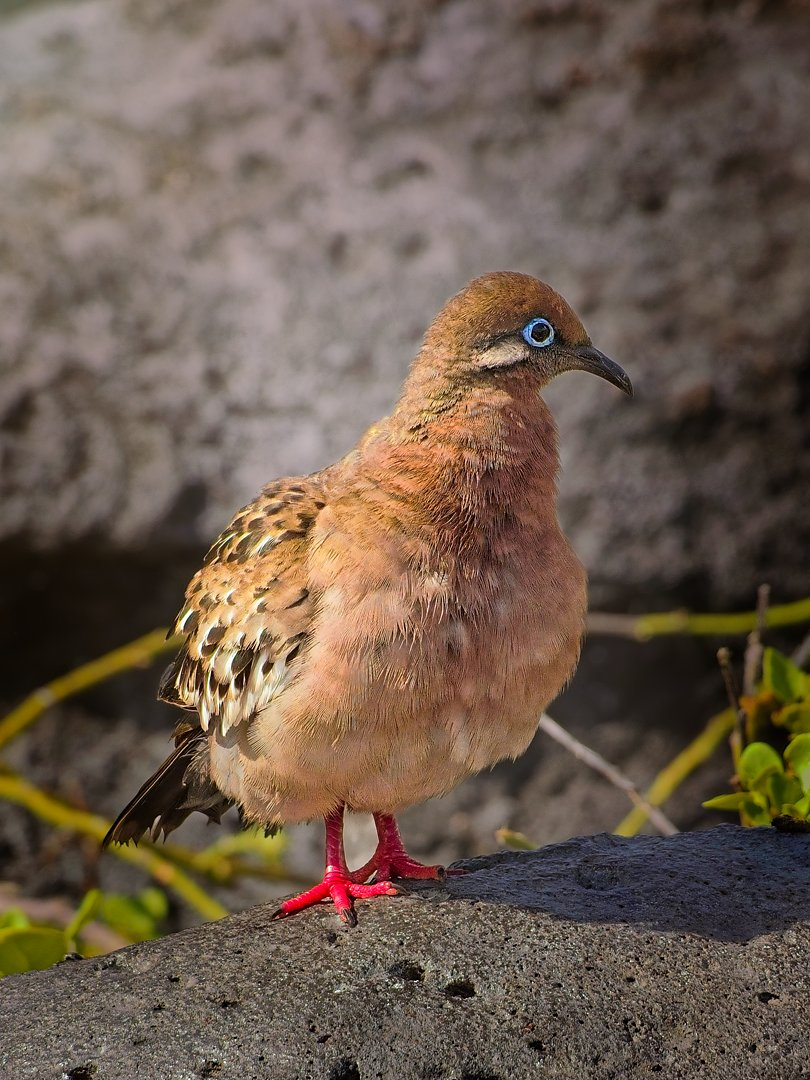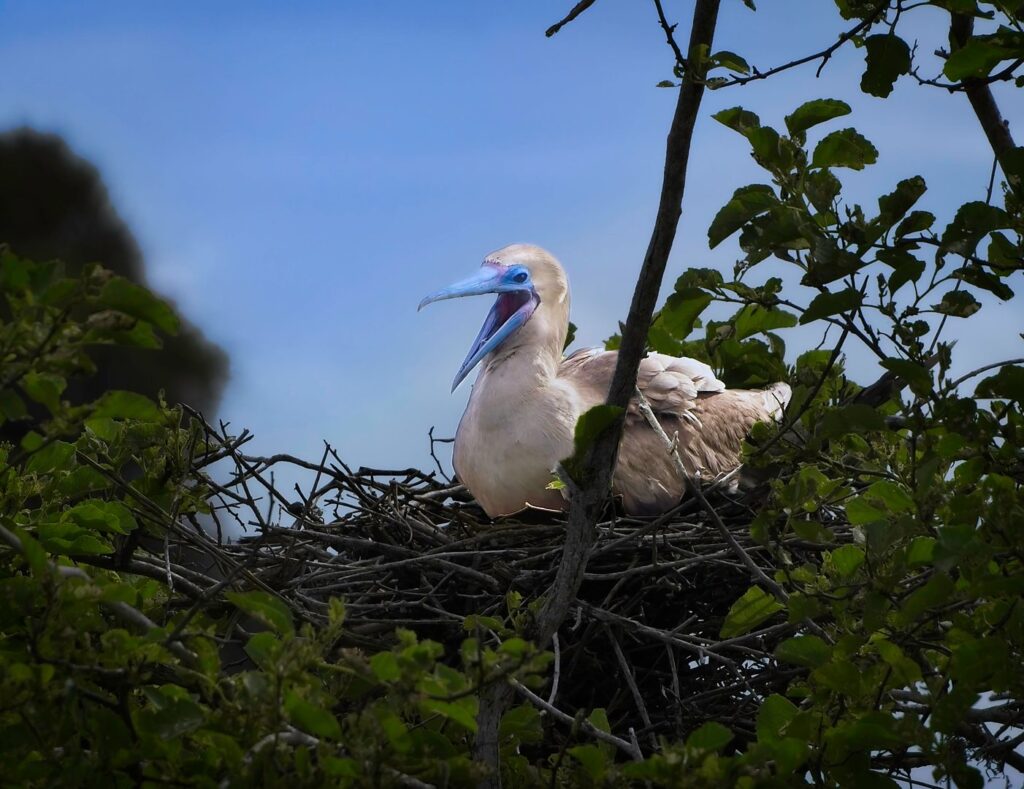
In March, Penny and I went to the Galapagos Islands to celebrate our 50th wedding anniversary. In addition to being the trip of a lifetime, this was a photographer’s dream. There is a fascinating variety of wildlife, much of it seeming quite happy to pose.
We toured six islands in the southwestern part of the archipelago, where we saw amazing birds, sea lions, iguanas, and tortoises. We bunked aboard the Galapagos Legend but zipped to the islands in Zodiak-type inflatable boats, where our guides helped us explore and learn about the wonders we were seeing.
If you haven’t seen my post about our first two days on the Islands, please look at Part One.
Days Three, Four and Five
Birds
Tortoises
Seascapes & Sea Lions
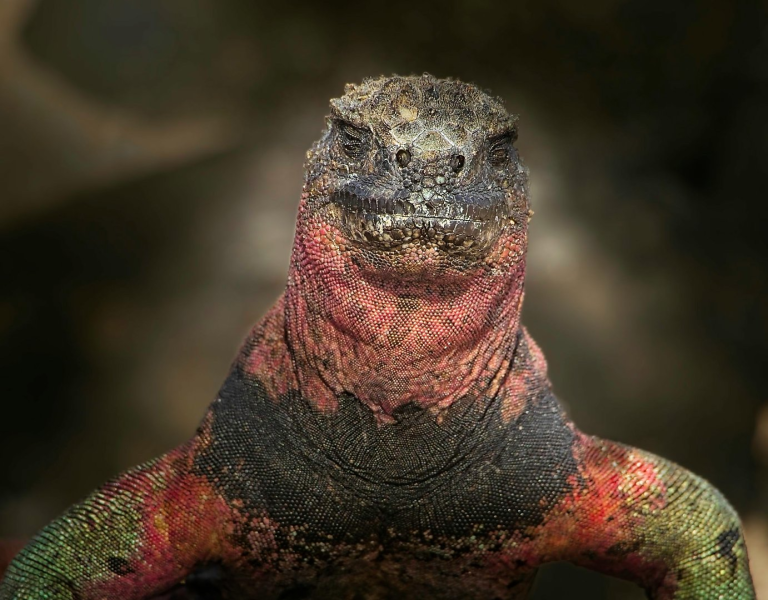
Iguanas & Crabs
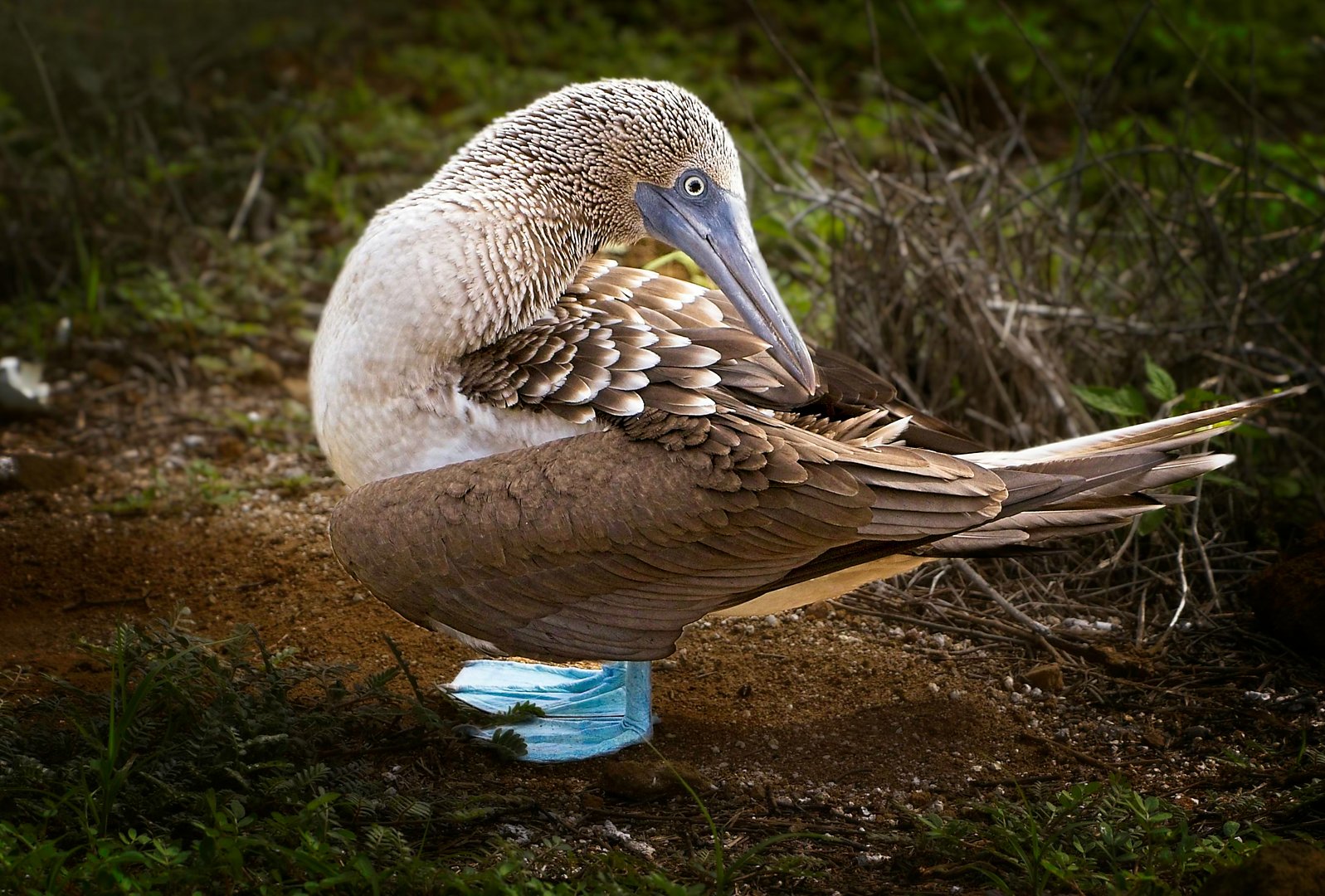
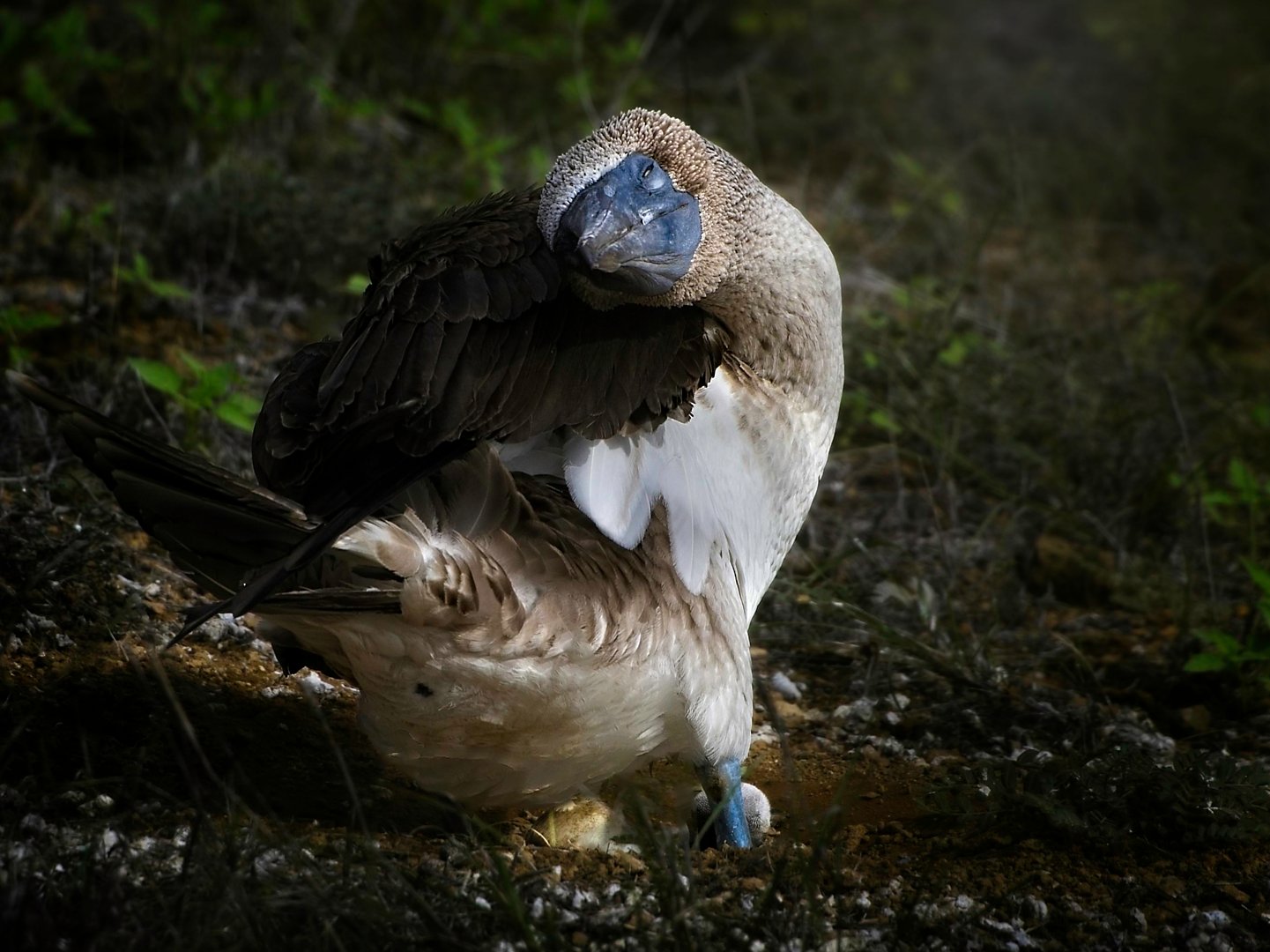
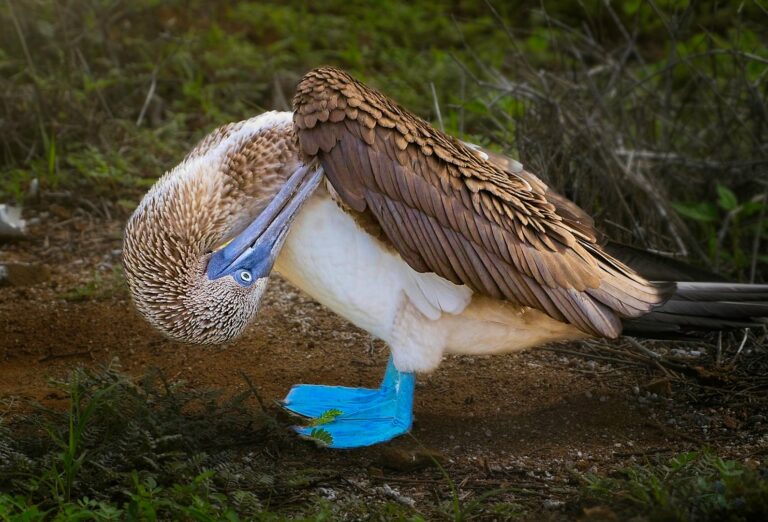
In days three through five, we visited just two islands–San Cristobal and Española. The first day on San Cristobal, we took a long hike where we enjoyed the antics of Blue-footed Boobies. Many of these Boobies were sitting or nesting right out in the open and they didn’t seem to have any problem with us getting very close. If you look closely at one of the photos in the gallery of birds, you can see a Boobie sitting on her egg without any cover at all.
How can these birds expose themselves and their babies so nonchalantly? They simply don’t have any natural predators. Originally, the wildlife arrived at the islands by flying, floating on wood, or swimming. Large mammals at the top of the food chain never made it to the Galapagos until the humans arrived. Today the introduced predators and competing foragers, such as rats and goats, are being controlled through strict measures enforced by the Ecuadoran government.
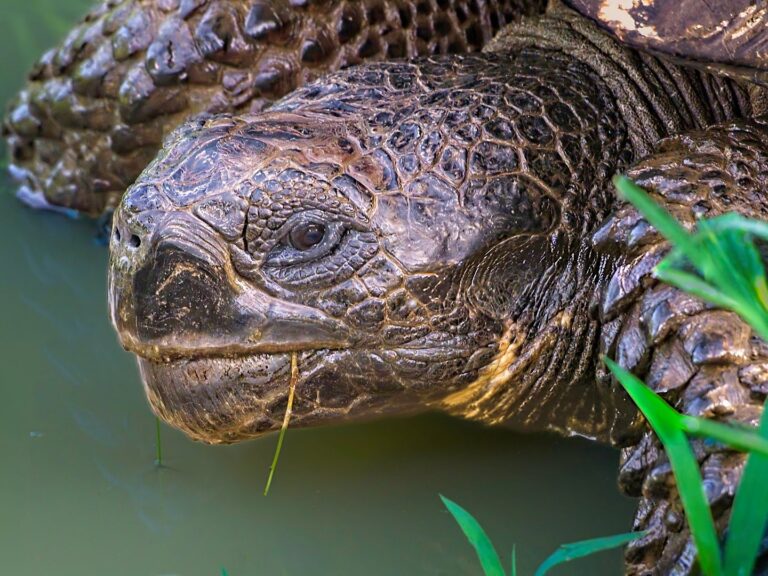
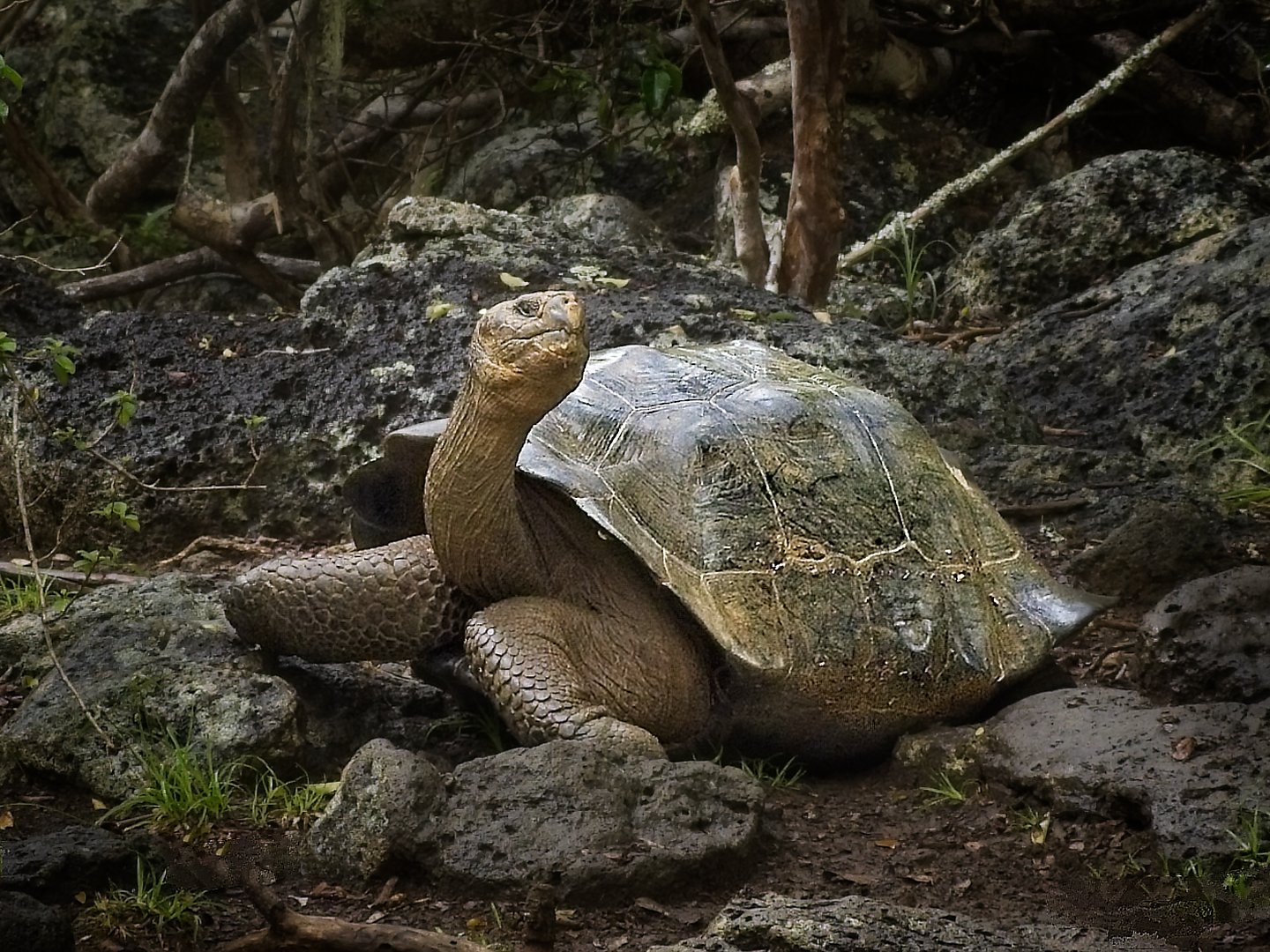
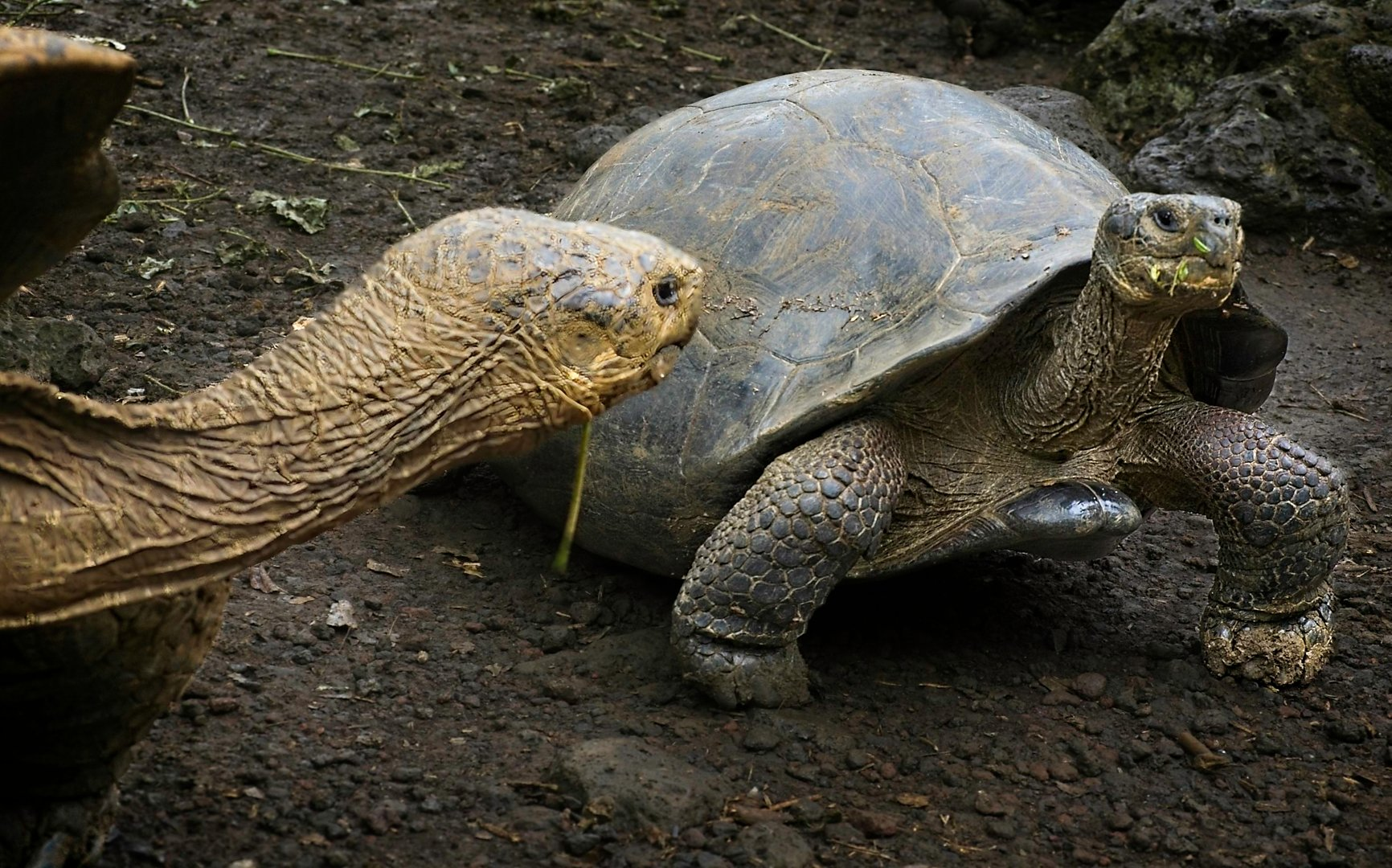
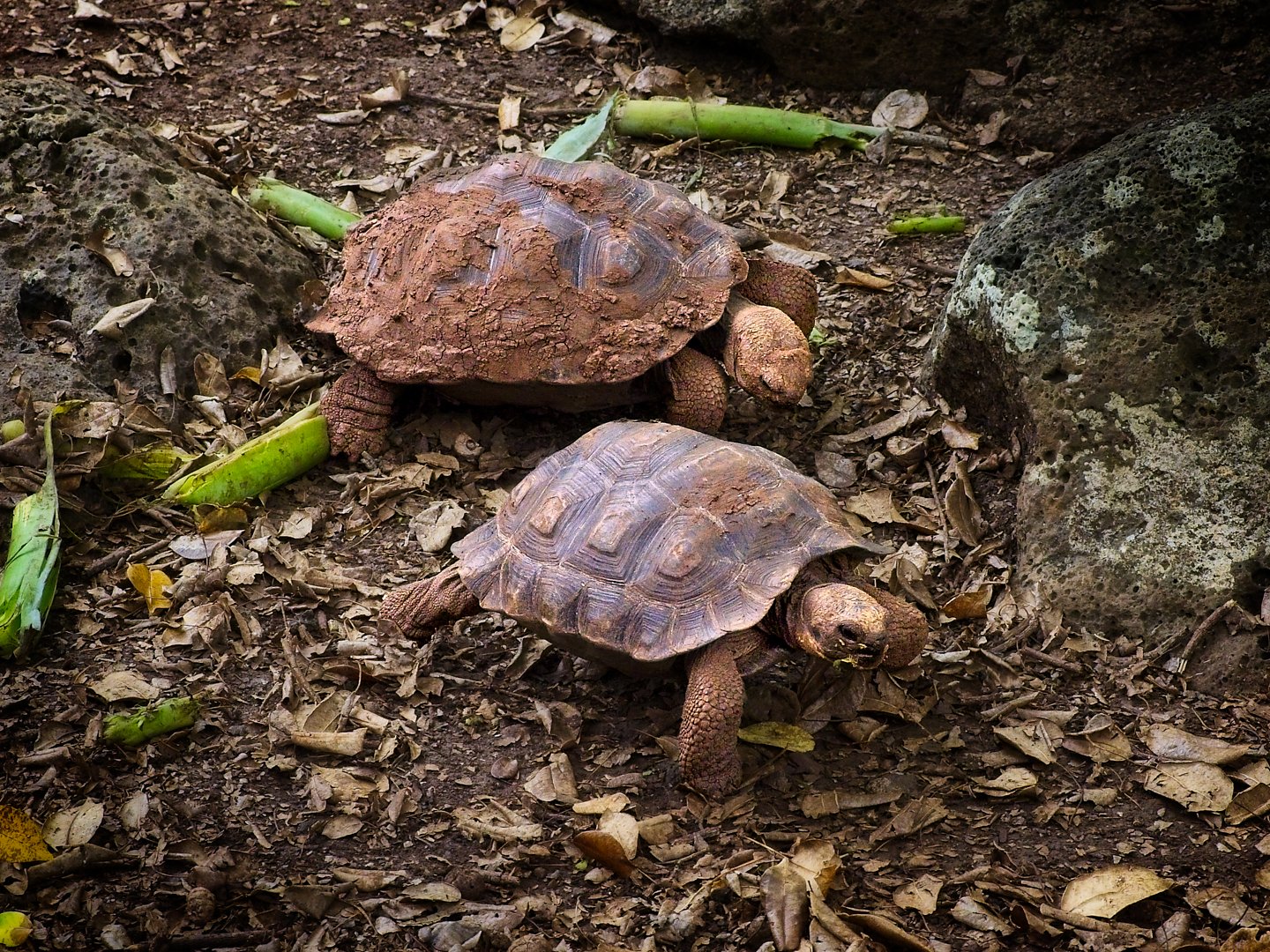
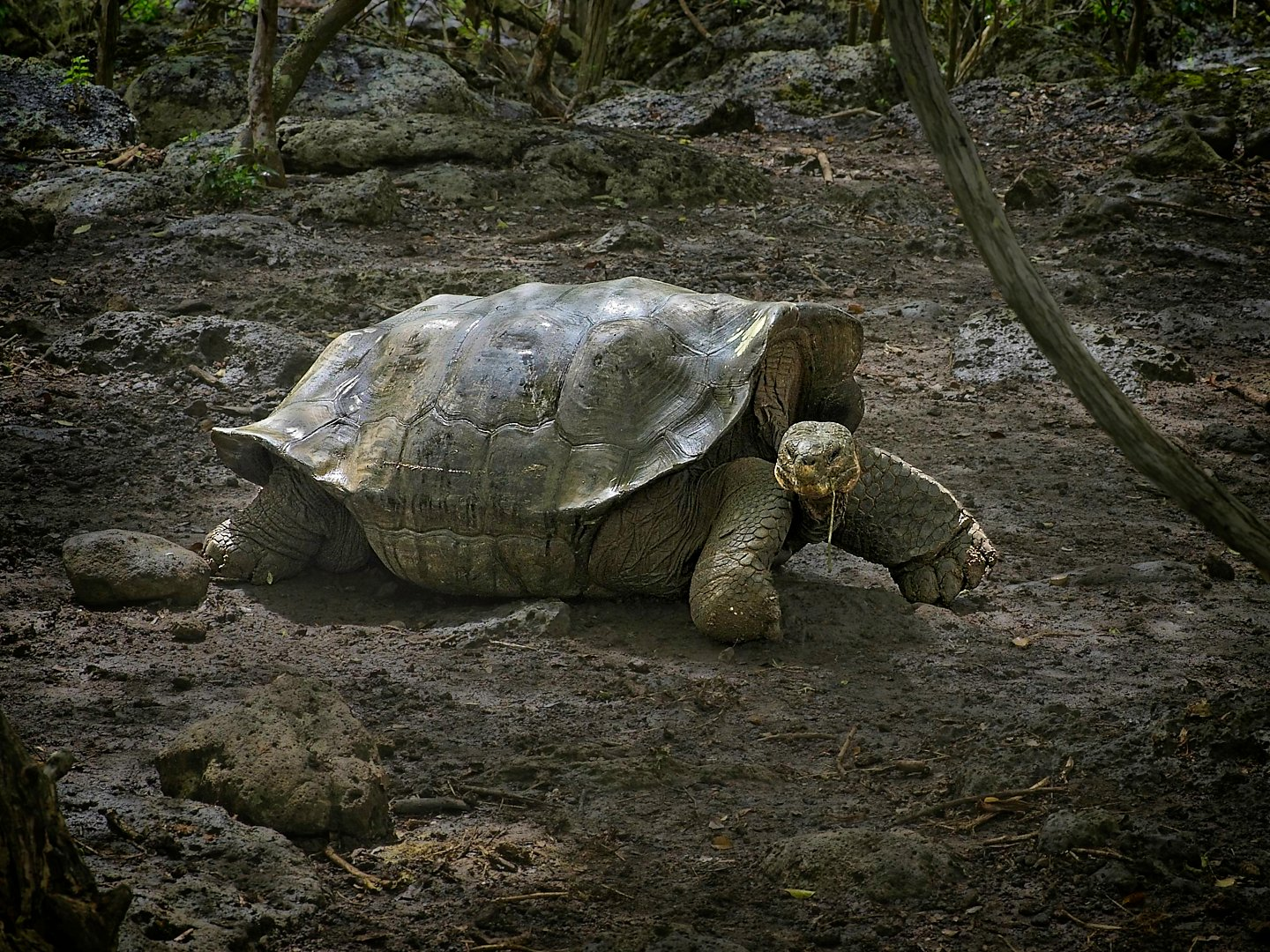
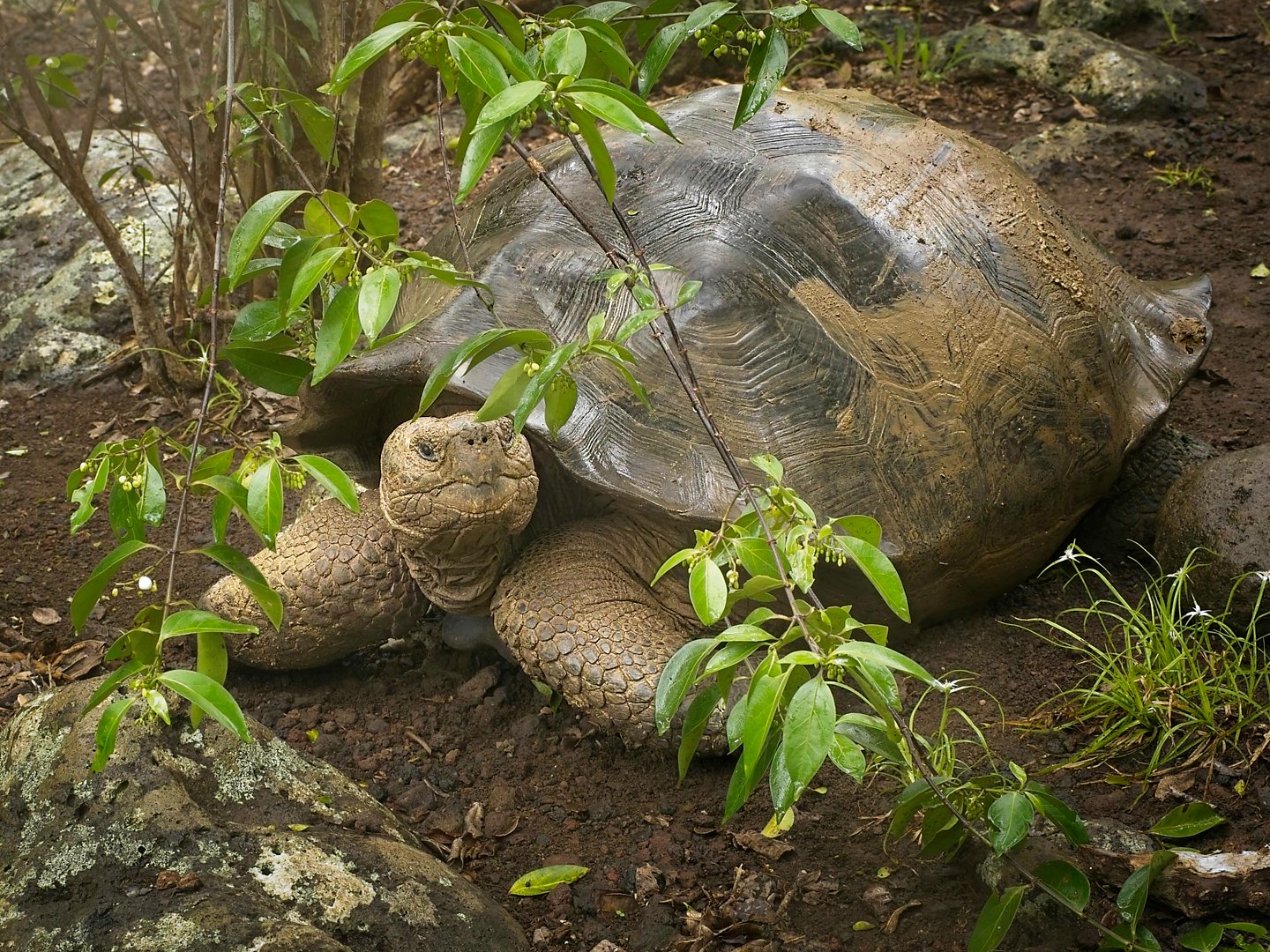
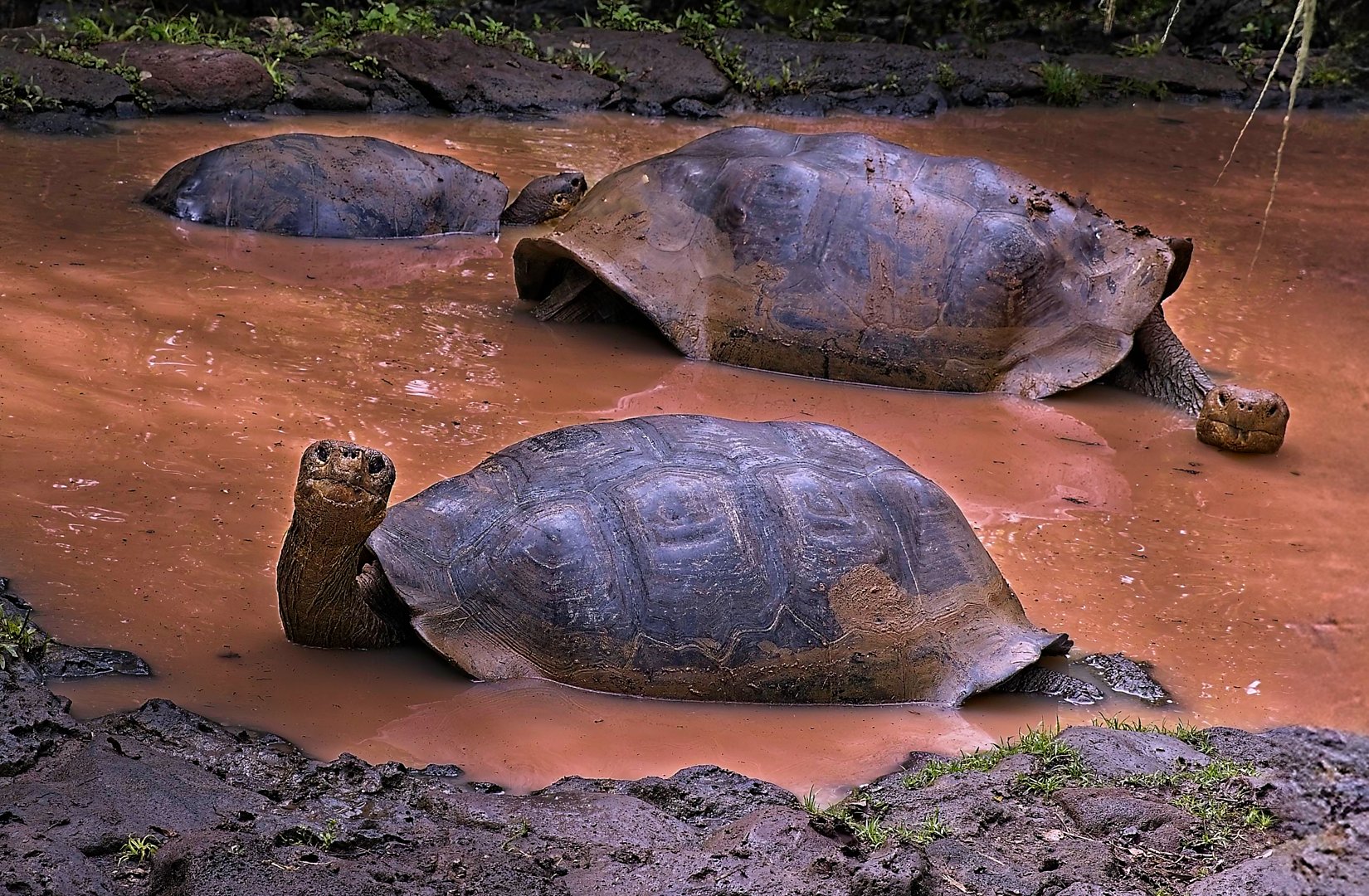
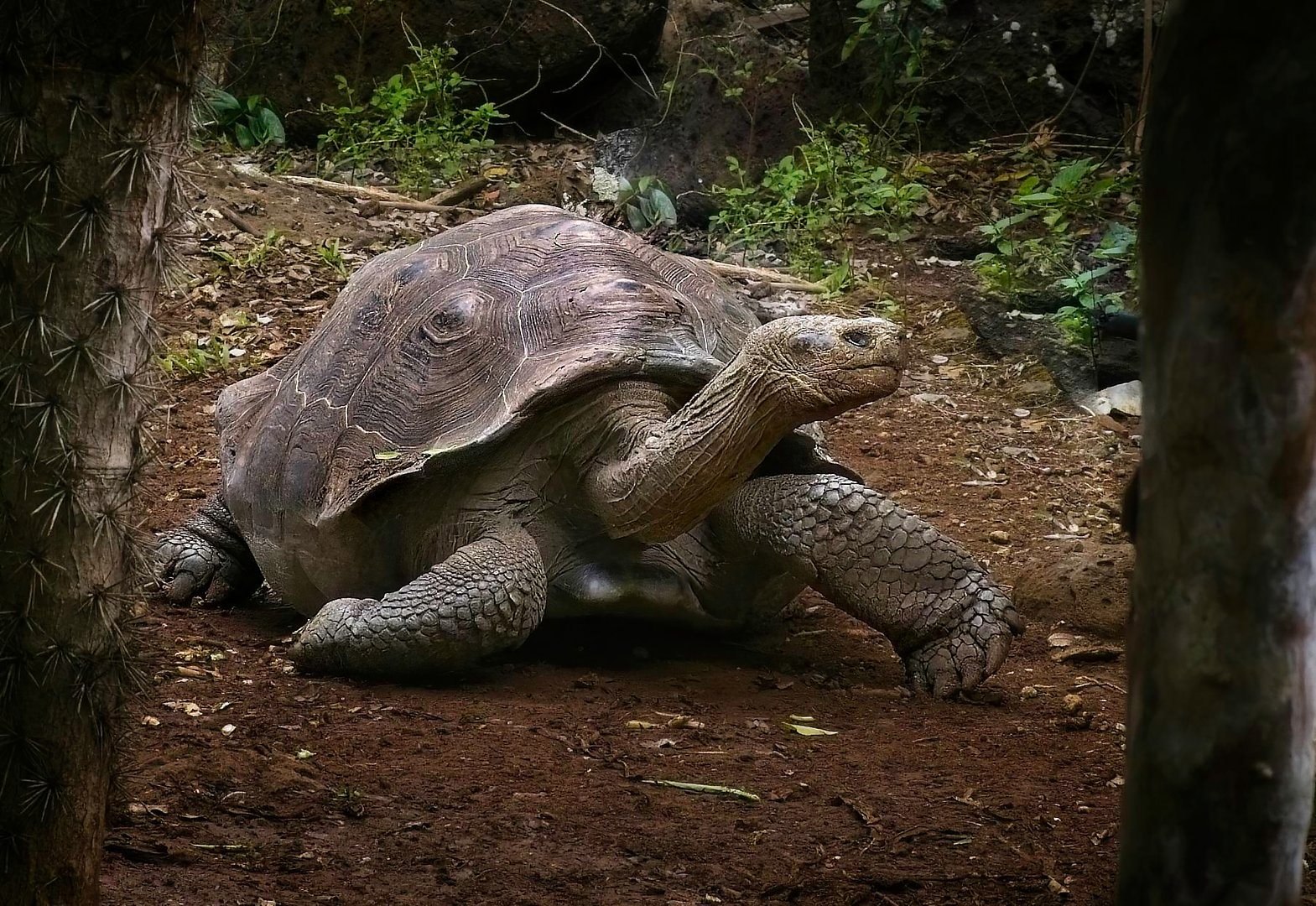
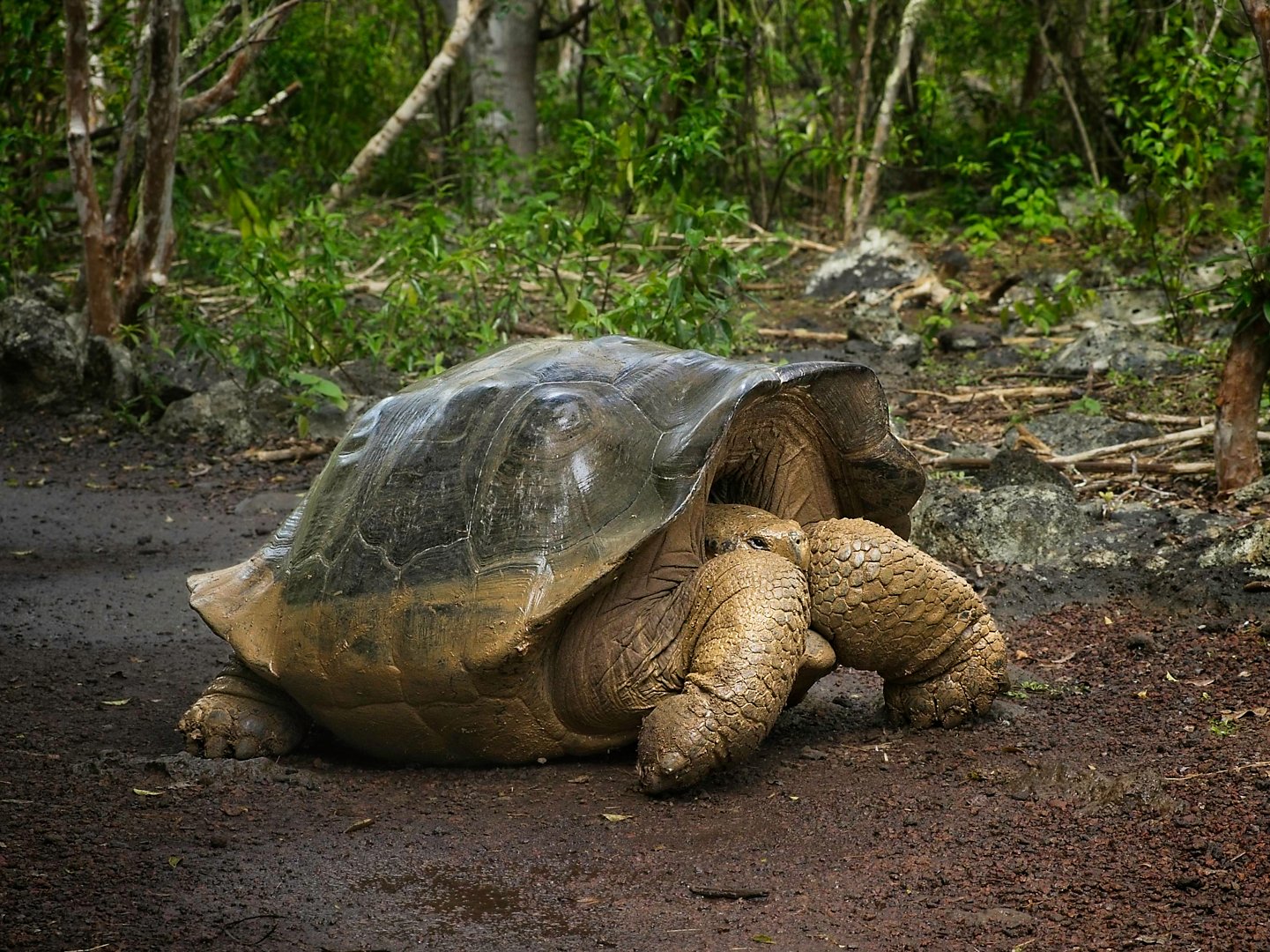
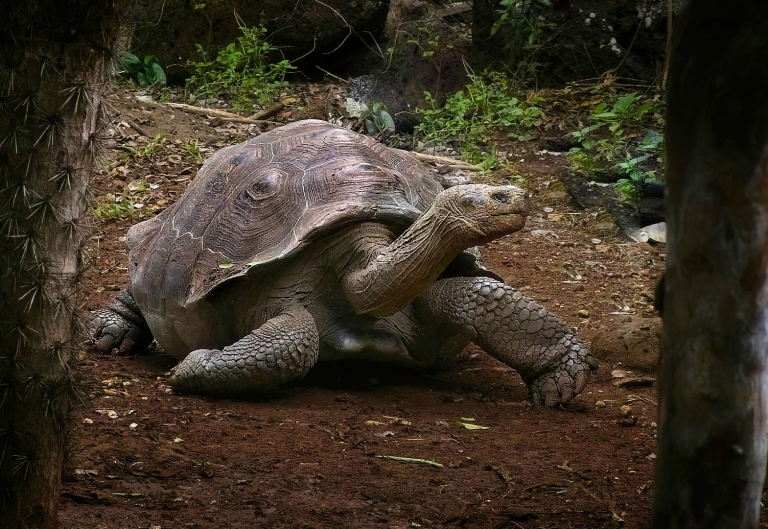
Our second morning on San Cristobal was devoted to touring the Cerro Colorado Tortoise Reserve, a breeding center for giant Galapagos tortoises. I was astounded at the size of these tortoises and loved photographing them. For these shots I used my Olympus 75-300 mm zoom.
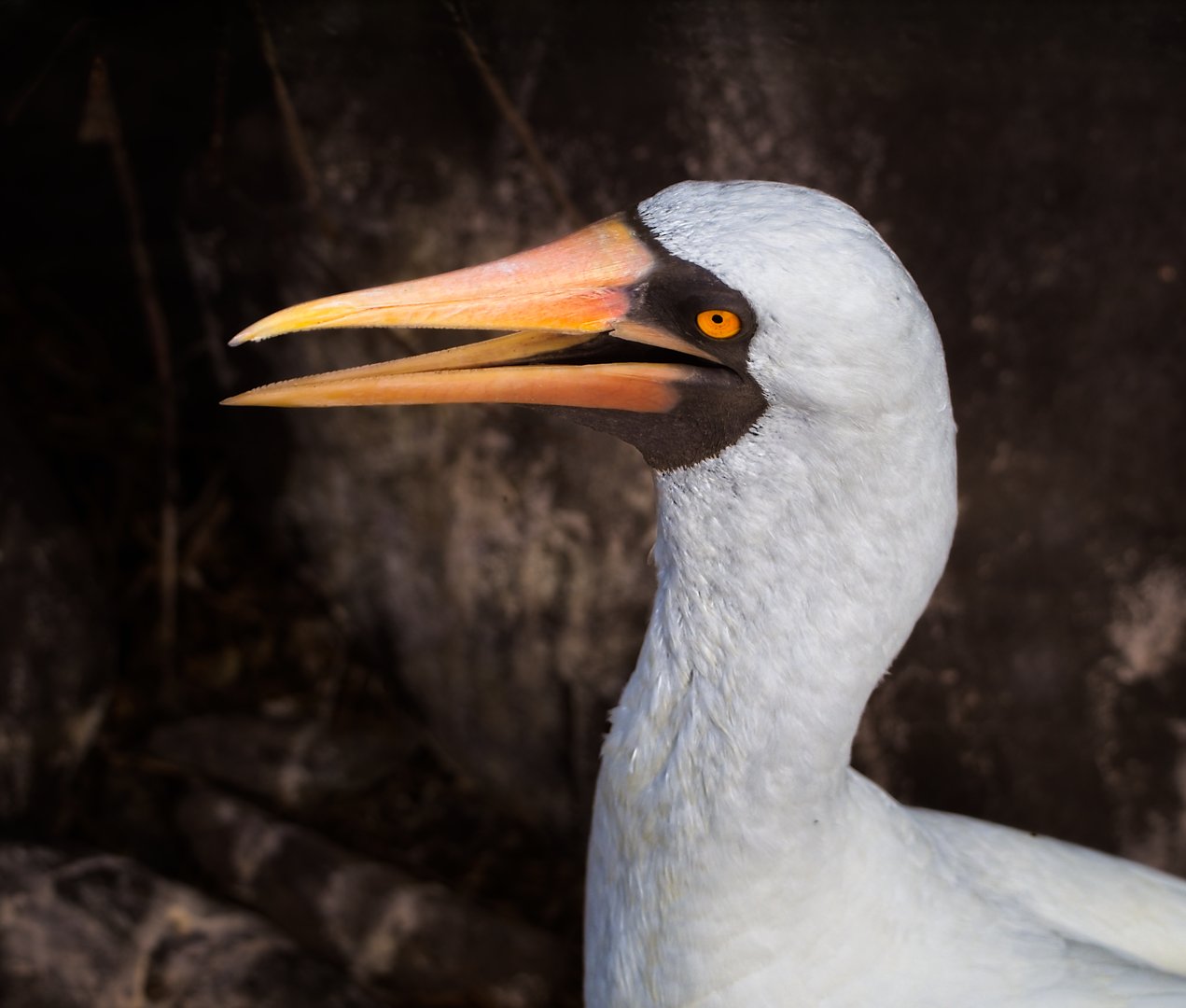
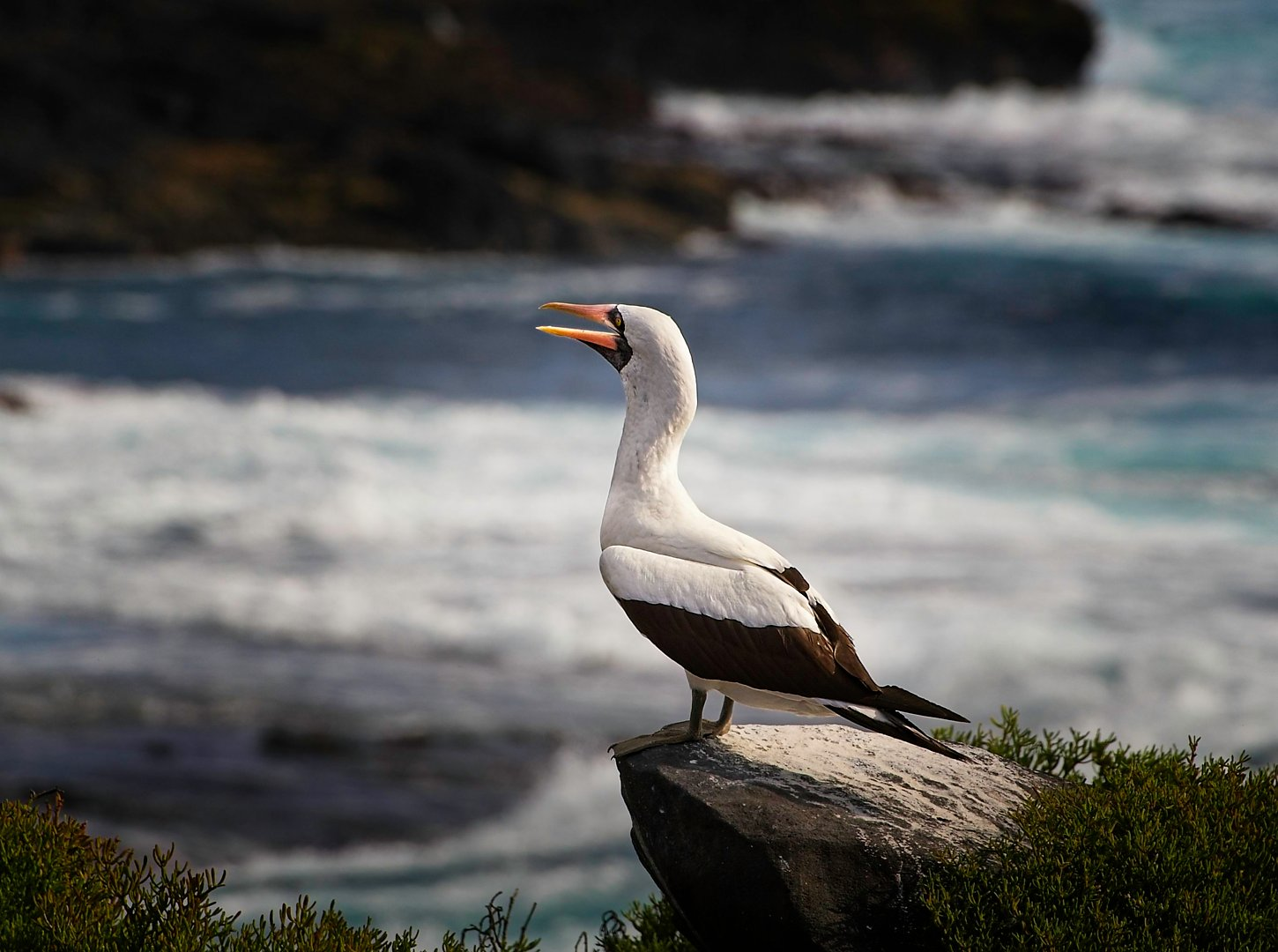
The next day we went to Española Island. It is the southernmost island in the archipelago and also the oldest. The highlight for me here was watching and photographing the Nazca Boobies, the largest of the three Boobie species on the islands. We also saw many marine iguanas and brightly-colored Sally Lightfoot crabs.
Birds
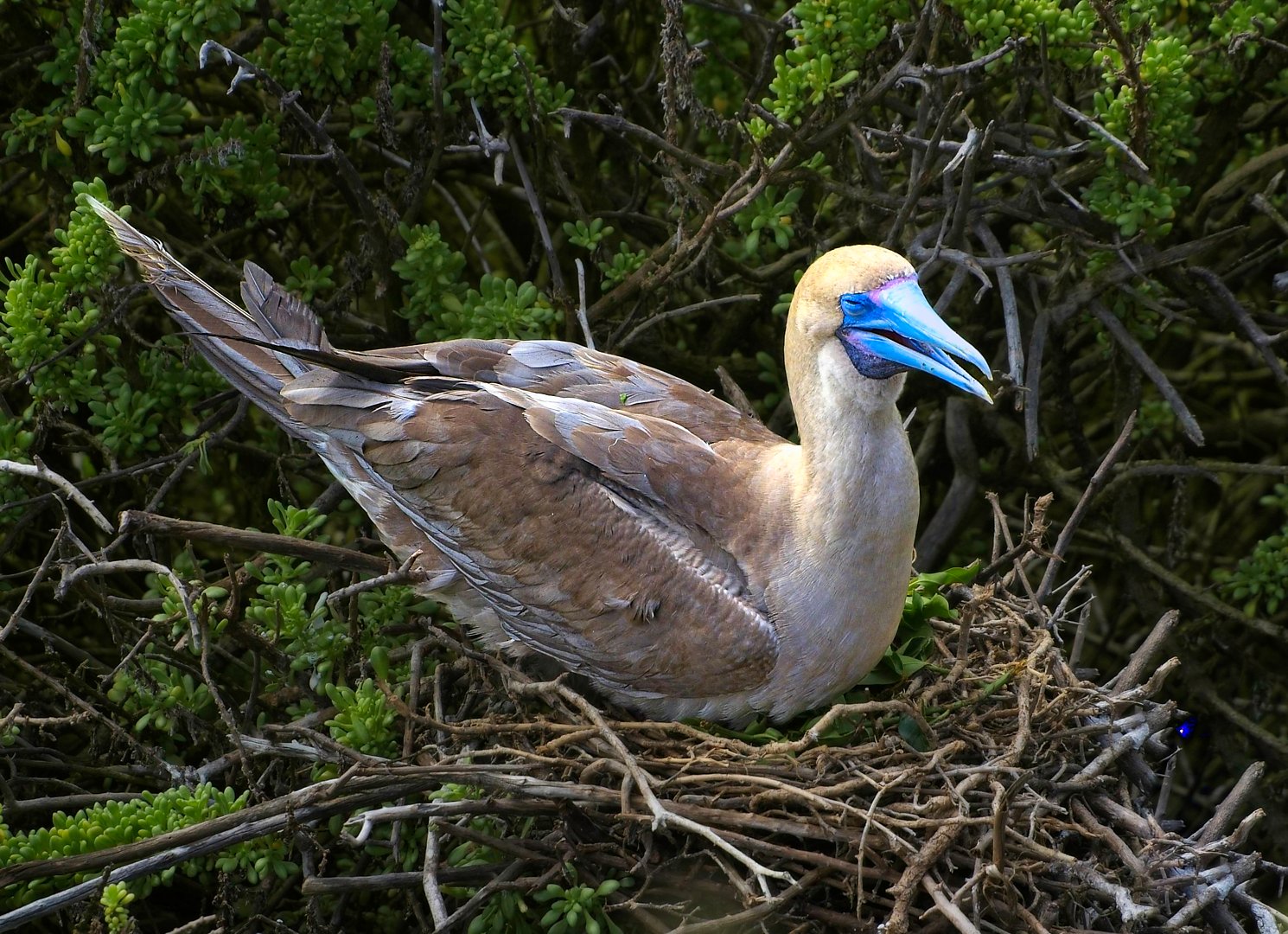
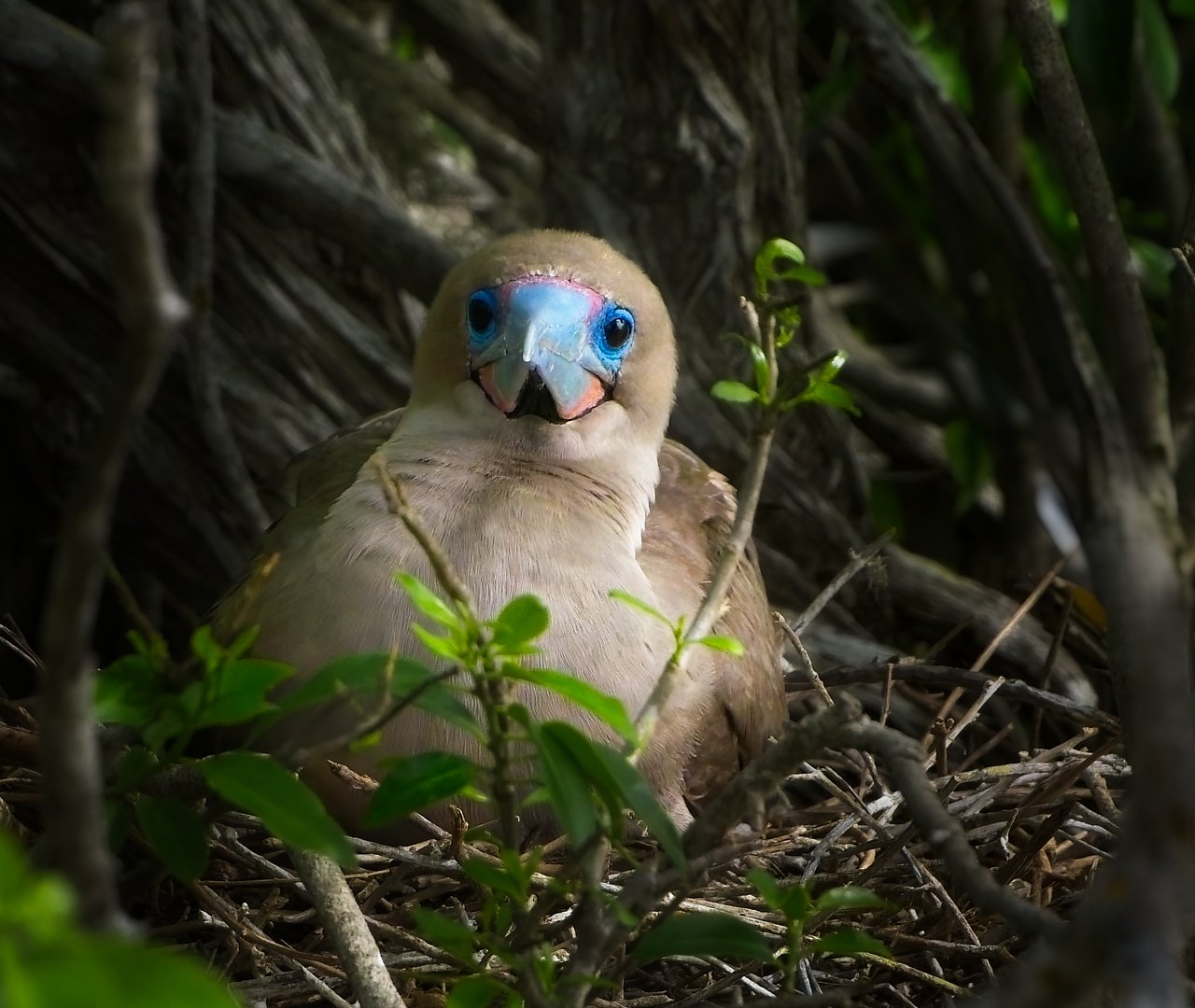
We were enchanted with the Red-footed Boobies on our first day in the Galapagos. But I have to say that I found the Blue-footed Boobies even more interesting and entertaining. They were not camera shy at all and even seemed to take some pleasure in their ability to contort themselves into convoluted poses.
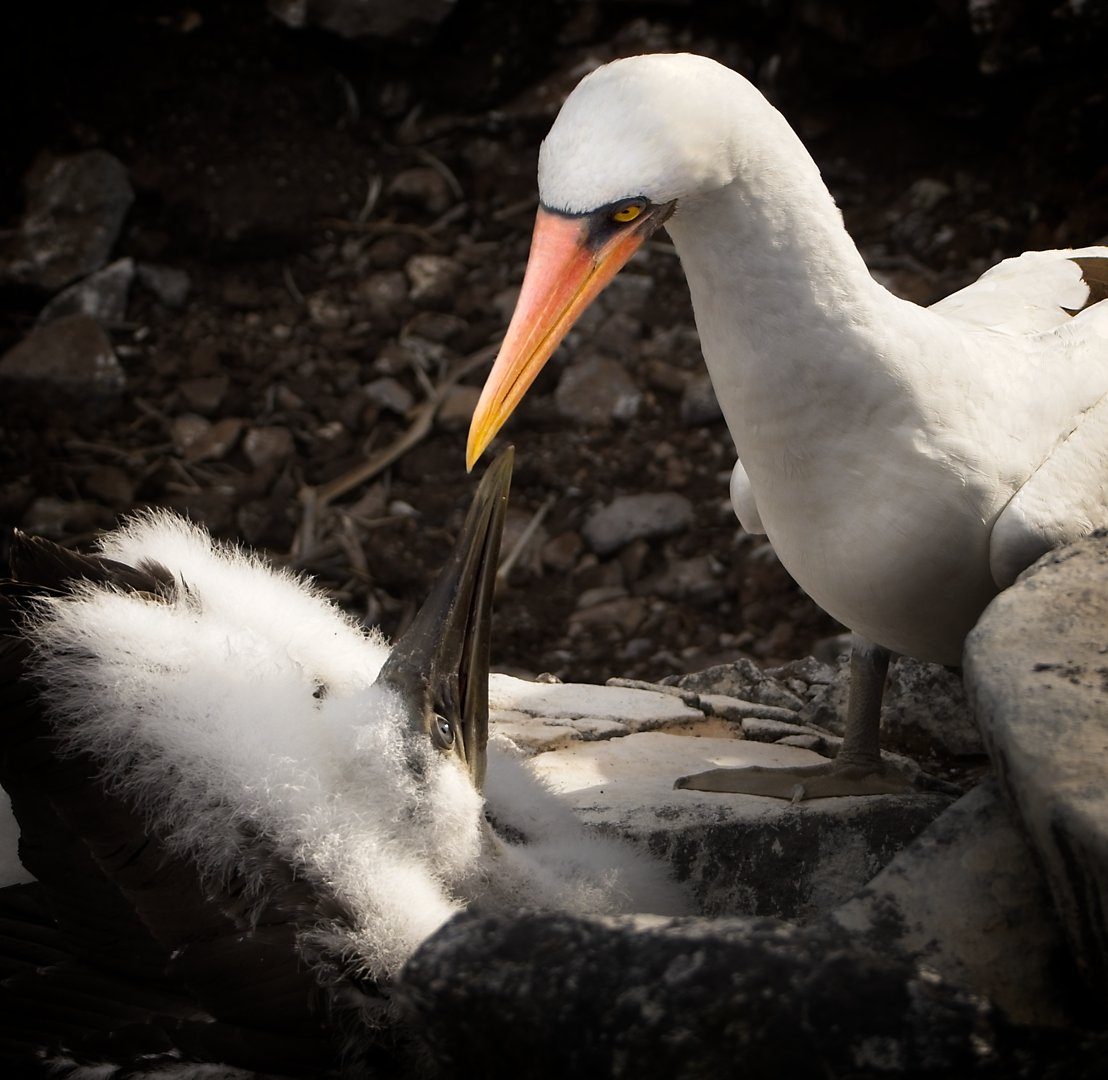
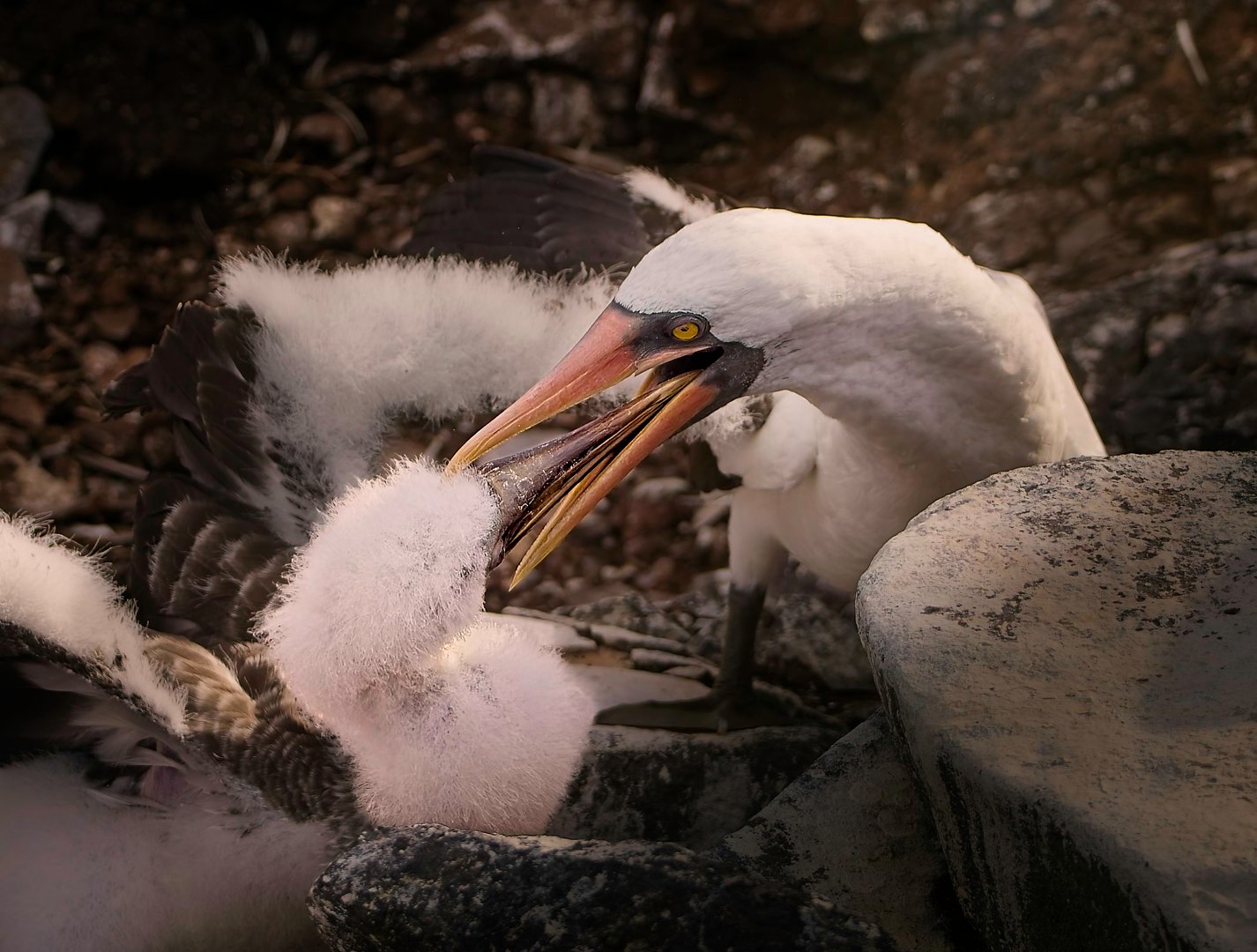
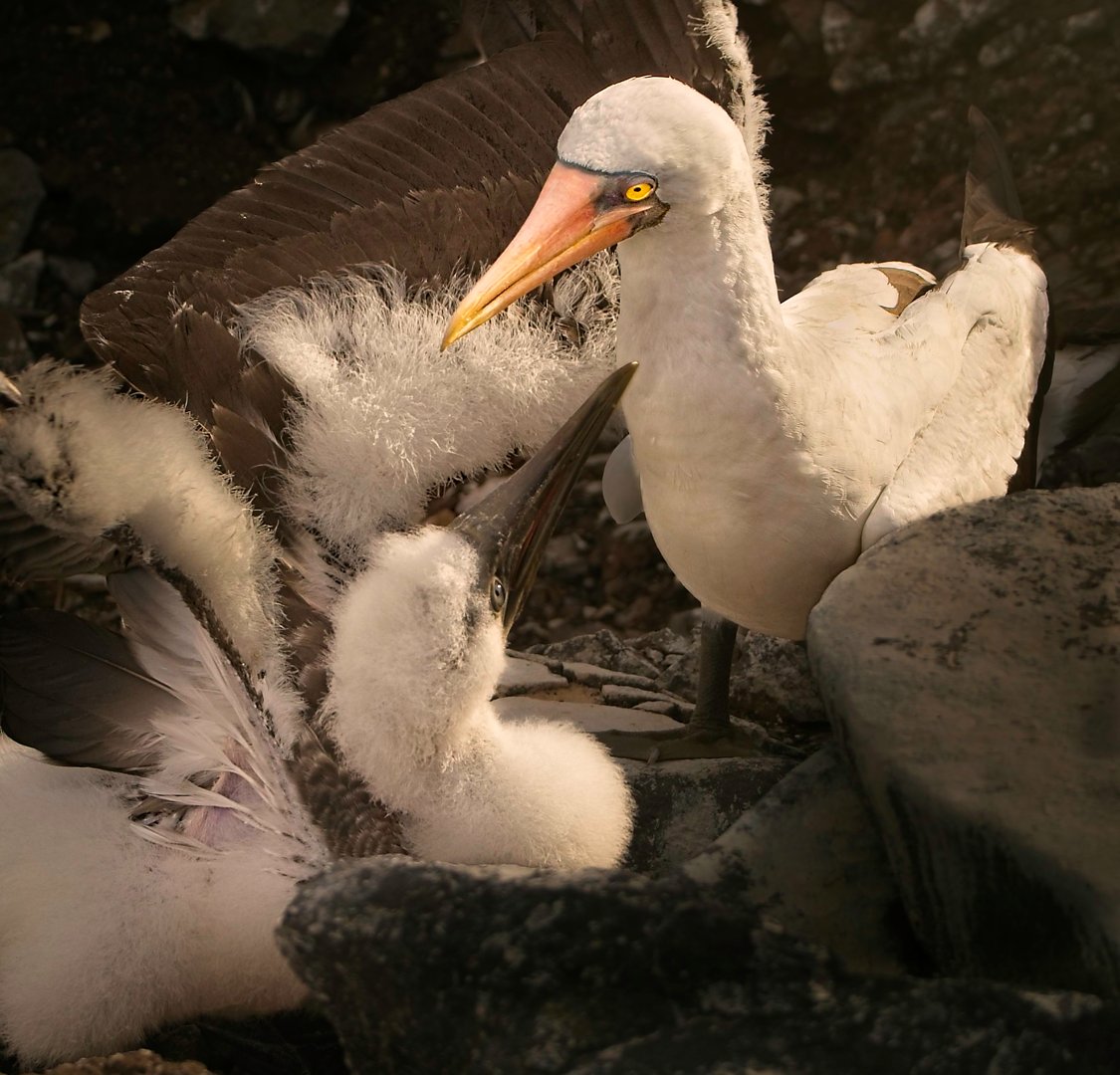
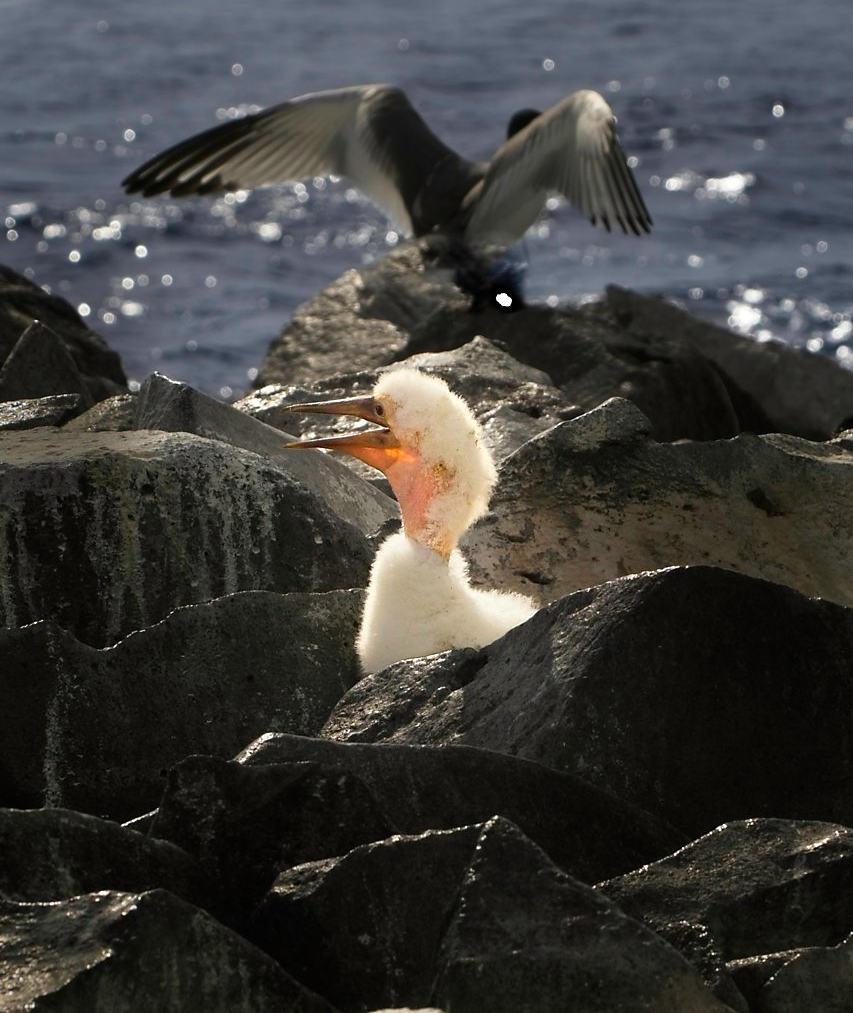
Then, on Española Island we hiked to a cliff top where we found a large group of Nazca Boobies, impressive in their white plumage with black accents on the wing tips and tail. In some of the photos you can see the fluffy-white chicks. My favorite shots from this outing are the ones of a mom feeding her chick by mouth.
All Boobies are sea foragers, extremely agile in the air and able to plunge-dive for their prey at up to 60 miles per hour. I felt especially fortunate to see so many of them on land while they were nesting and raising their chicks.
Select photos for enlargements.
Tortoises
Certainly the most famous animal in the Galapagos is the giant tortoise. In fact, galápago is a Spanish word for tortoise, and it lent its name to the whole archipelago. Once hunted nearly to extinction, there are currently 15 species of these tortoises, most native to a single island. They can grow to be more than four feet long and weigh over 500 pounds. Their very slow metabolism gives them the ability to live for up to a year without food or water.
We were able to see giant tortoises twice during our tour of the islands. I took these photos as we walked the paths at the Cerro Colorado Tortoise Reserve on San Cristobal, where tortoises roam and breed in semi-captivity. After hatching in the wild, the baby tortoises spend several years in “corrals” where they are protected from predators and learn to forage on their own.
Needless to say, these are extremely impressive animals and they were a joy to photograph.
Seascapes & Sea Lions
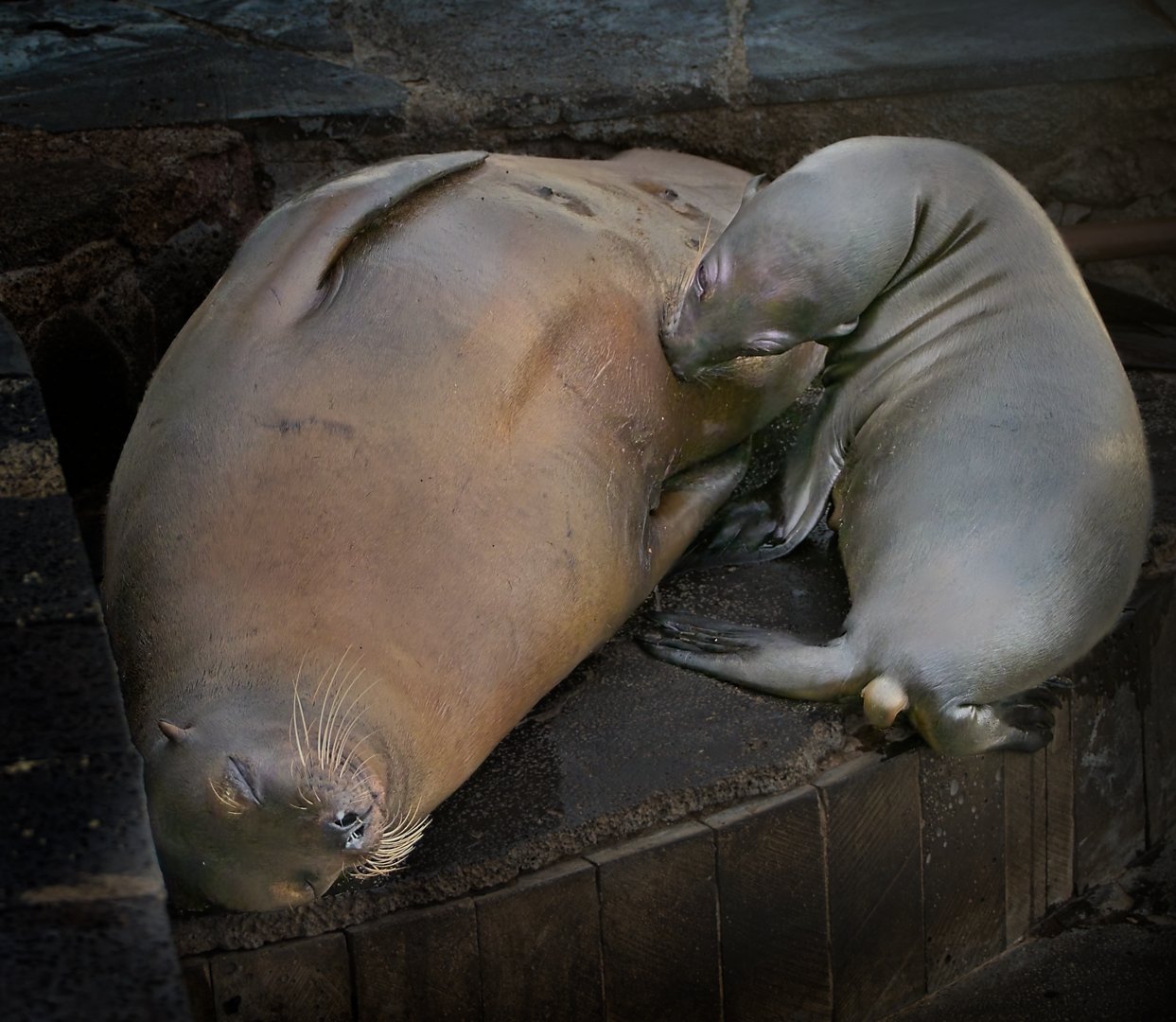
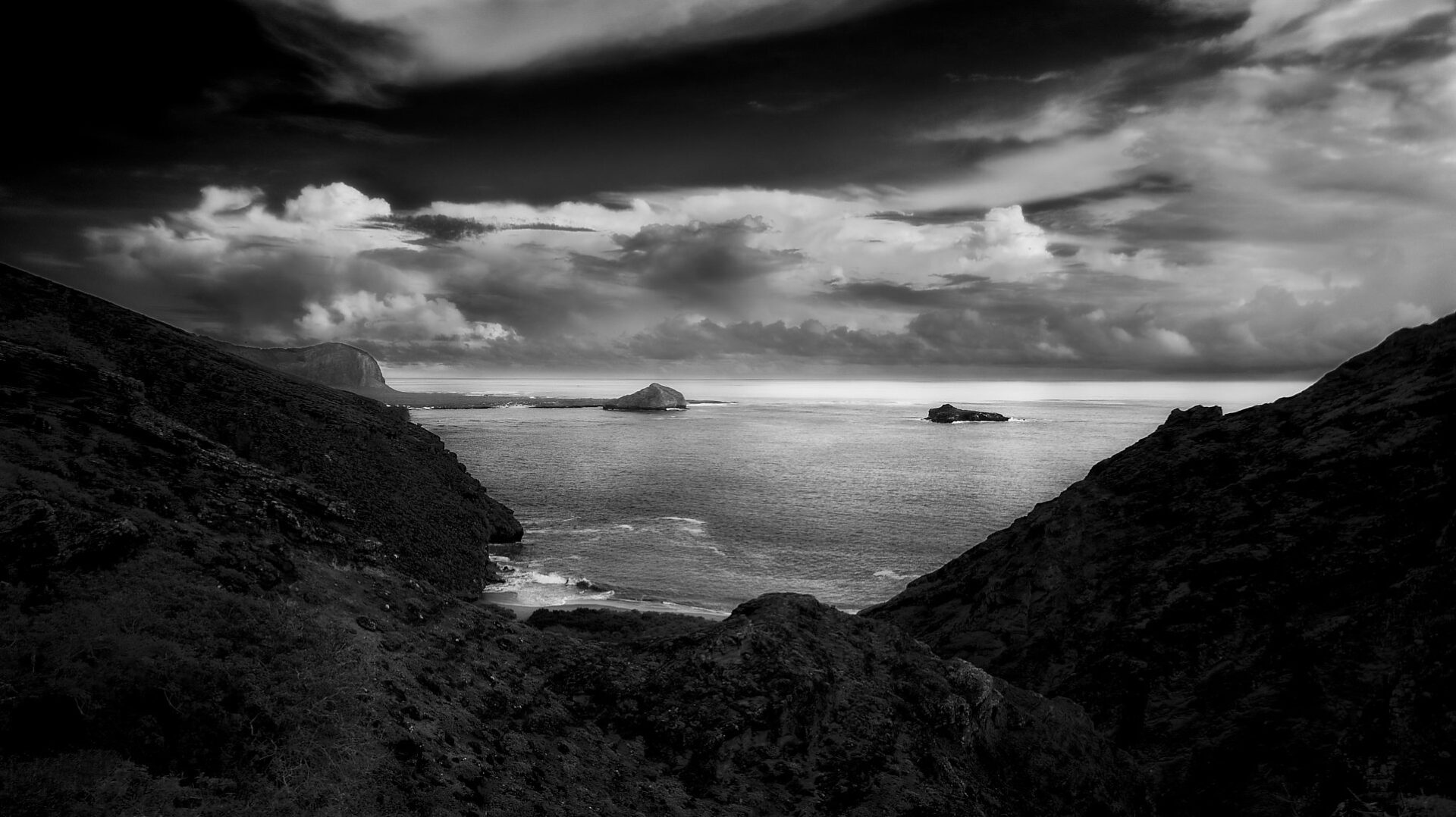
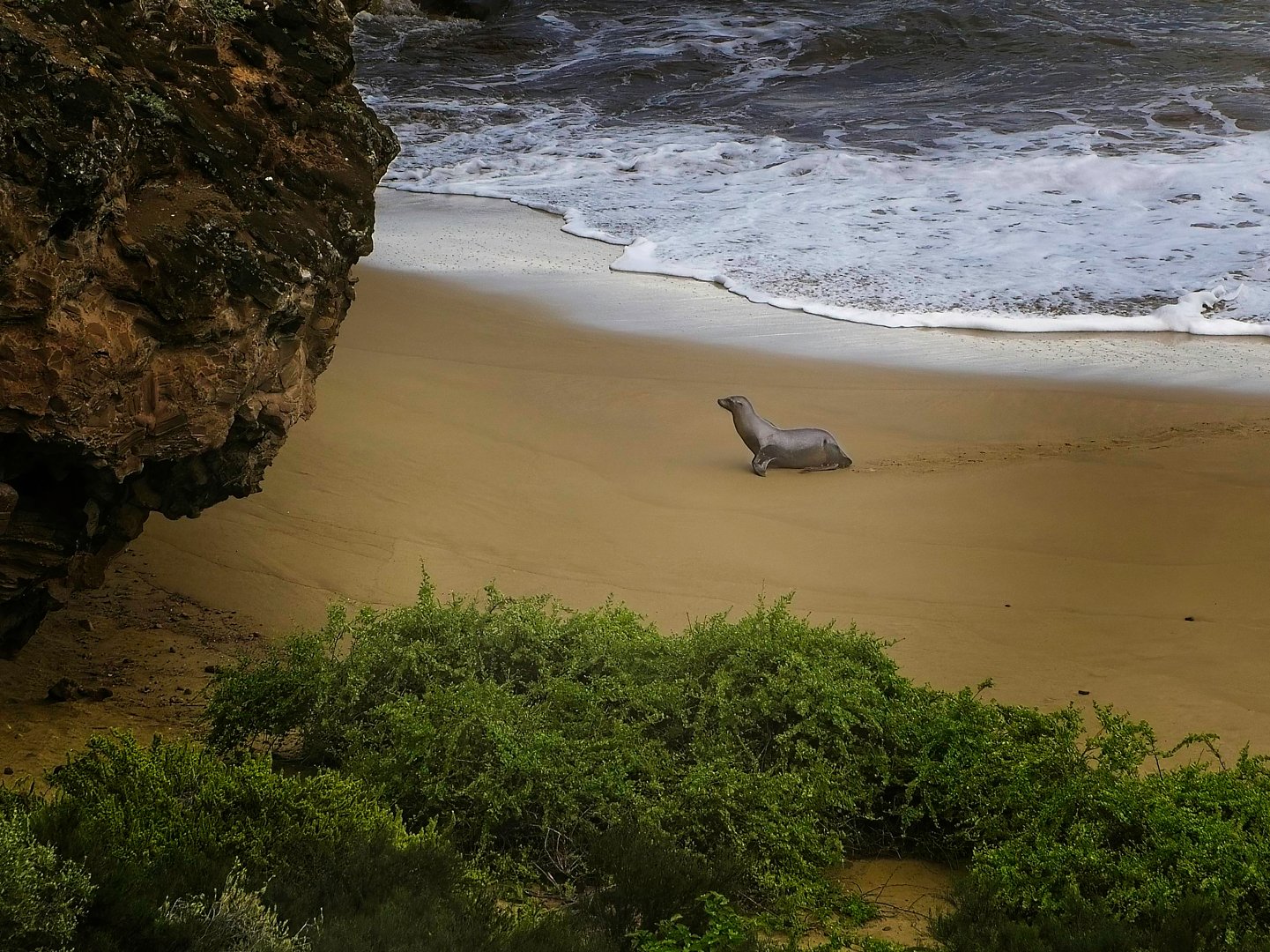
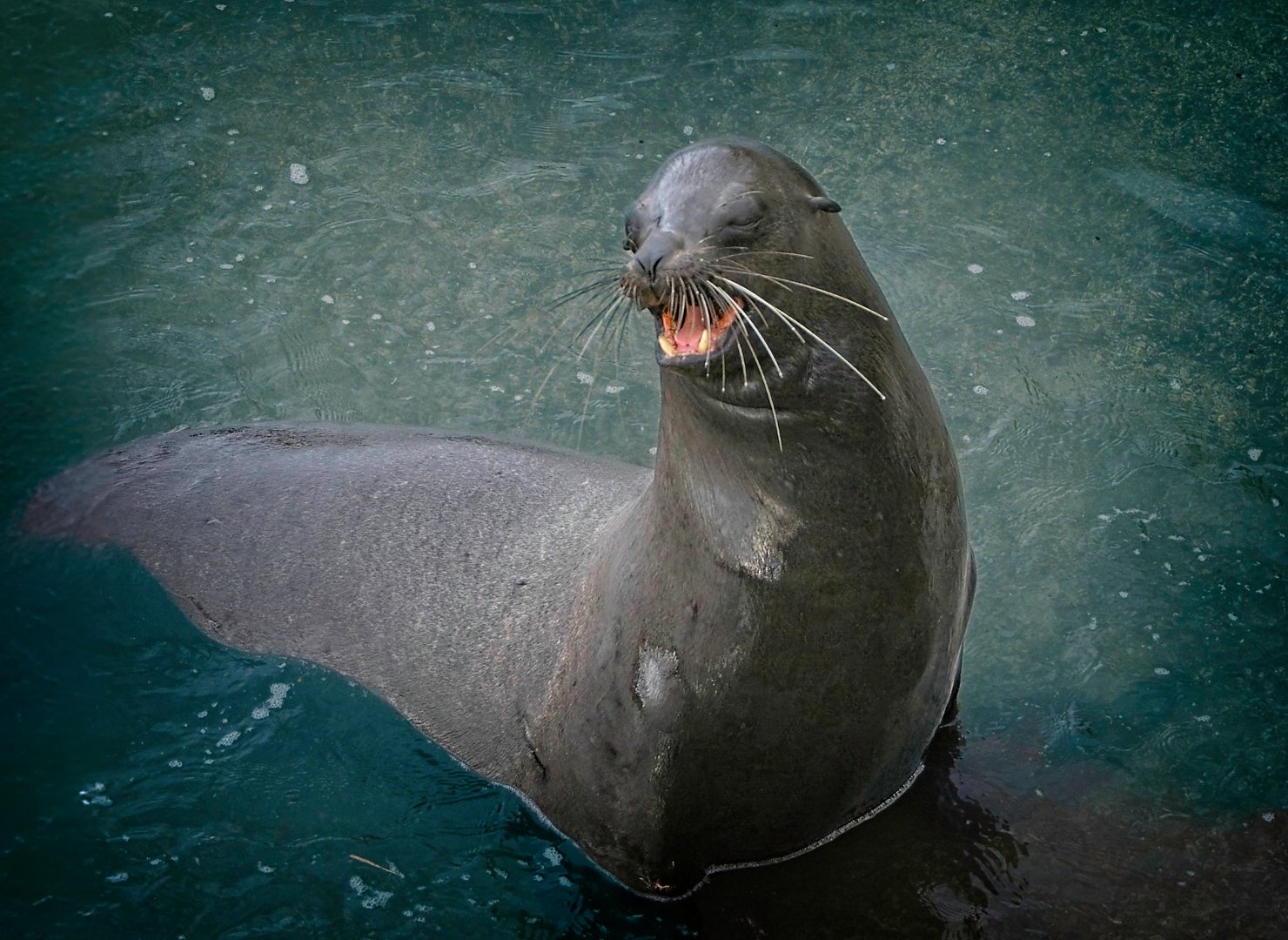
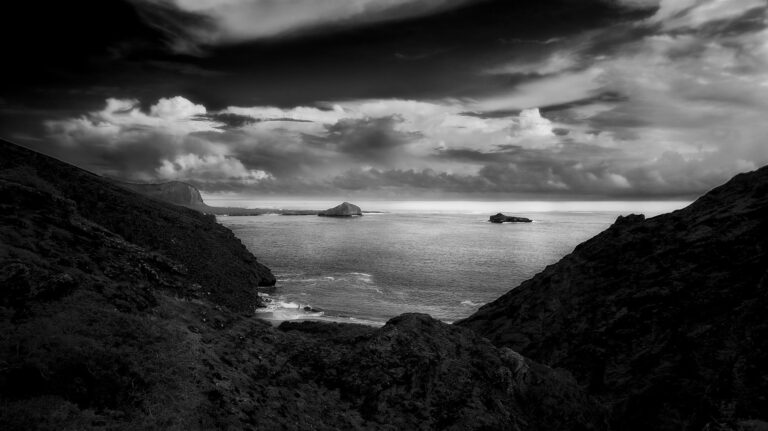
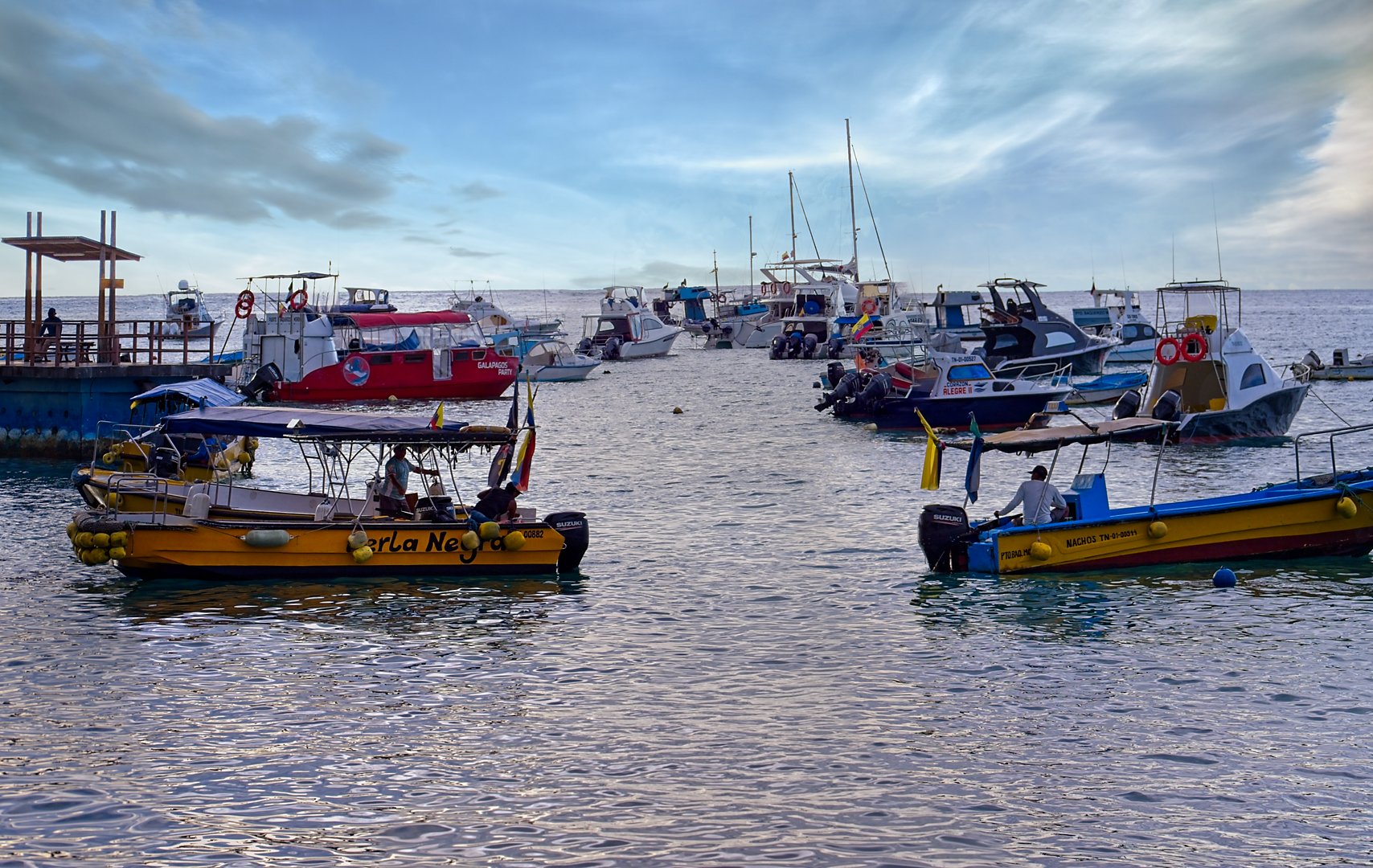
I’ve started out this section with a panorama of the harbor where we landed at on San Cristobal Island. The town of Puerto Baquerizo Moreno is the capitol of the Galapagos Islands and provides anchorage for a lot of fishing vessels as well as tourist boats. Sea lions also populate this harbor and some believe they own the place. One of the funniest episodes on our trip happened here, when a large sea lion literally pushed our tour group out of the way as we were on the boarding ramp to our Zodiak. No one was going to get in its way as it climbed out of the water, found a convenient bench, and plopped down for a snooze.
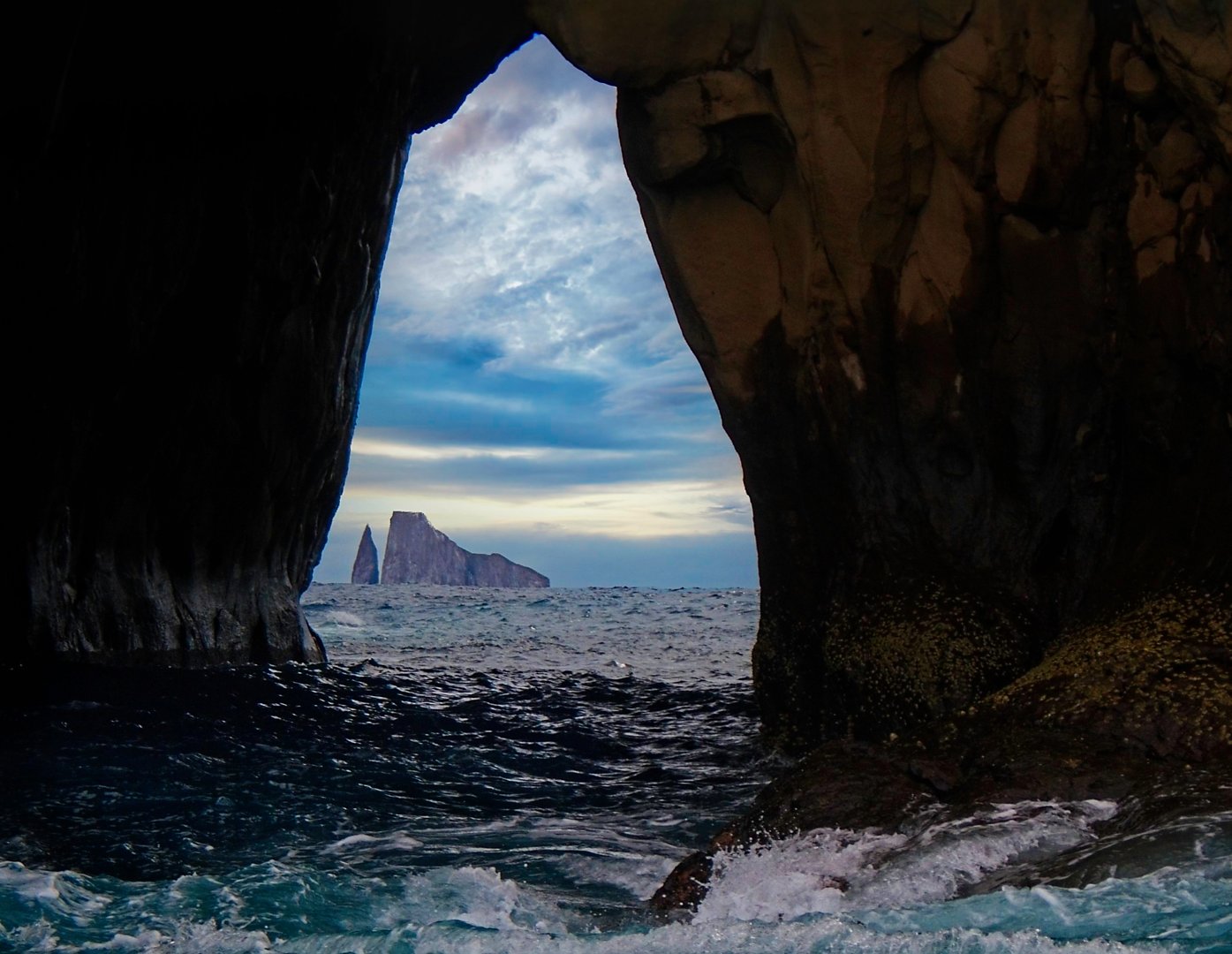
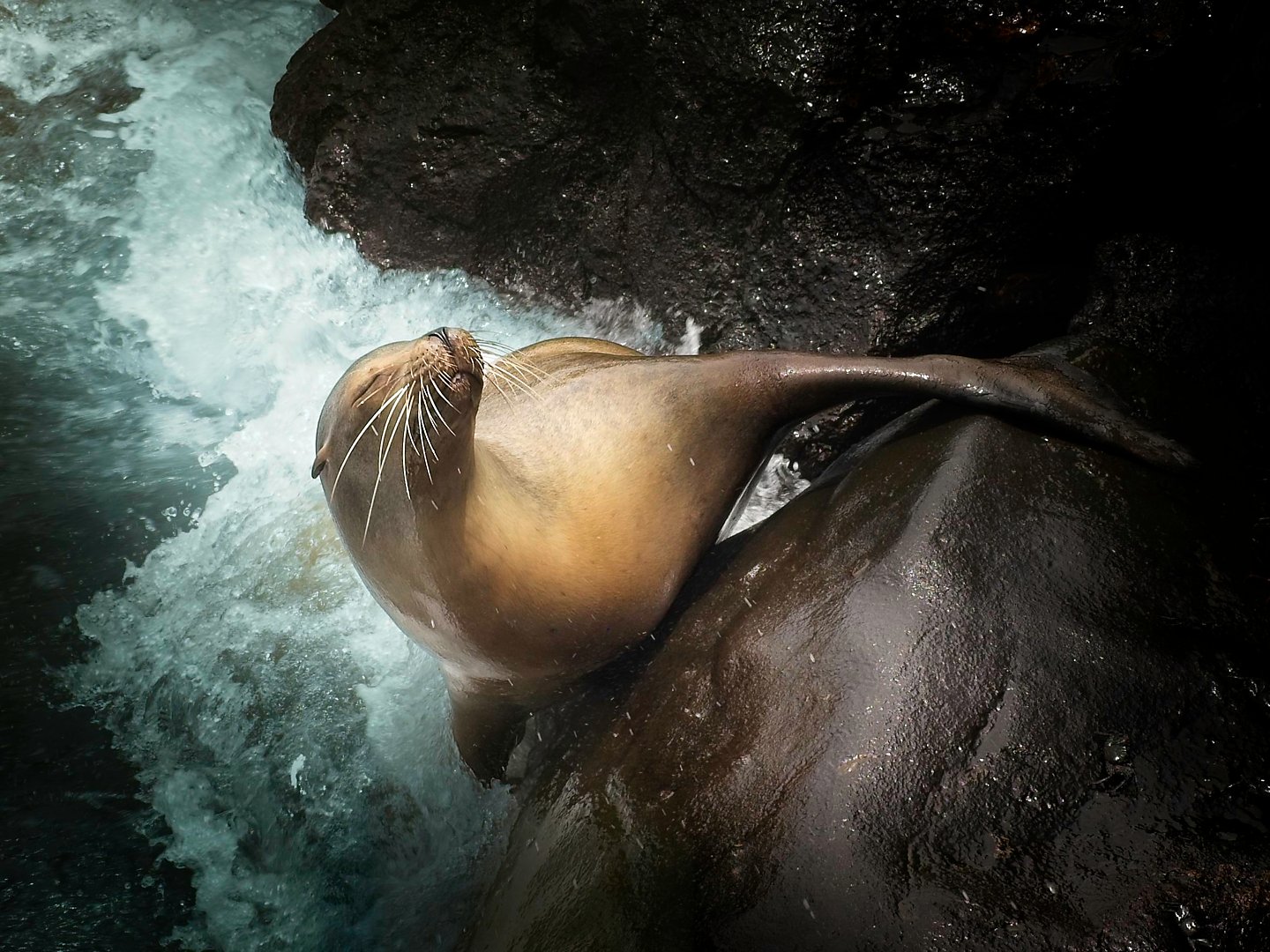
We had a several wet landings, seaside hikes and beach time on San Cristobal, giving me more opportunities to photograph the many moods of sea lions, who always seemed quite happy to pose–even during a pretty intimate moment. I have also included some seascapes taken with the Olympus TG-6 from the Zodiak during some fairly rough seas.
Iguanas & Crabs
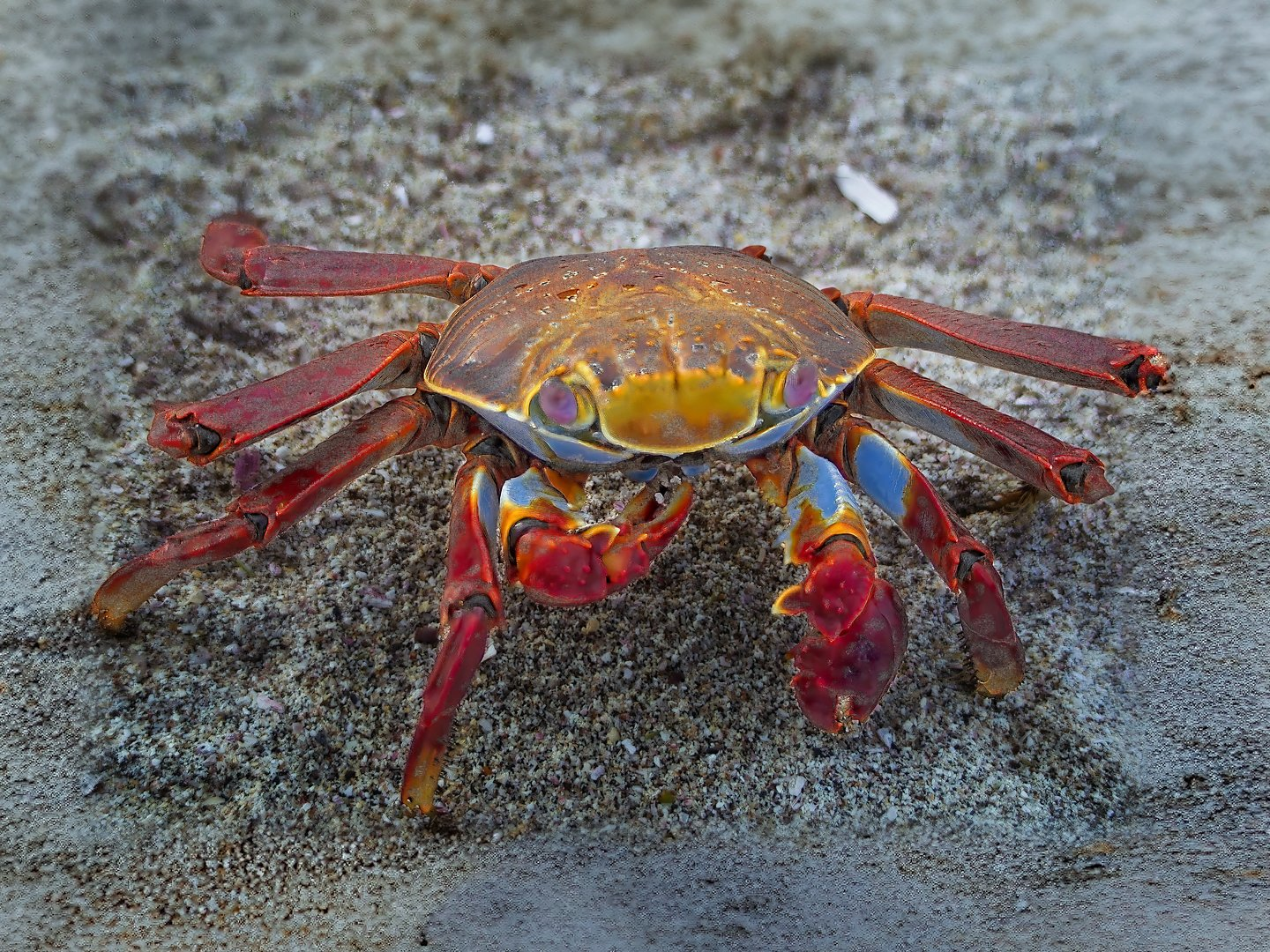
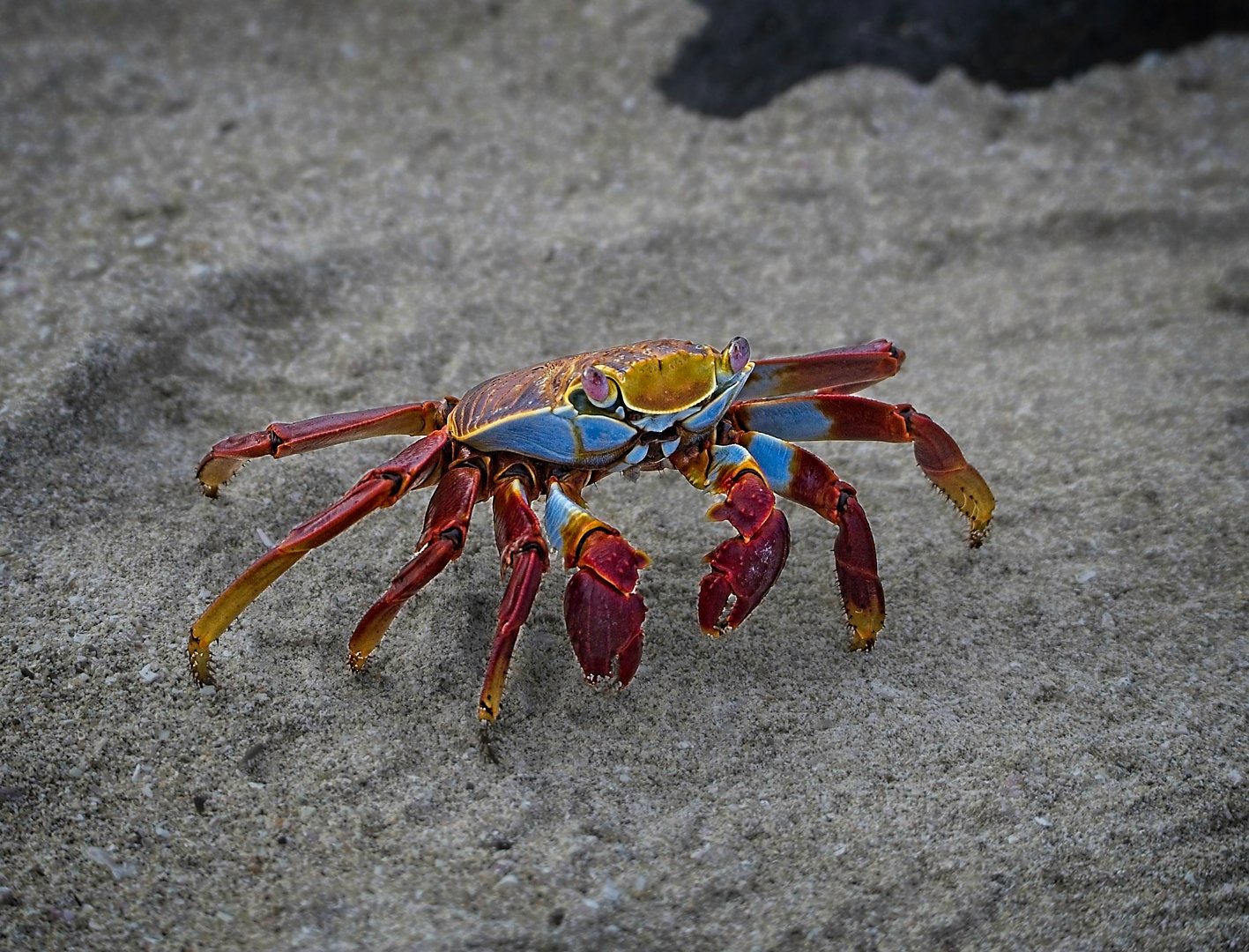
Almost everywhere we went ashore on the Galapagos we found Sally Lightfoot crabs. They are rumored to be named after a Caribbean dancer because of their agility and speed. They are so colorful that it is hard to resist photographing them. But you have to be quick about it.
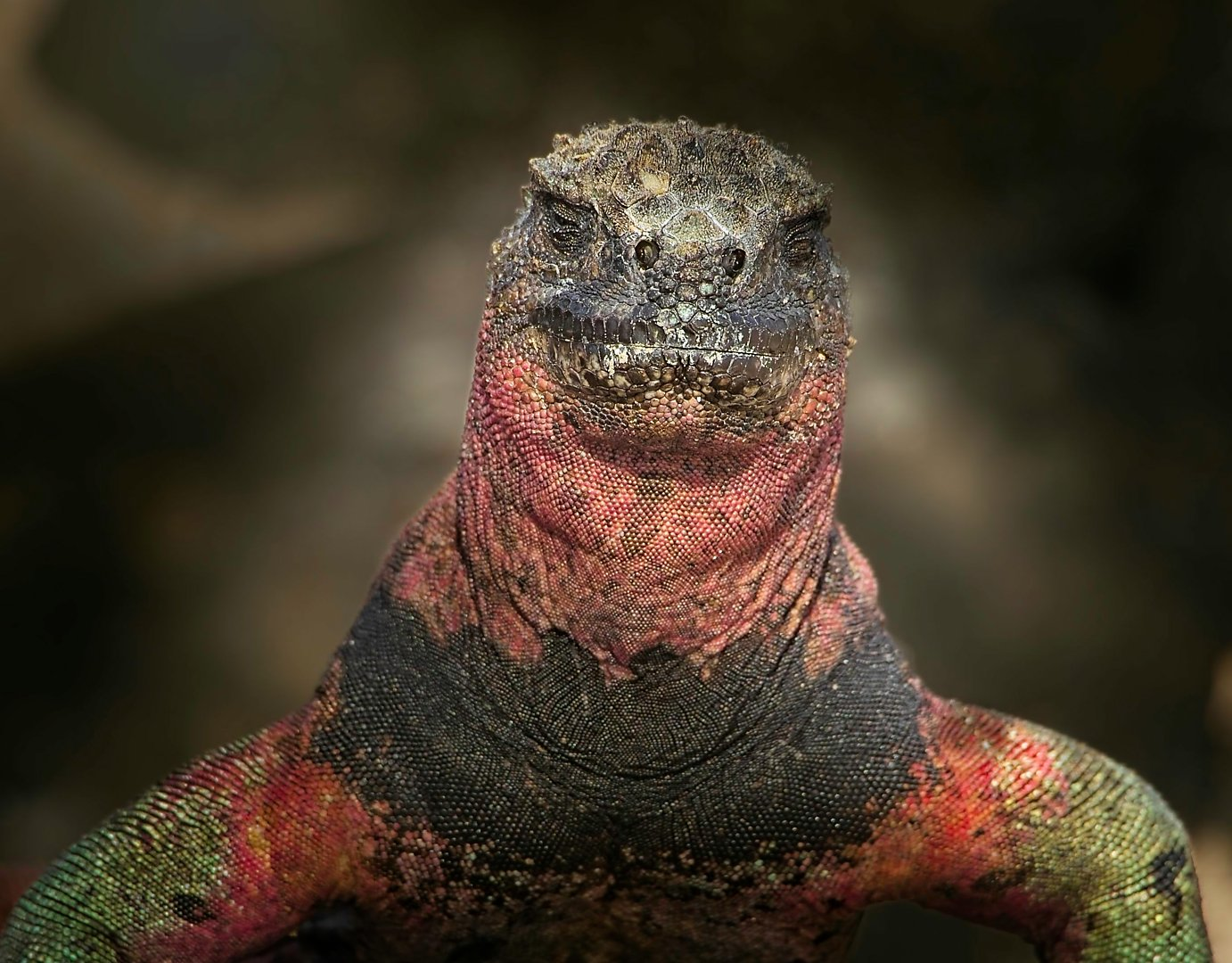
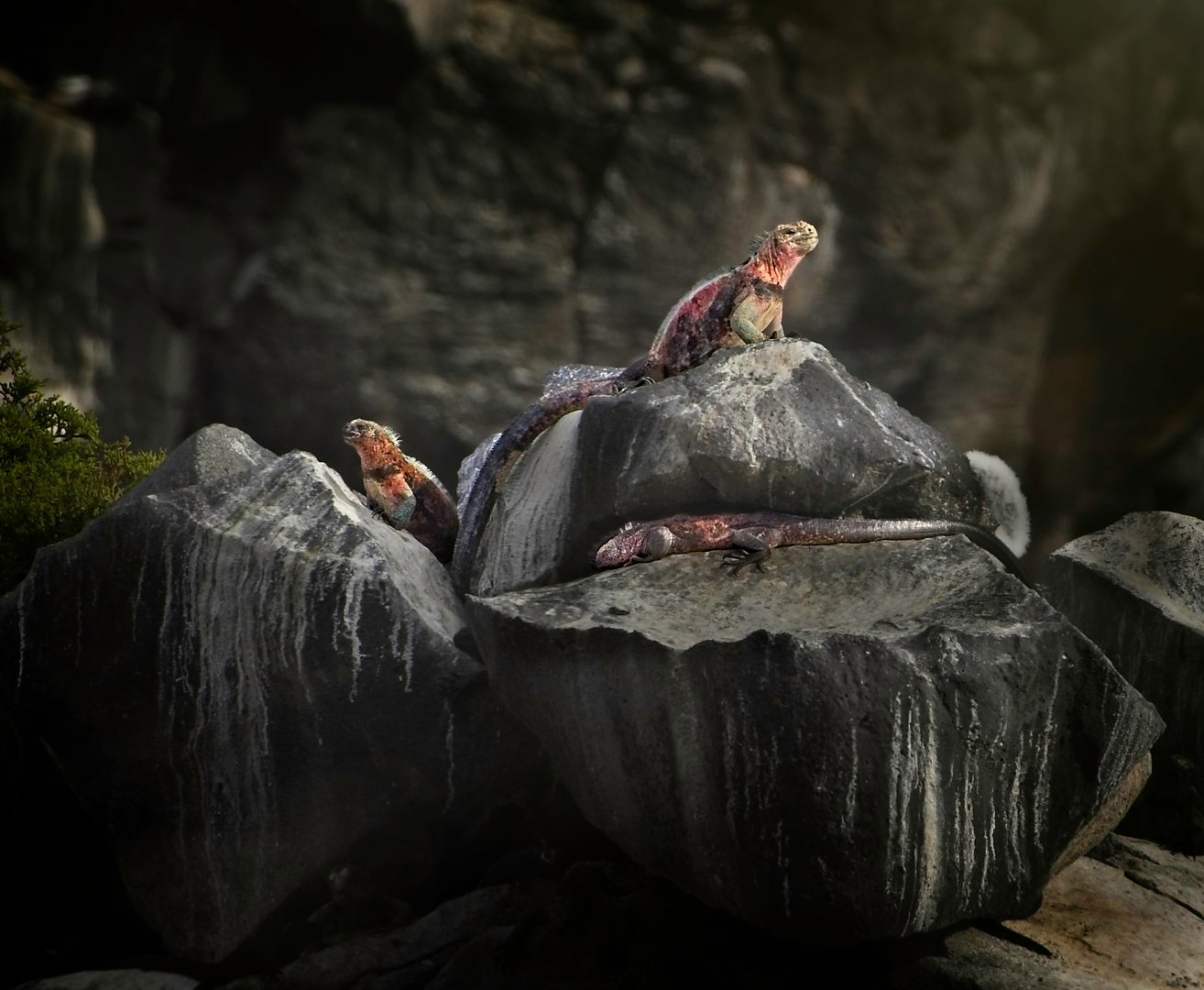
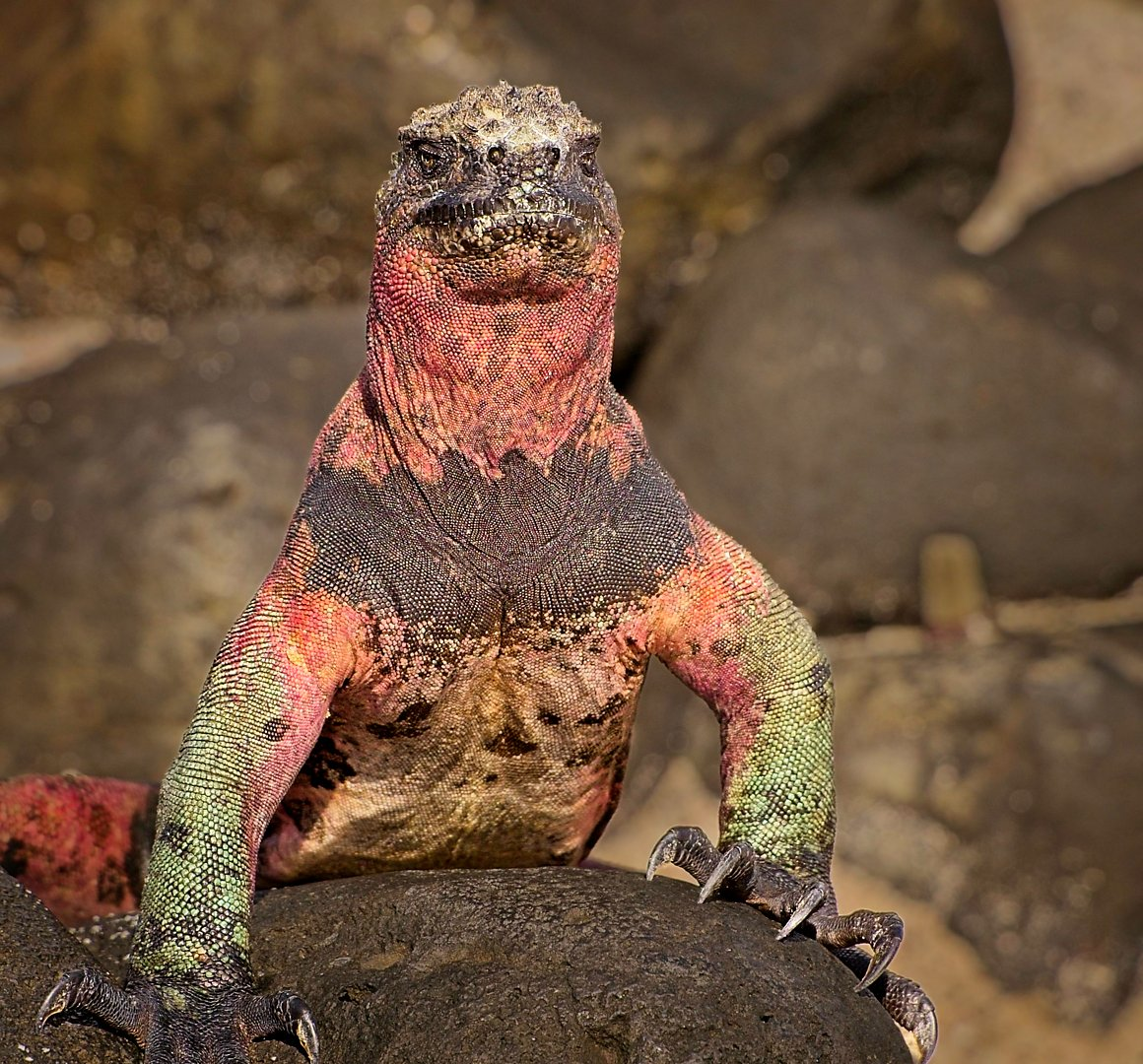
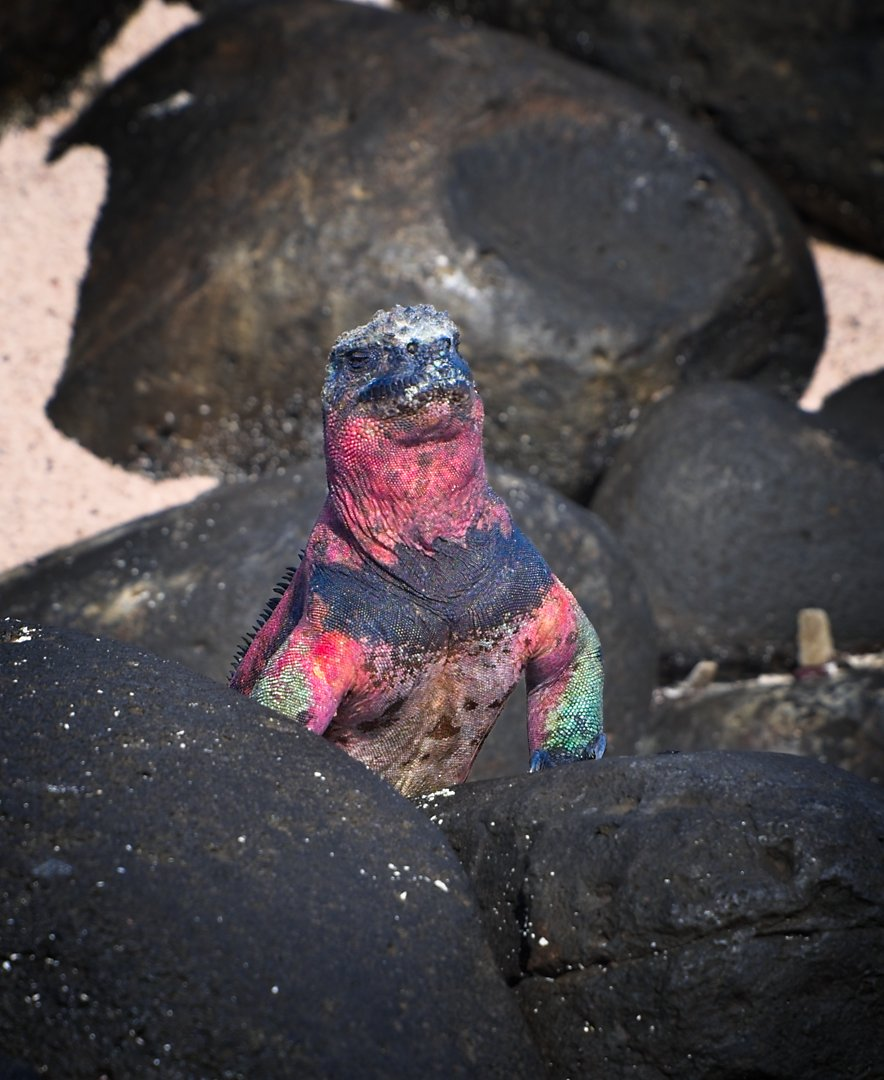
The photos below of the Marine Iguanas were shot on Española Island, taken as we began our rocky hike to see the Nazca Boobies (gallery above). They are the only lizards in the world able to live in a marine environment; they are excellent swimmers and feed on algae. With their brilliant colorations, they make a stunning impression up close.