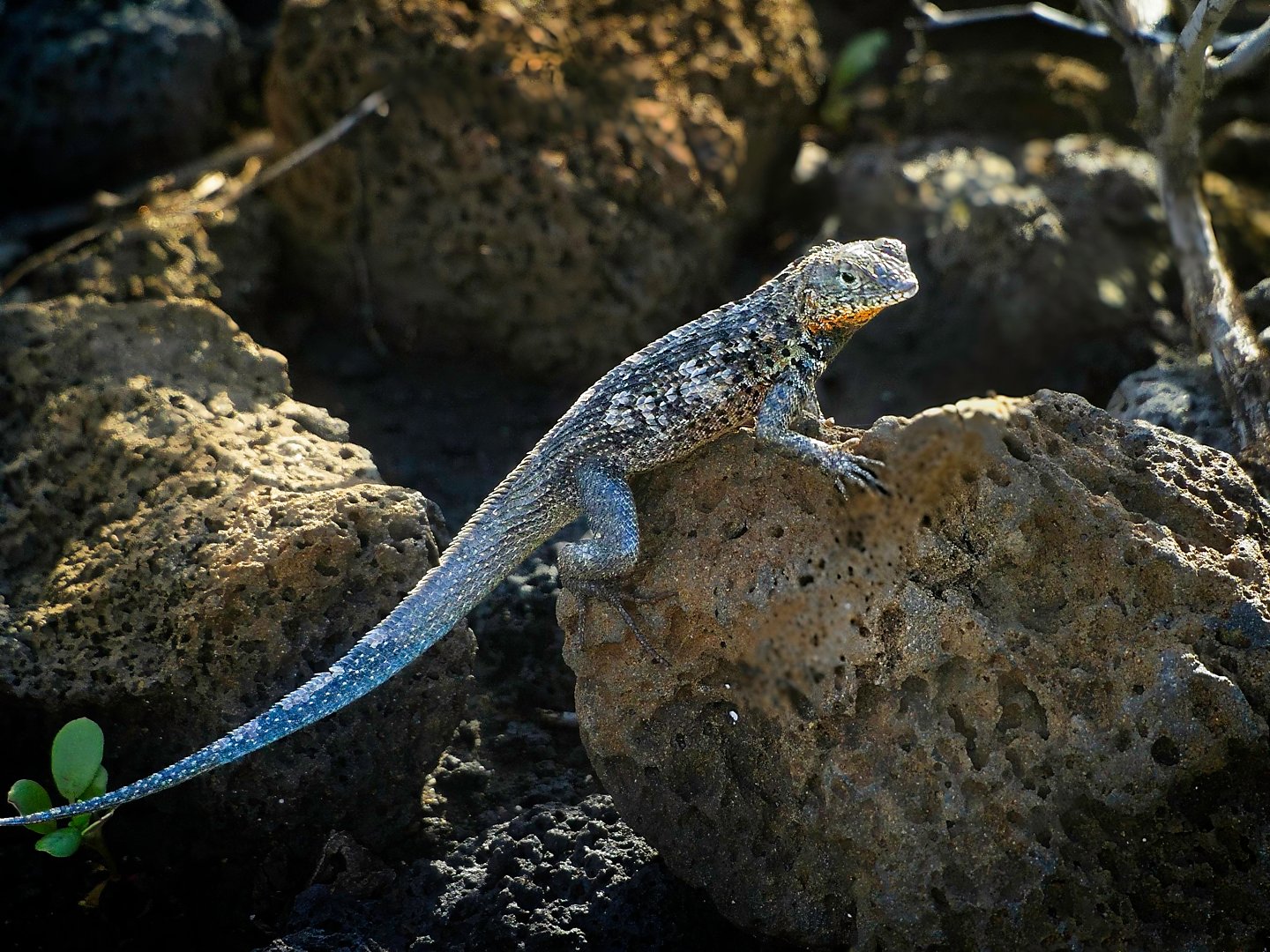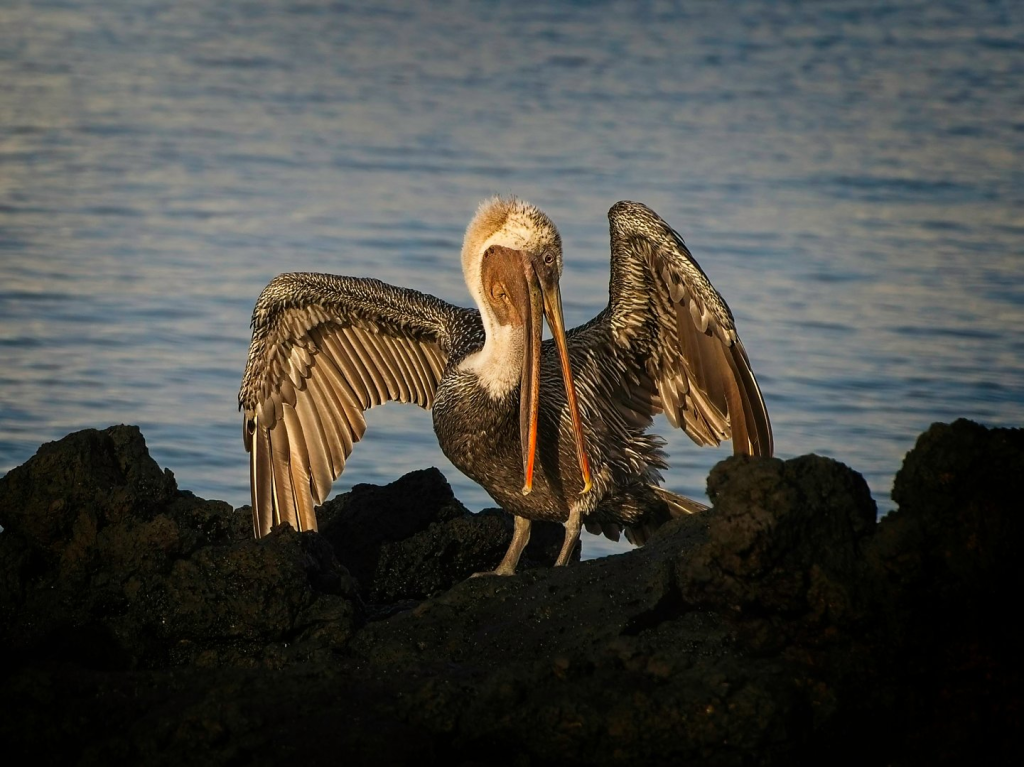
In March, Penny and I went to the Galapagos Islands to celebrate our 50th wedding anniversary. In addition to the trip of a lifetime, this was a photographer’s dream. There is a fascinating variety of wildlife, much of it seeming quite happy to pose.
We toured six islands in the southwestern part of the archipelago, where we saw amazing birds, sea lions, iguanas, and tortoises. We bunked aboard the Galapagos Legend but zipped to the islands in Zodiak-type inflatable boats, where our guides helped us explore and learn about the wonders we were seeing.
Because I have so many photos, I made three separate posts. You can find Part One here and Part Two here.
Days Six, Seven and Eight
Birds of Floreana Island
Underwater
Birds of Santa Cruz Island
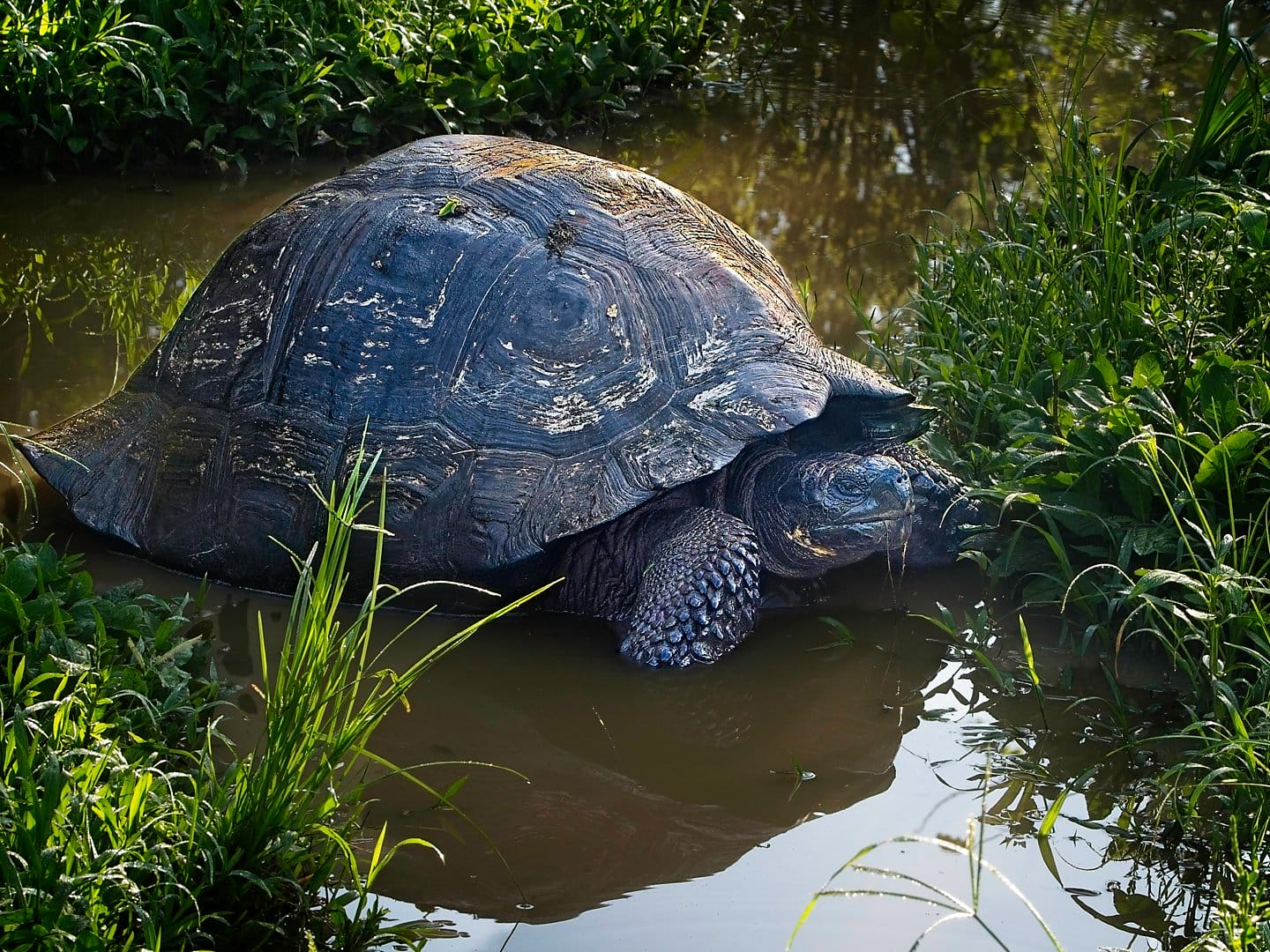
Tortoises & Iguanas
During the last three days of our adventure we explored two islands. We visited Floreana Island, which is located in the south of the archipelago, and then spent the next two days on Santa Cruz Island, one of the largest of the Galapagos.
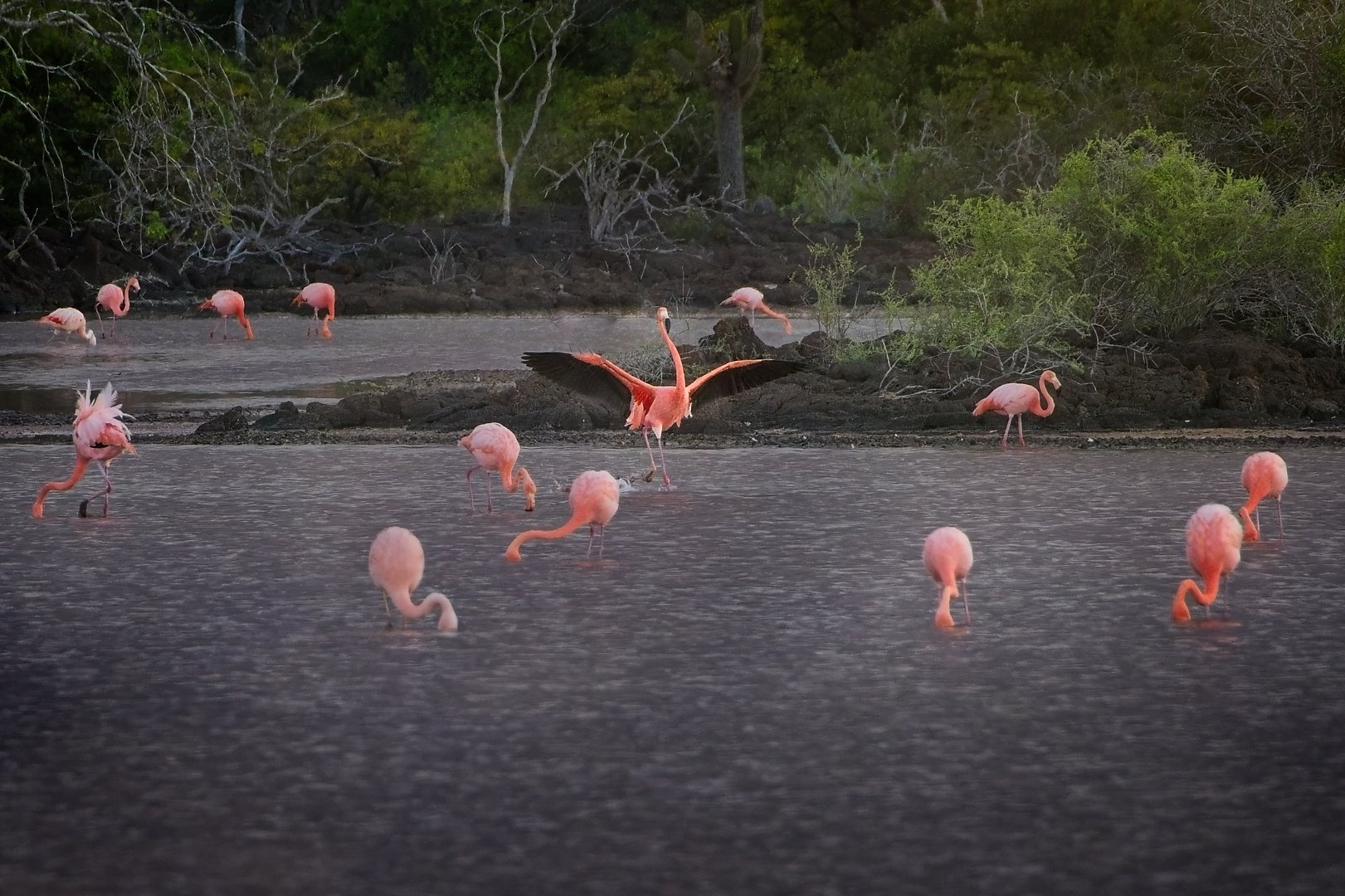
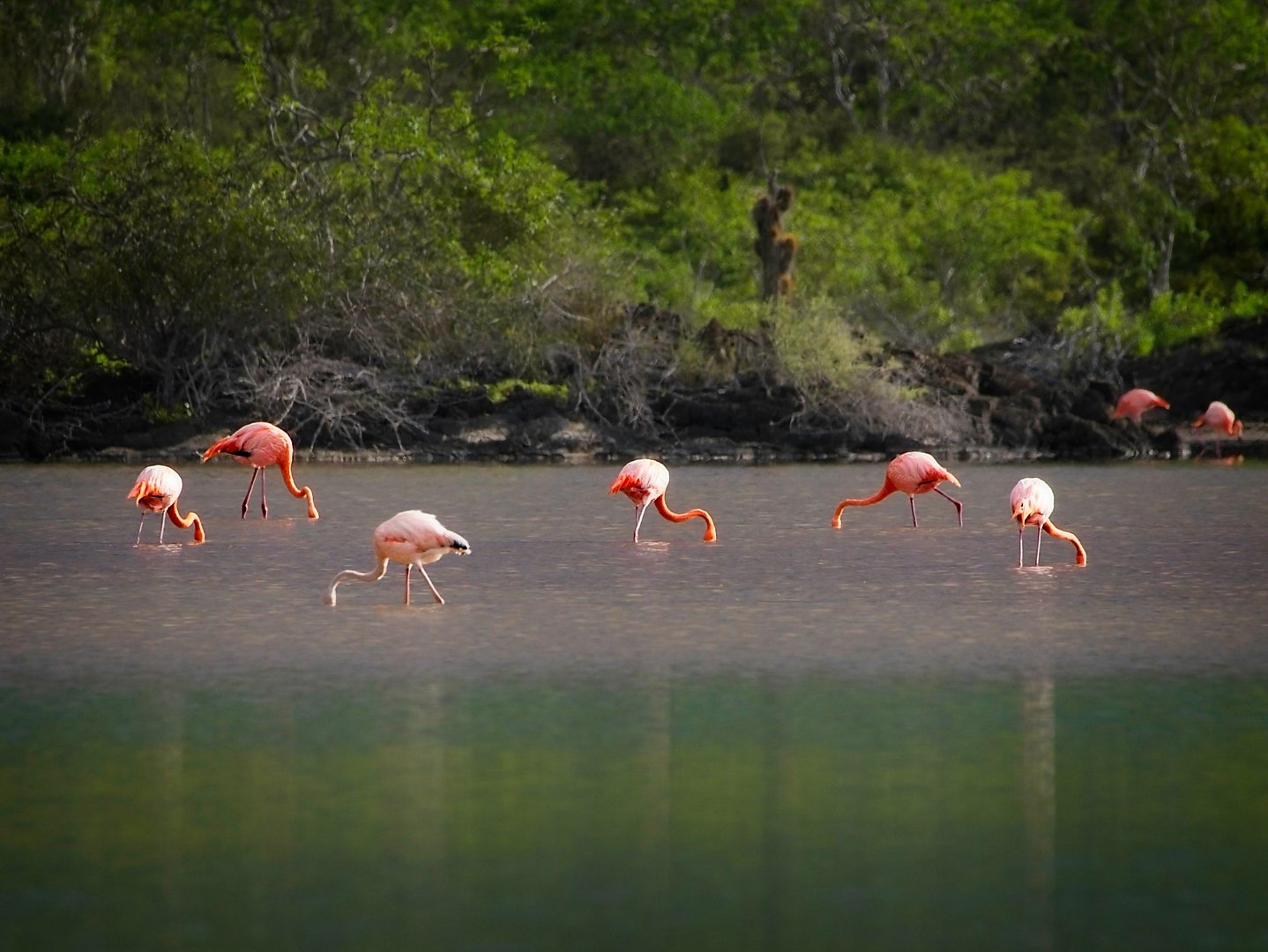
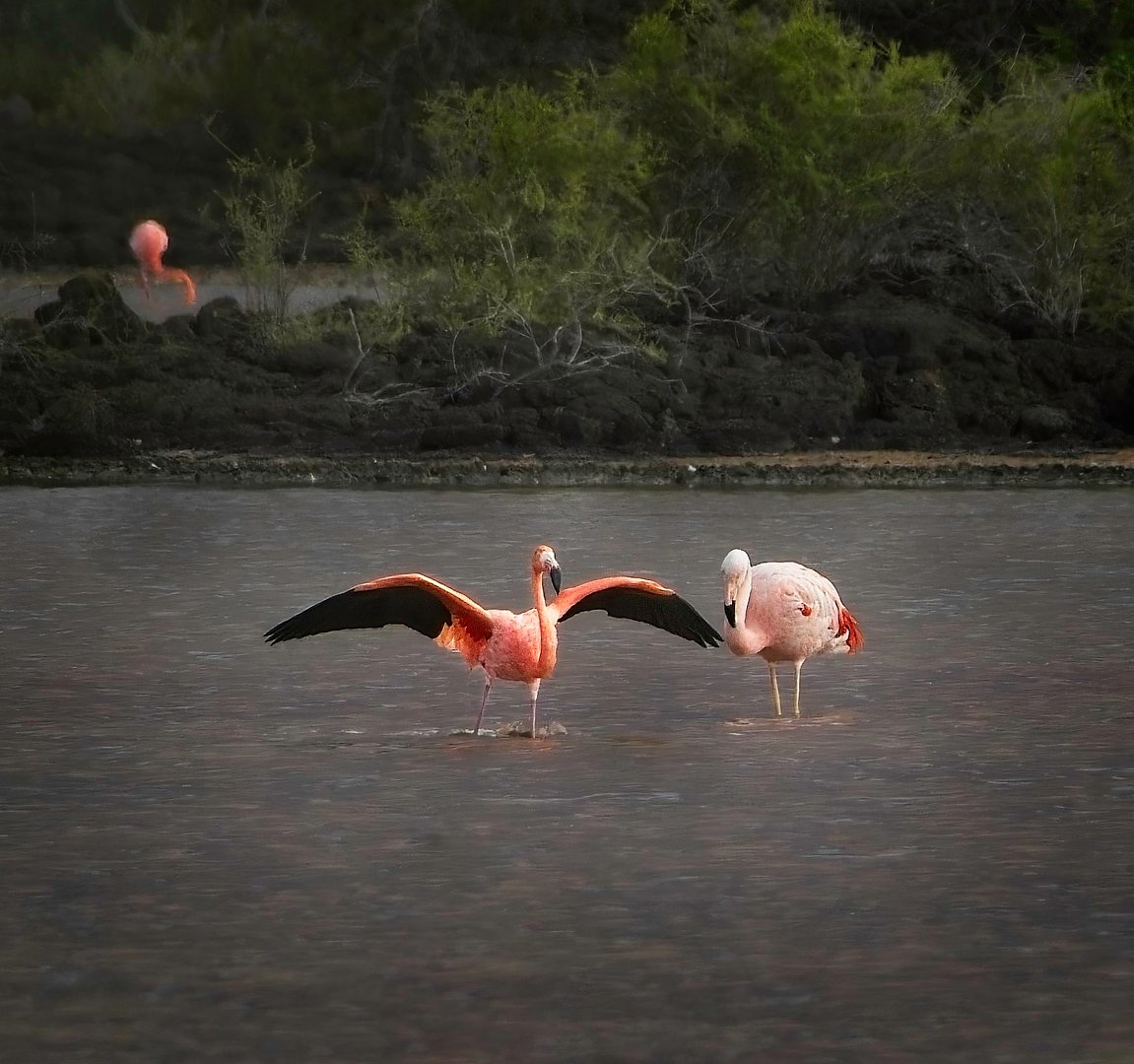
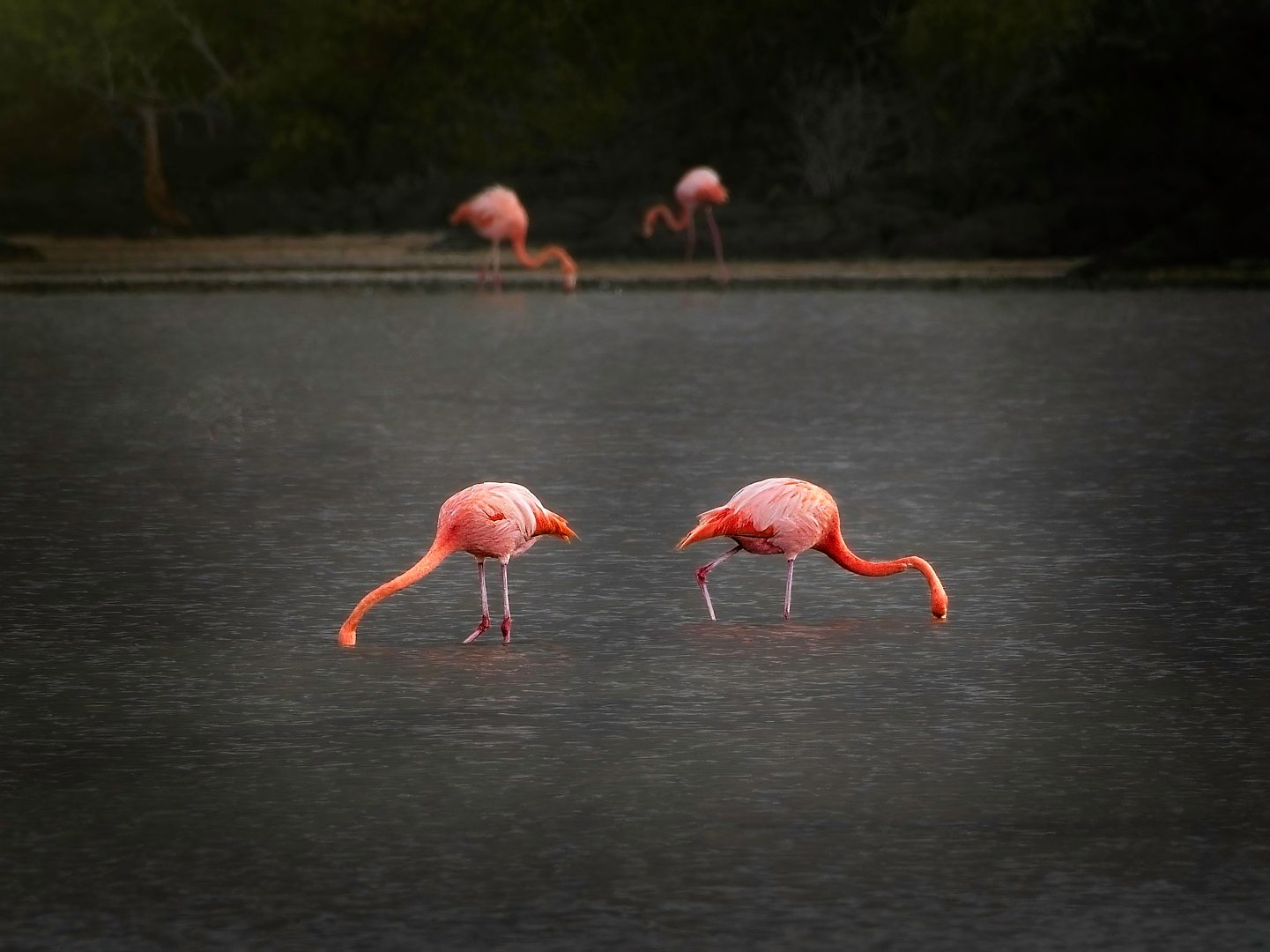
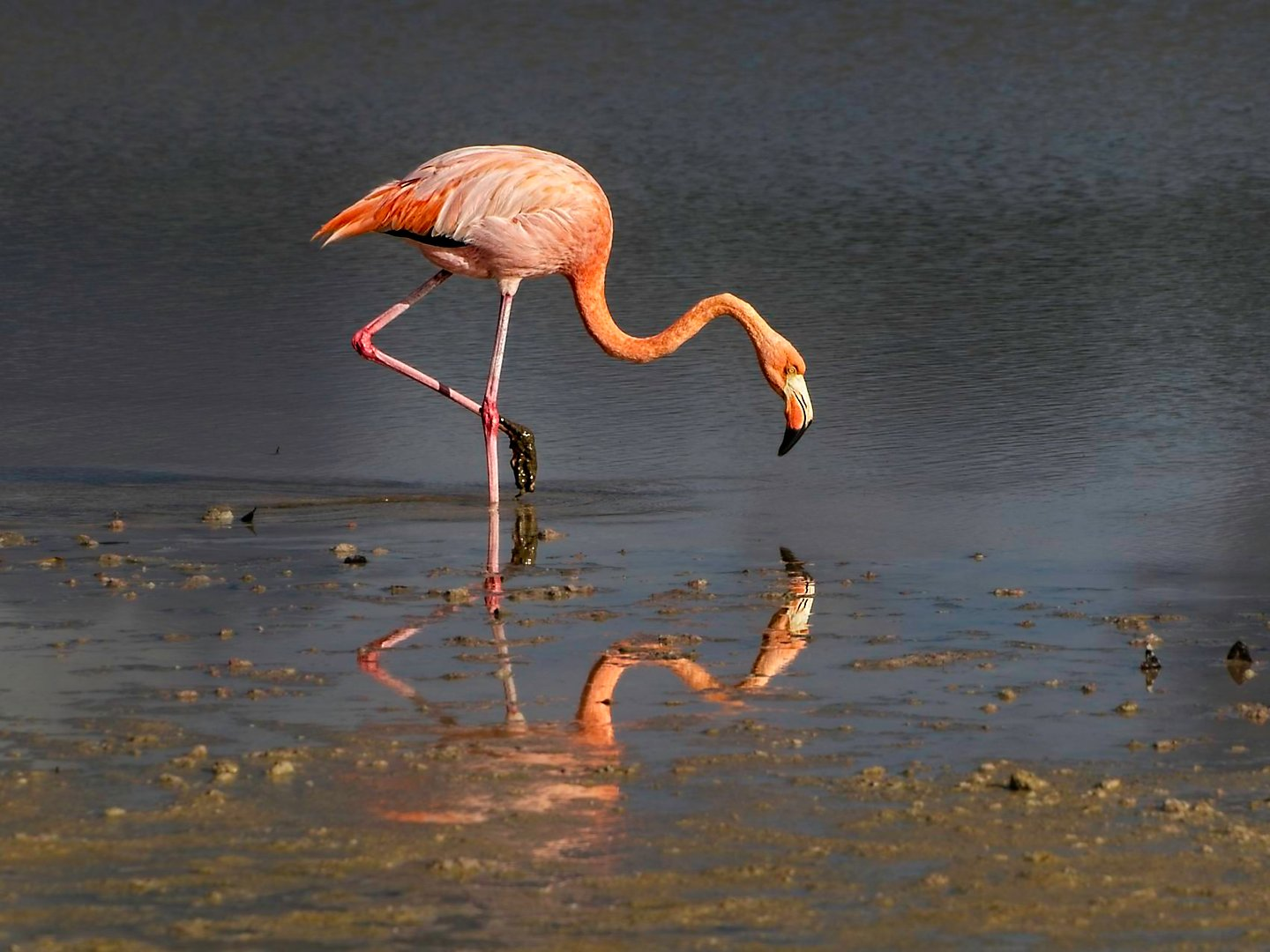
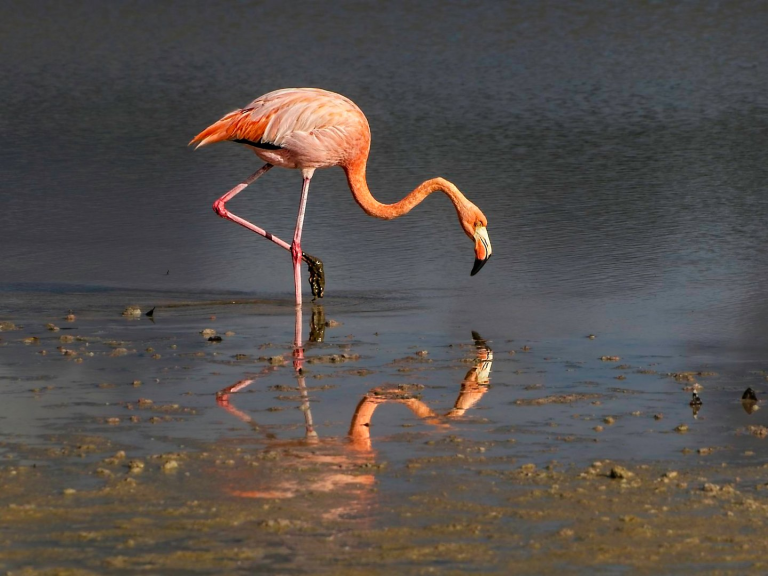
One of my biggest surprises were the flamingos of Floreana. The Galapagos has a small population of flamingos, which are concentrated in only a few locations where they can feed and nest in brackish pools and lagoons close to beaches. My familiarity with flamingos was pretty much limited to plastic lawn ornaments, so spending time watching them in their natural habitat was eye-opening. I loved photographing the flamingos, along with other birds on Floreana. Plus, I had another chance to practice snorkeling and try out underwater photography.
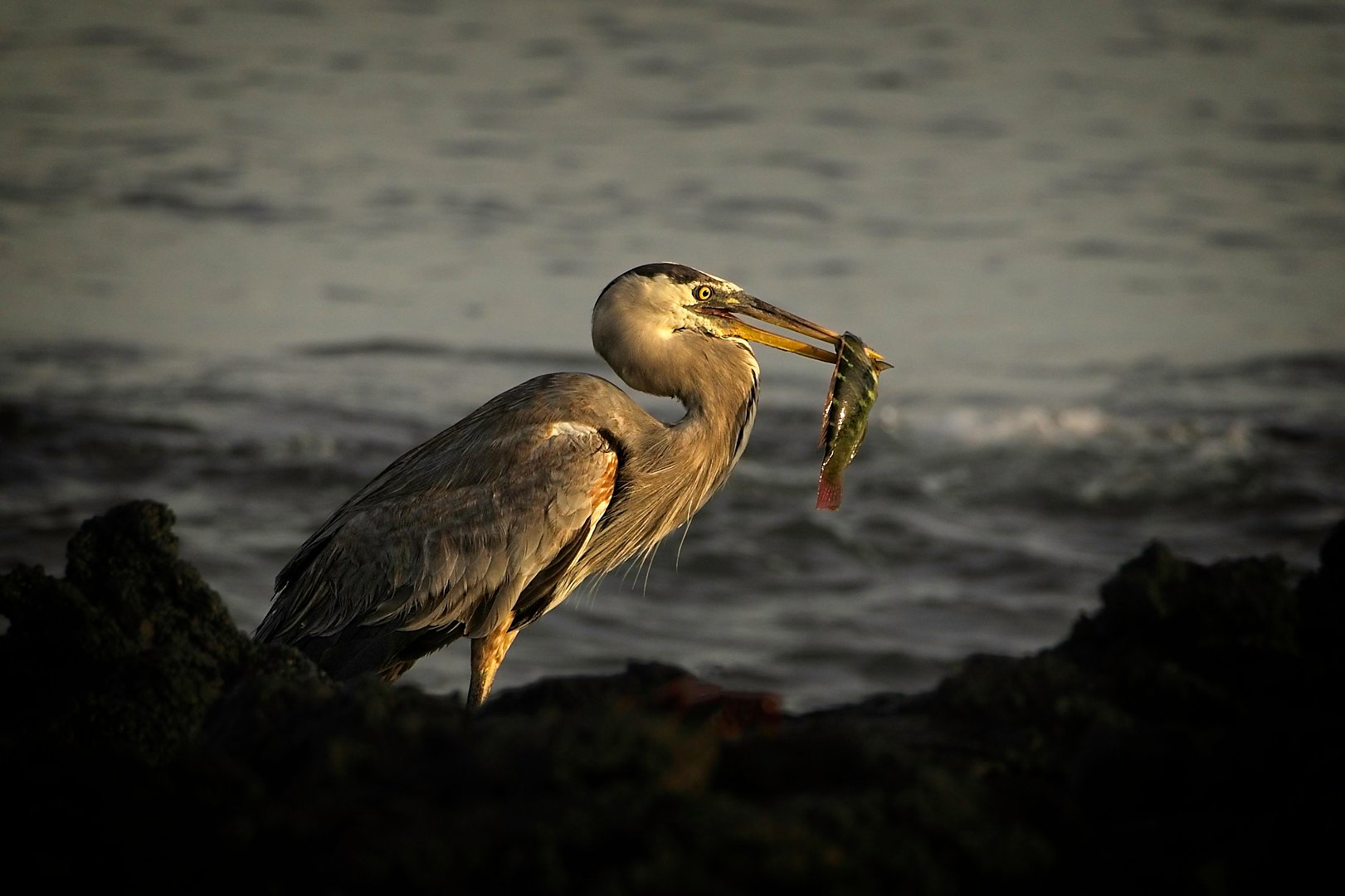
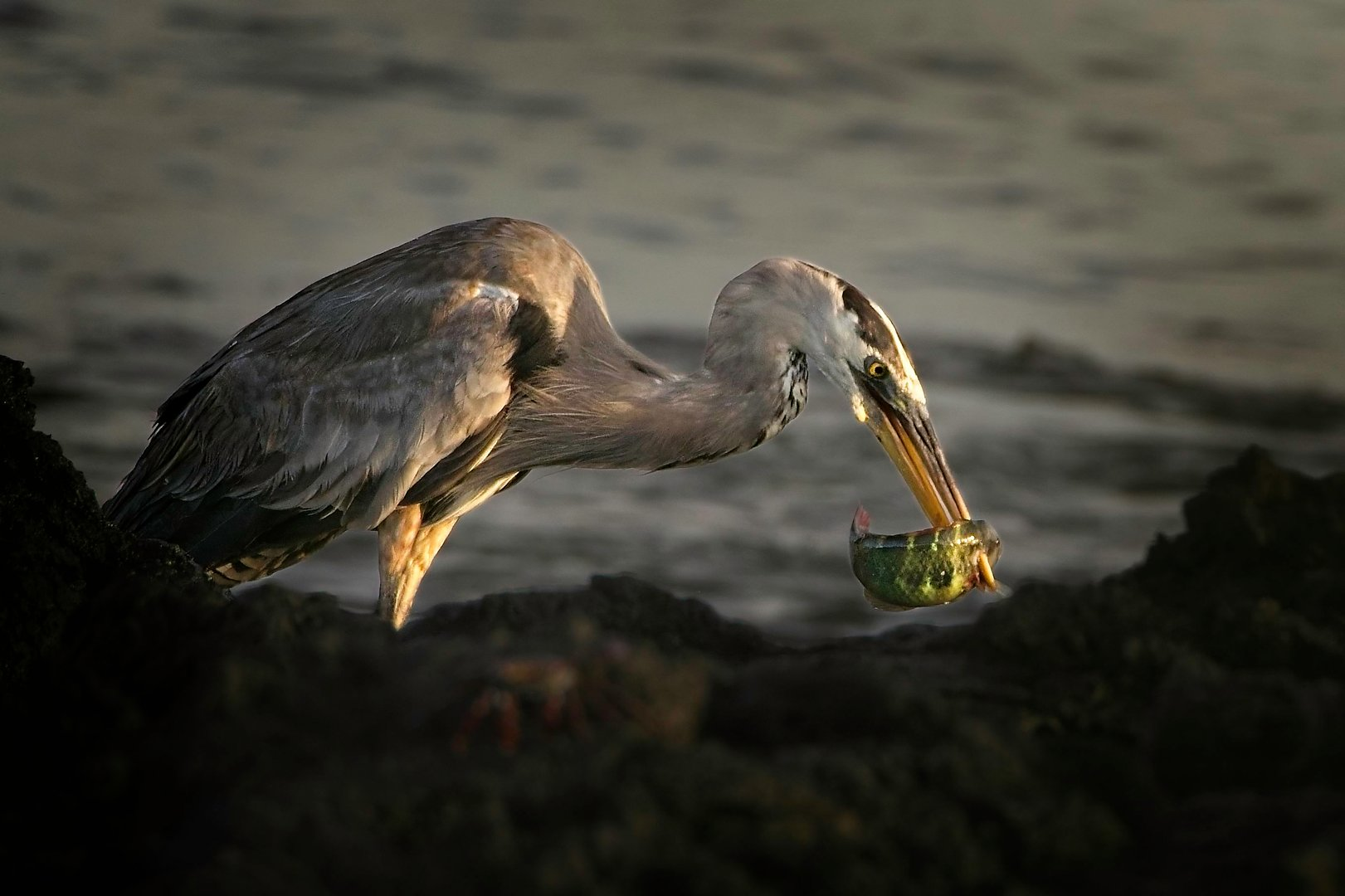
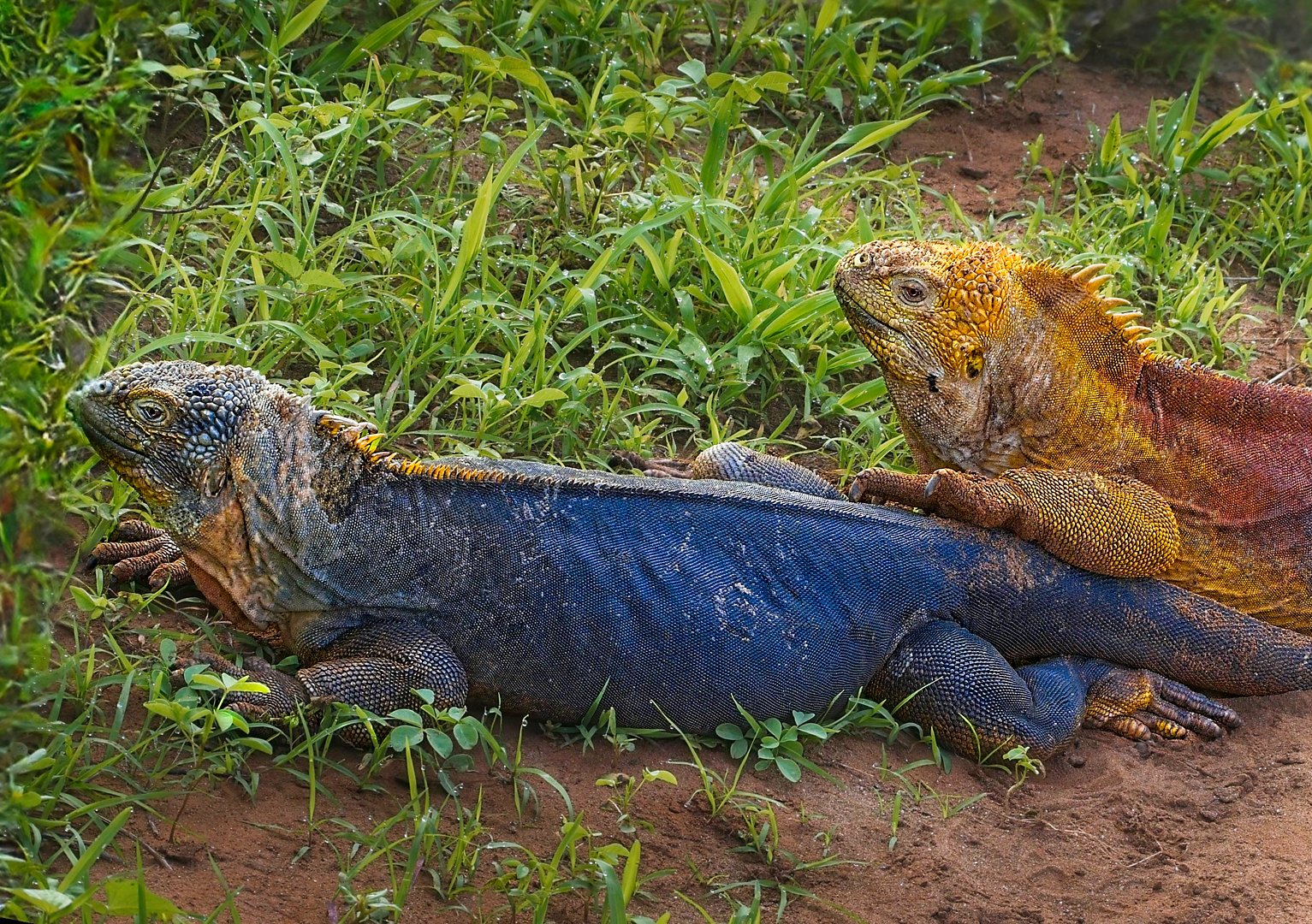
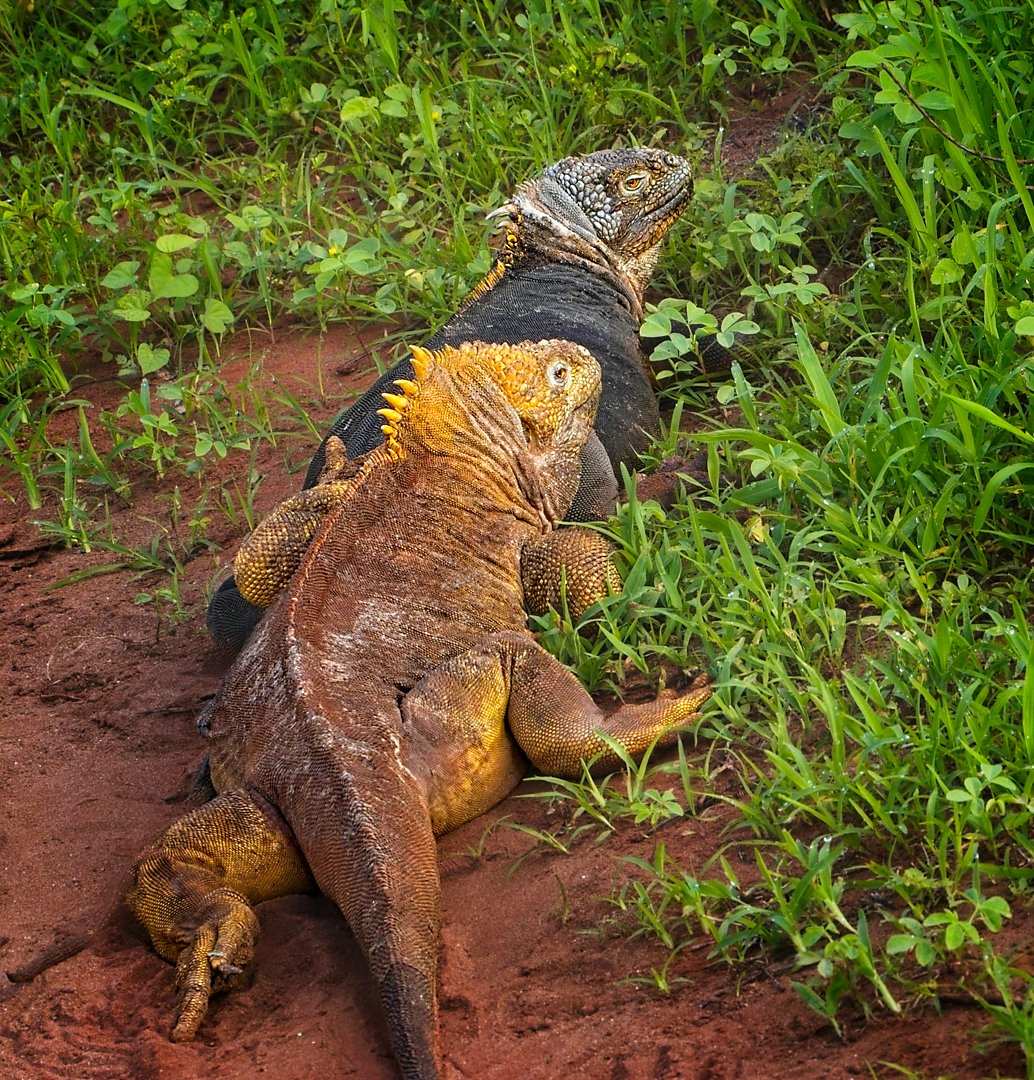
Santa Cruz was full of interesting shorebirds as well. As we made our first Zodiak landing on Santa Cruz we saw a heron fishing from the shore. Watching its technique was a bit unsettling. Santa Cruz is also home to a population of land iguanas, which we were lucky enough to see throughout an afternoon hike.
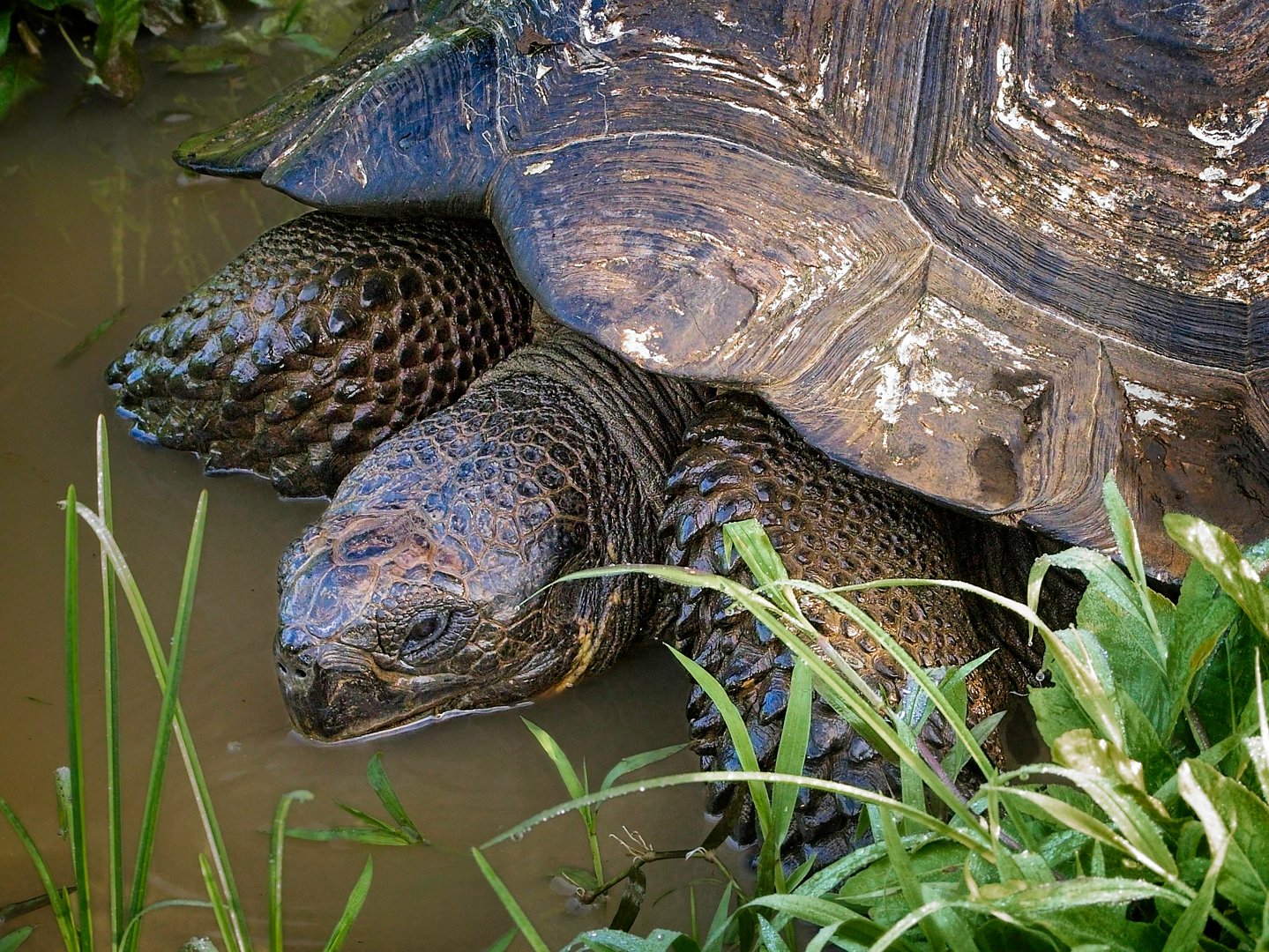
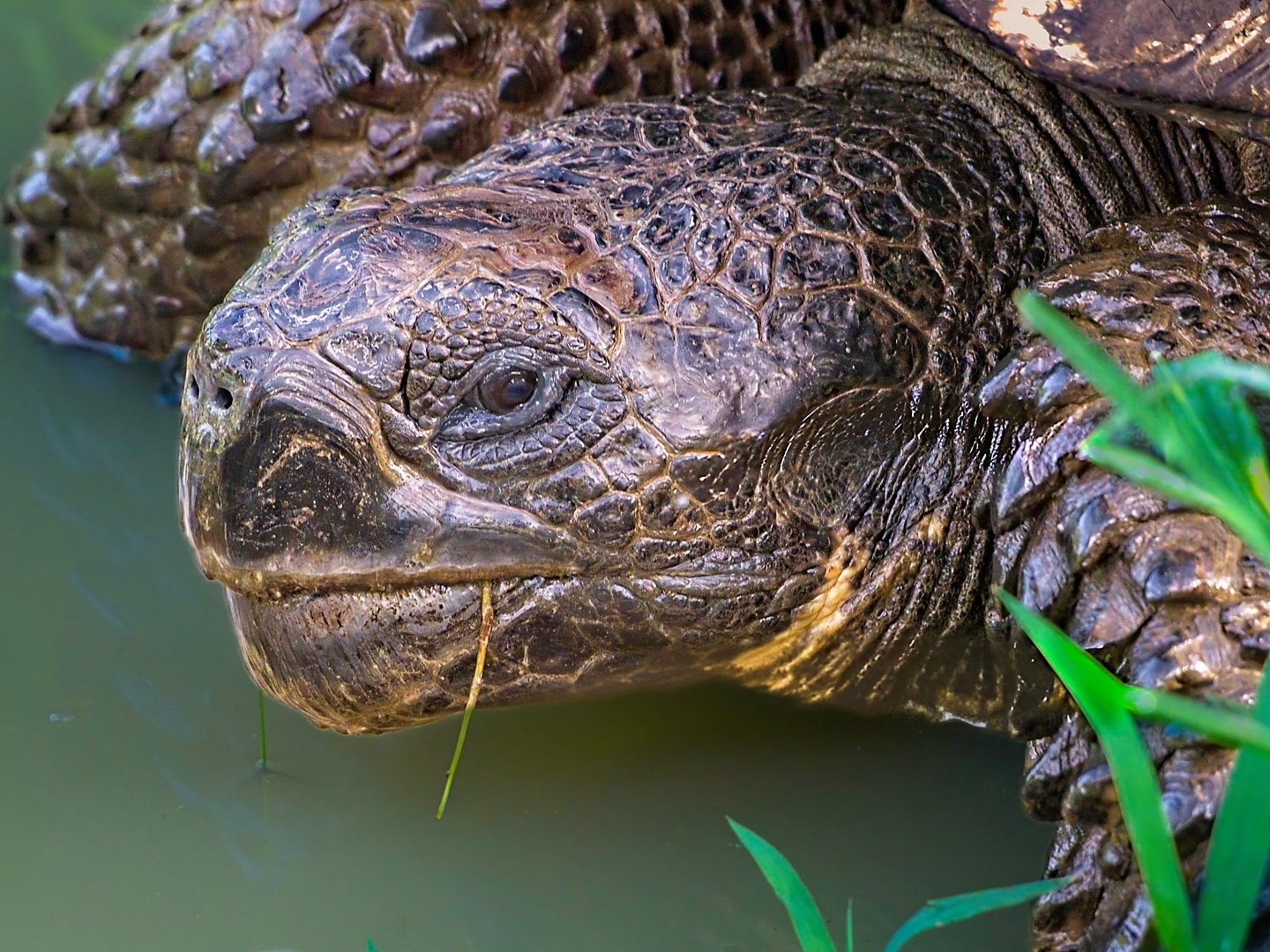
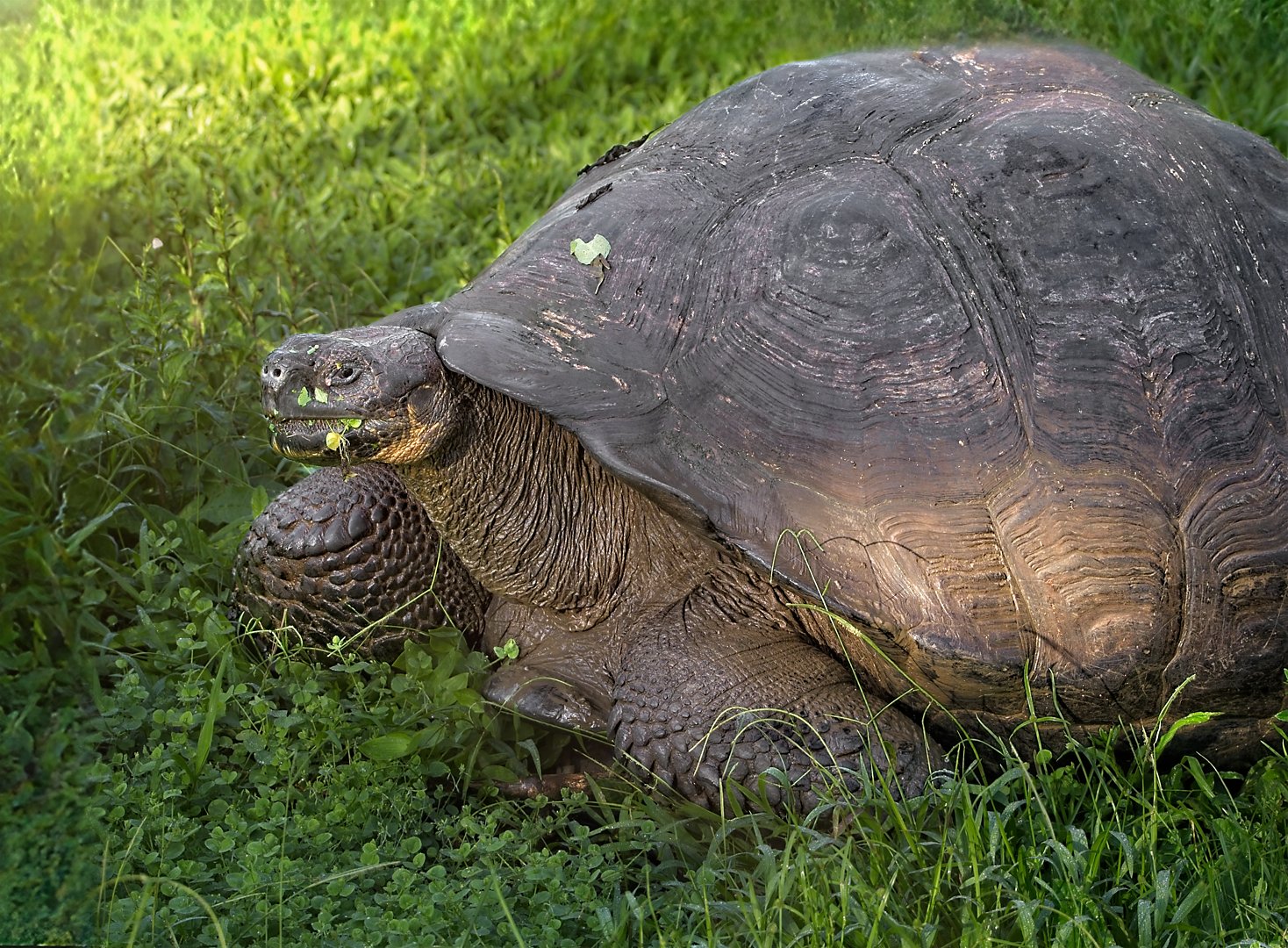
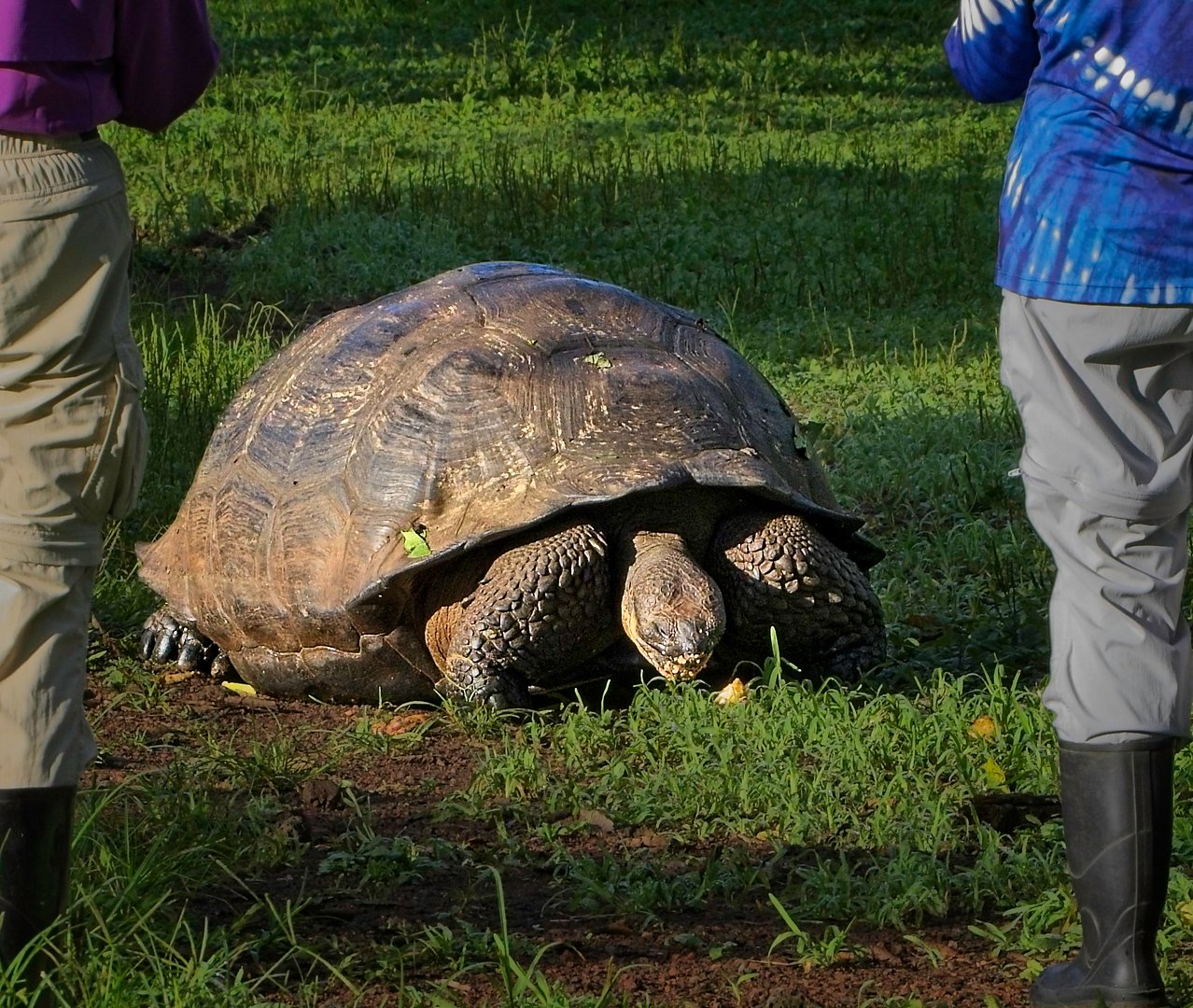
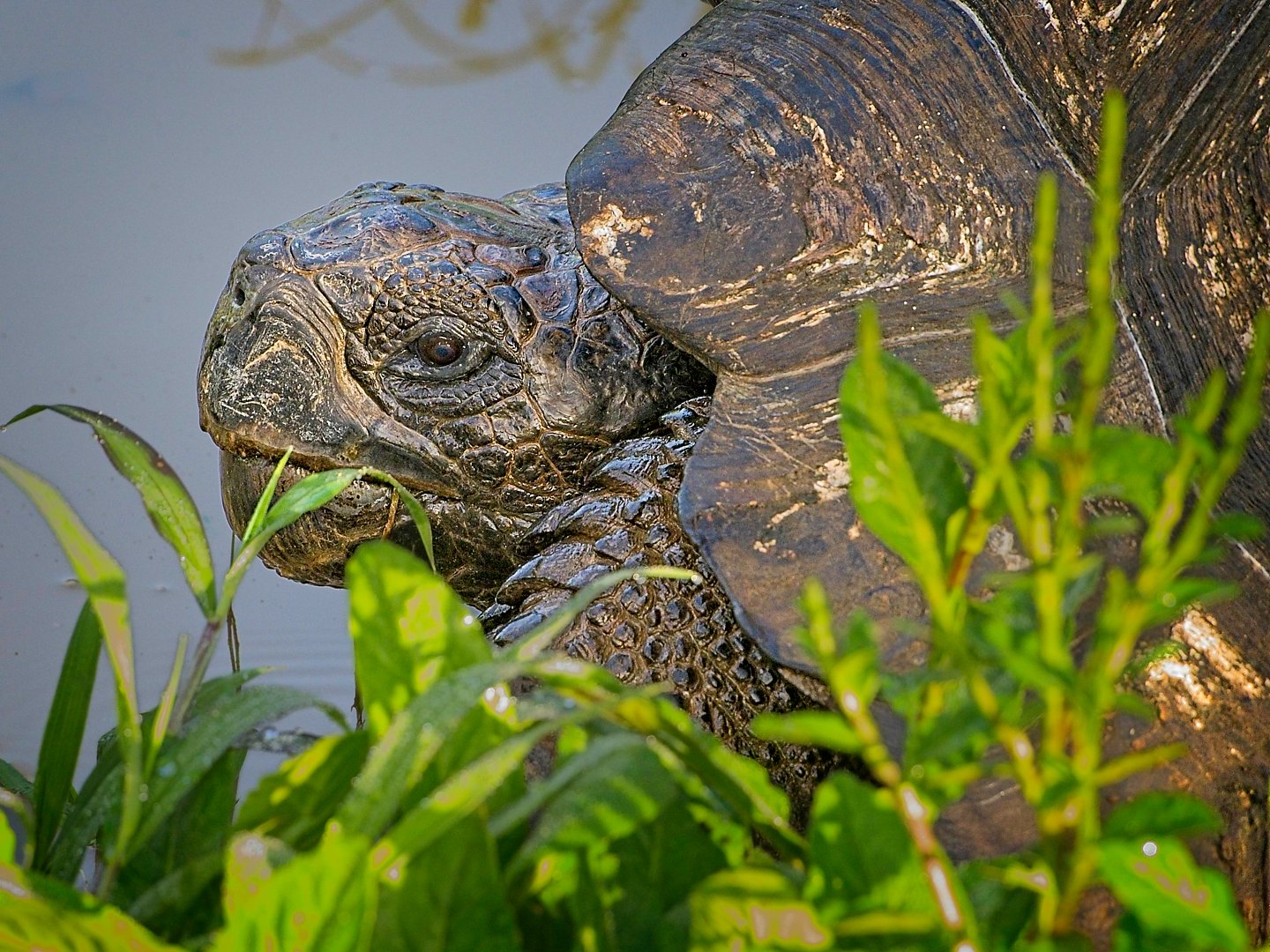
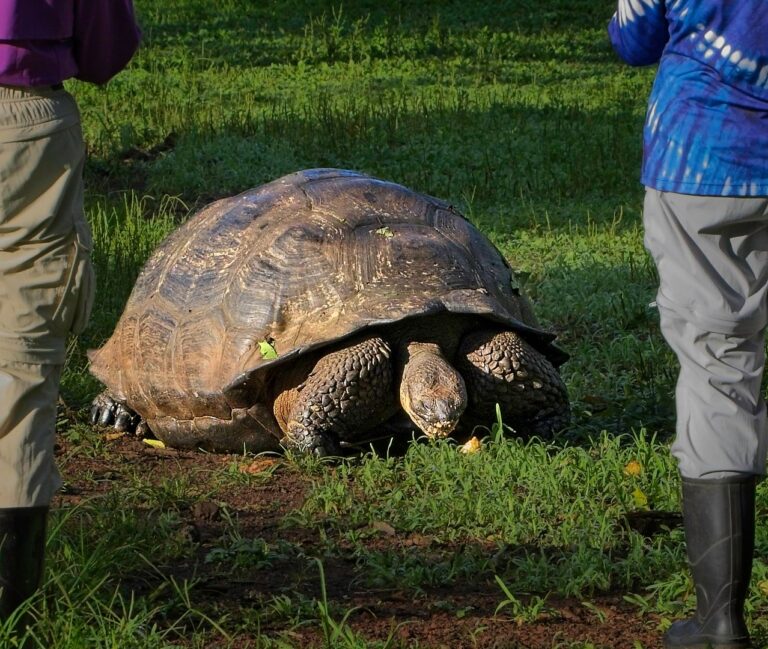
The morning of our last day on Santa Cruz was spent at a reserve where we had another opportunity to watch giant tortoises walking around freely. We were able to get very close to them here for an intimate view of their size and behavior.
Birds of Floreana Island
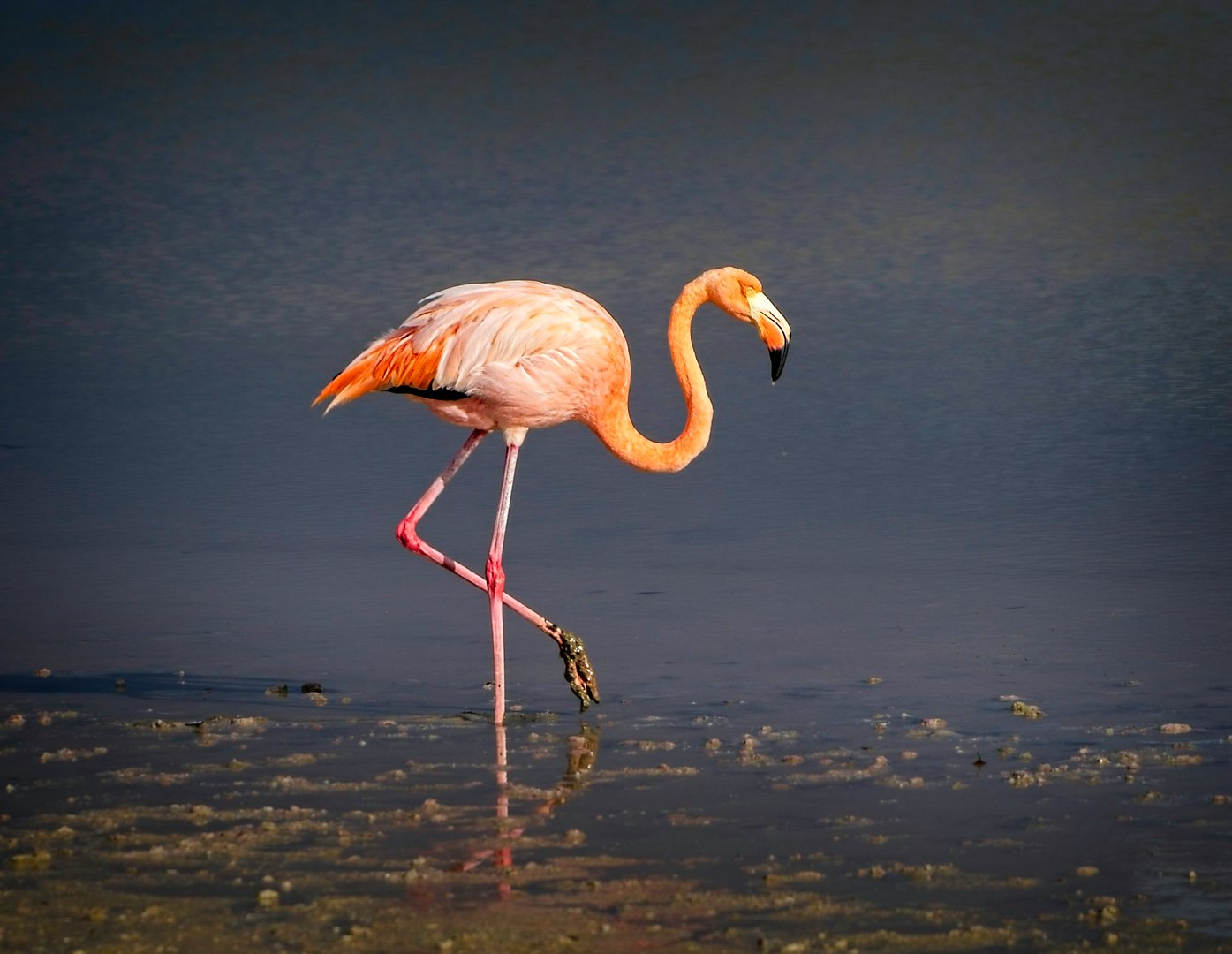
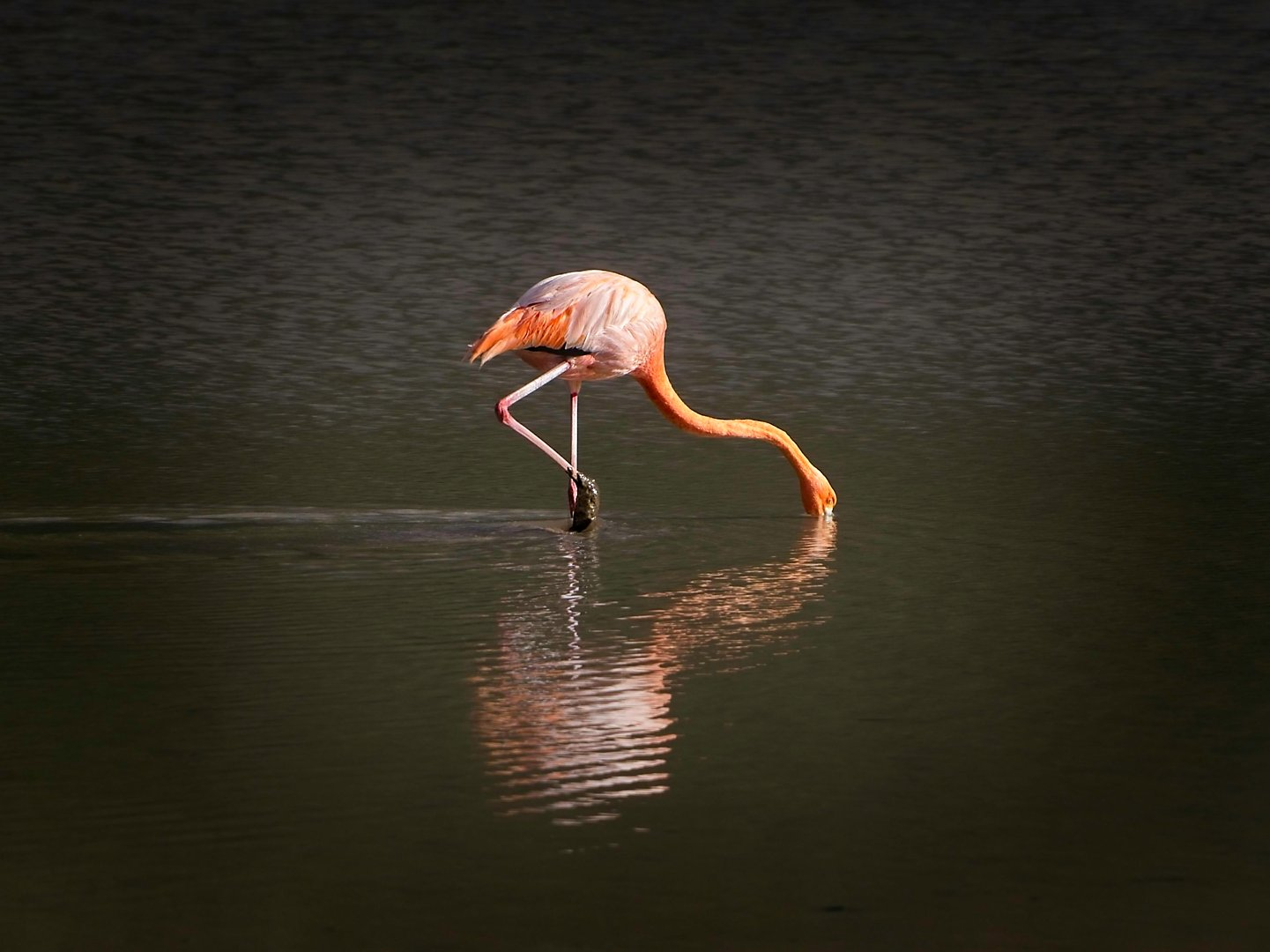
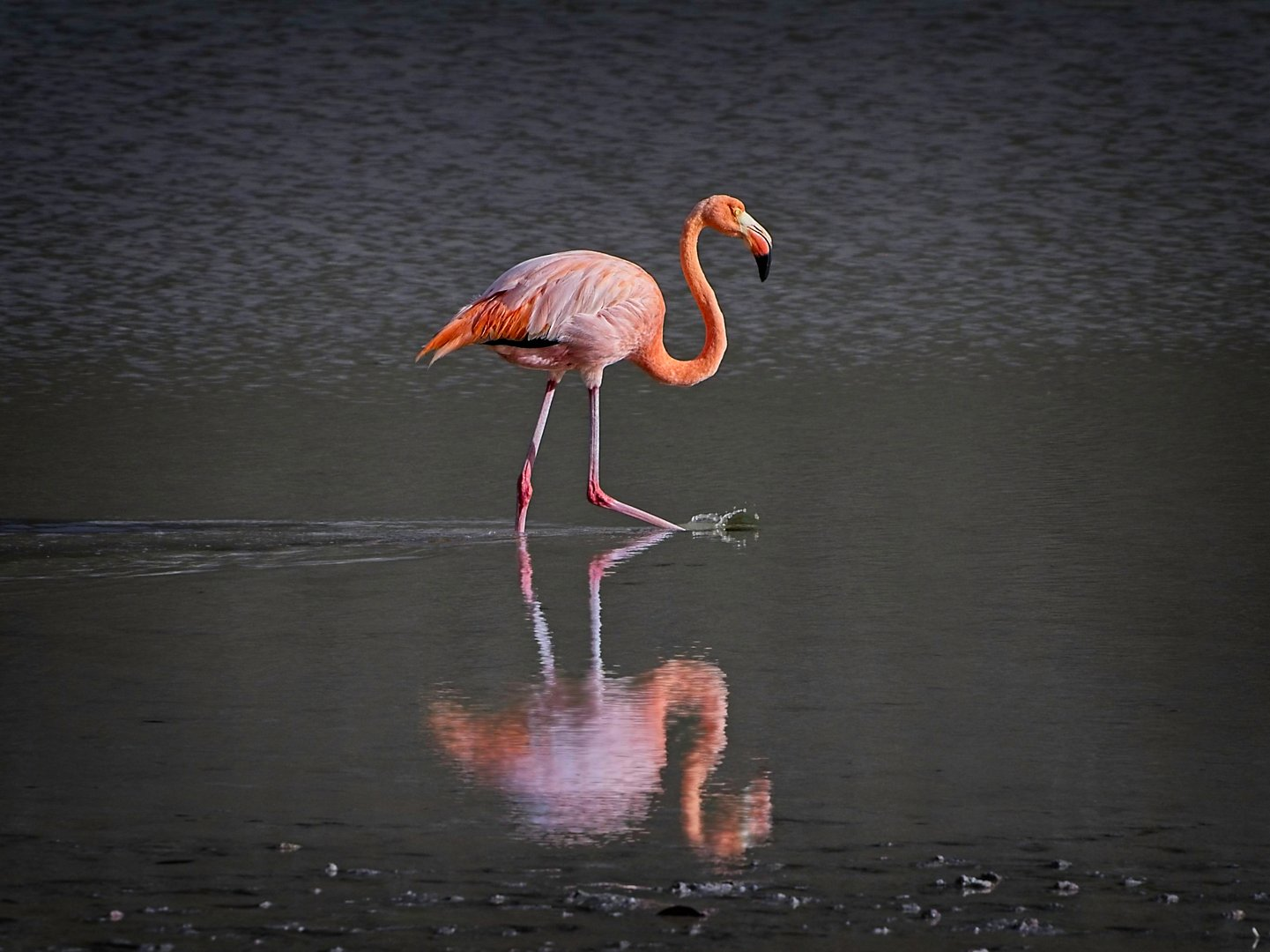
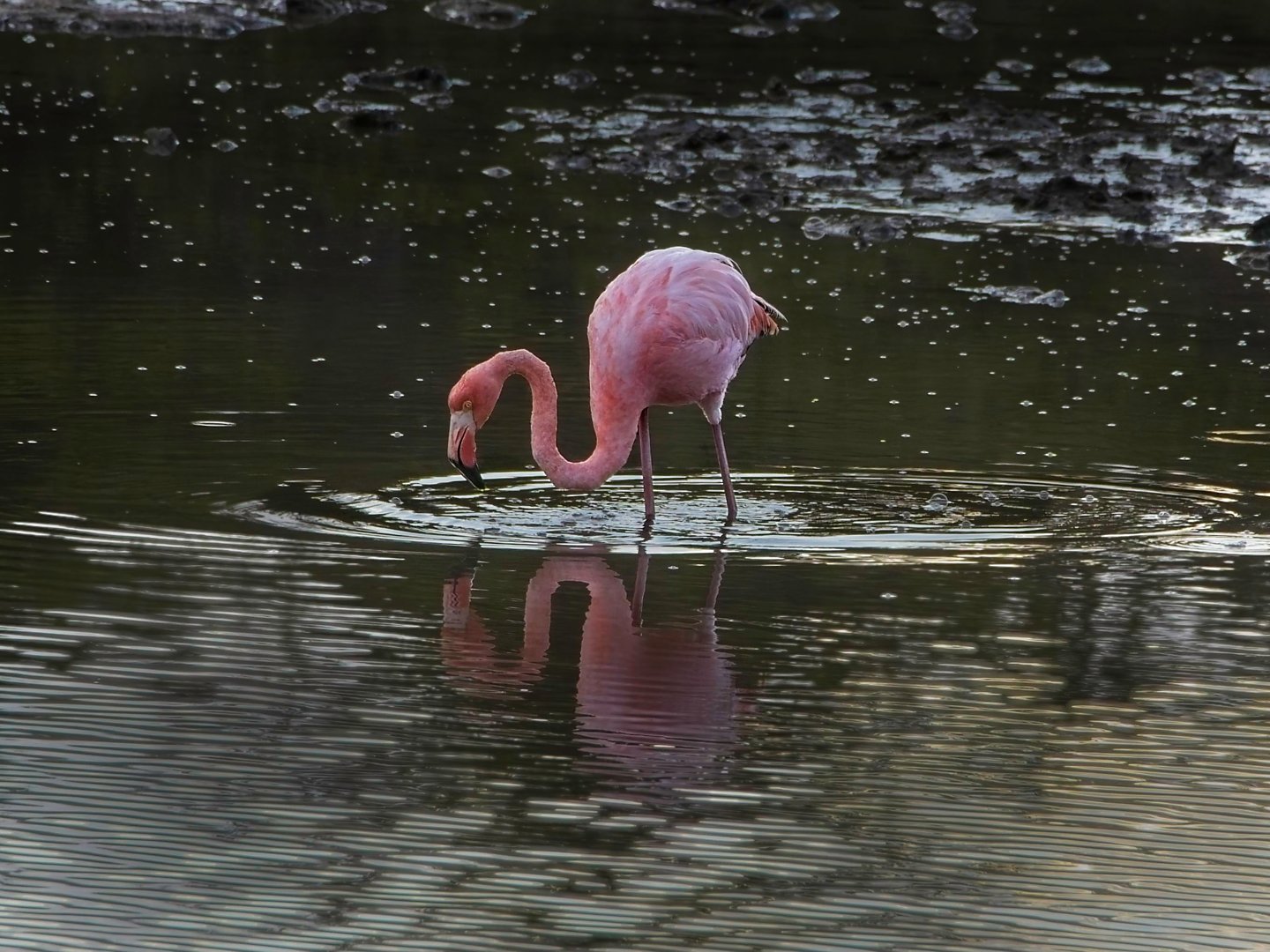
We saw several different bird species on Floreana island but the most memorable and impressive for me were the Galapagos Flamingos. We followed a wooded trail from the beach to Punta Cormorant lagoon, which was full of these majestic birds looking for shrimp at the start of the dry season. Flamingos feed by disturbing the shallow brackish water and inverting their unusual curved beaks to siphon and filter their food. In turn, the pigments in the algae, crustaceans and microscopic plants provide their iconic pink coloration.
Our hiking trail skirted the lagoon at some distance. For many shots I needed to use my Olympus 75-300 mm zoom
(150-600 mm equivalent) at its longest focal length. All the shots were hand-held, so the Olympus’ excellent in-body image stabilization saved the day. It was hard to choose from the many shots of these graceful birds posing with their reflections. Some were also displaying their beautiful black underwings which are usually only visible in flight.
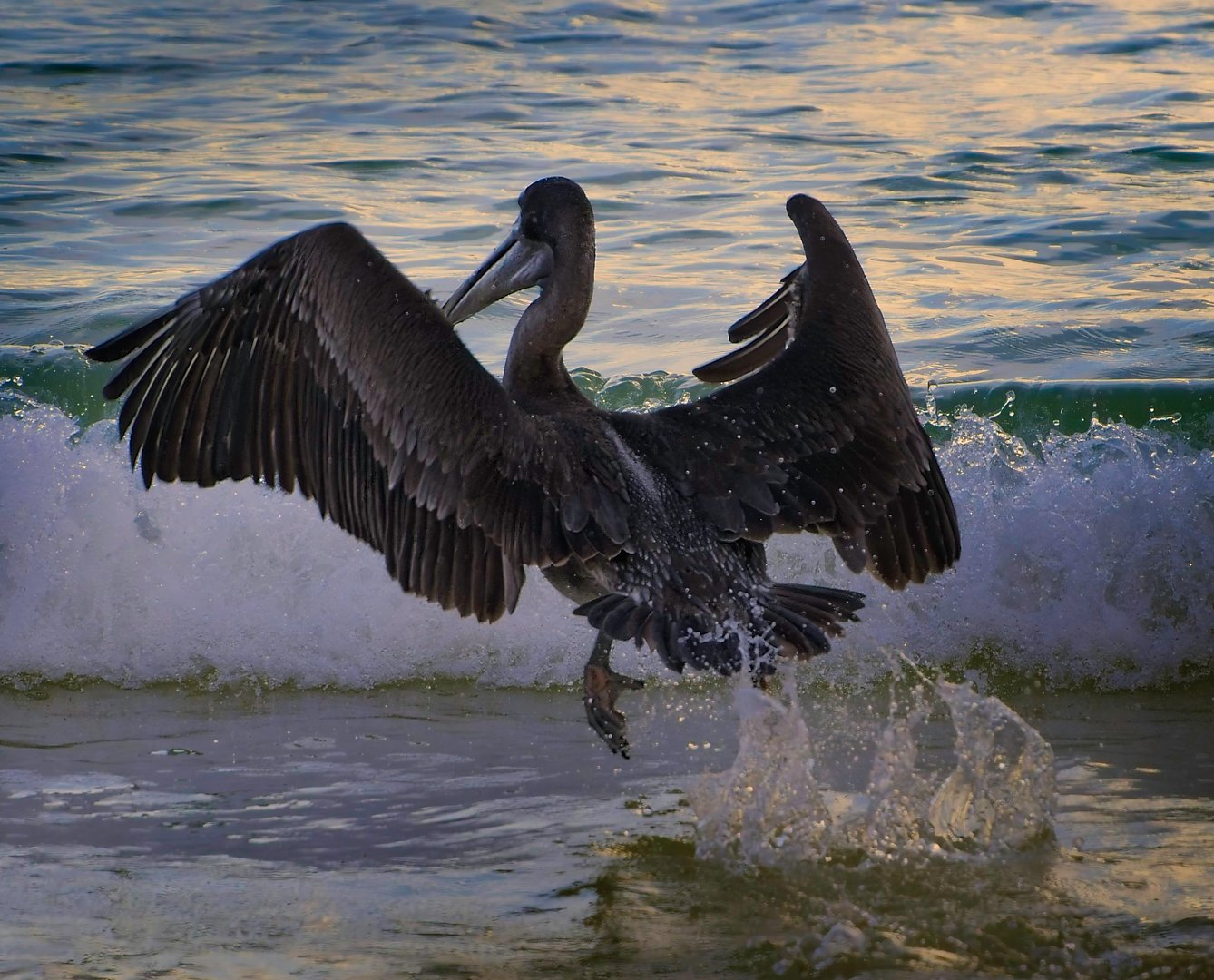
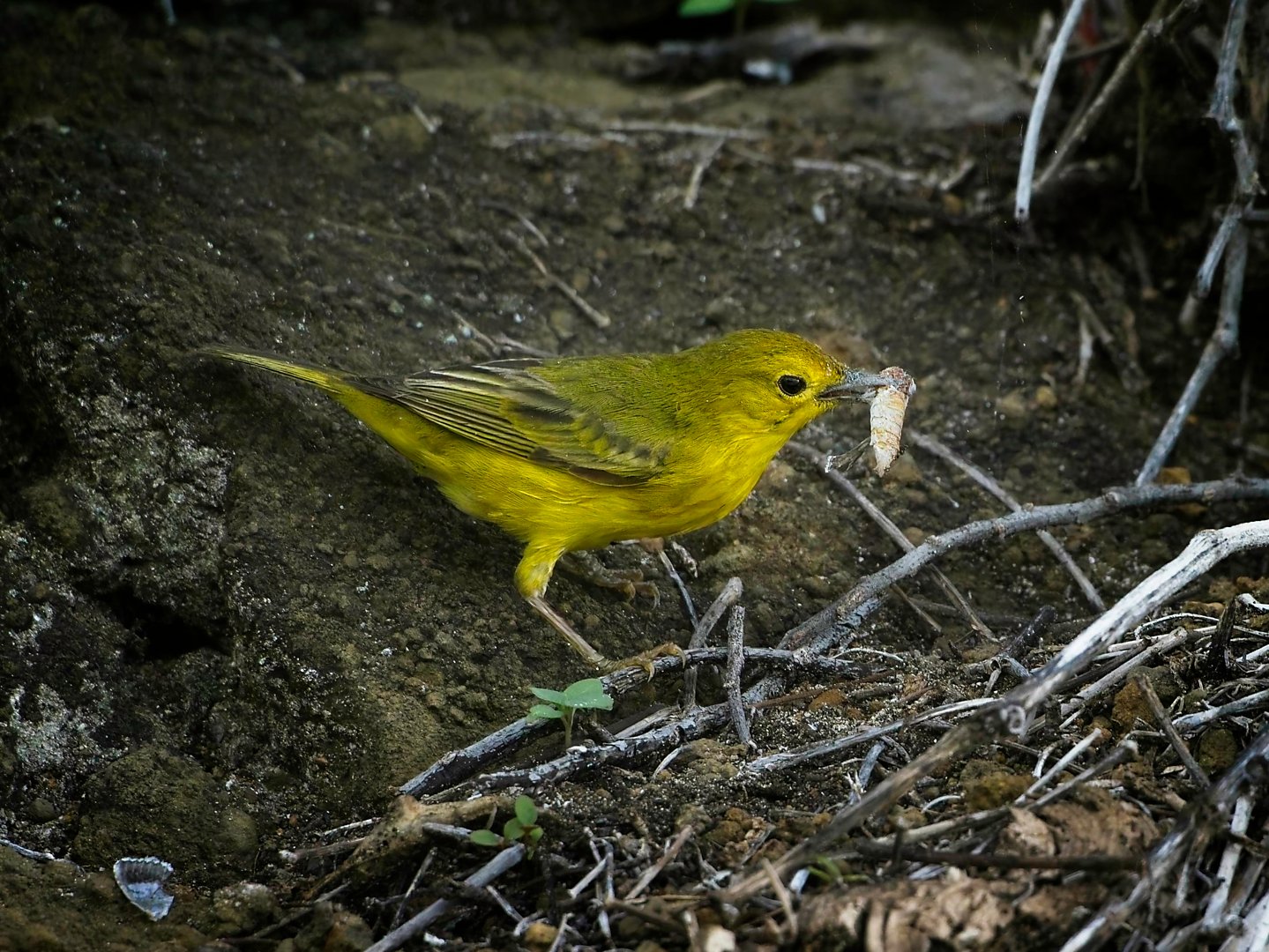
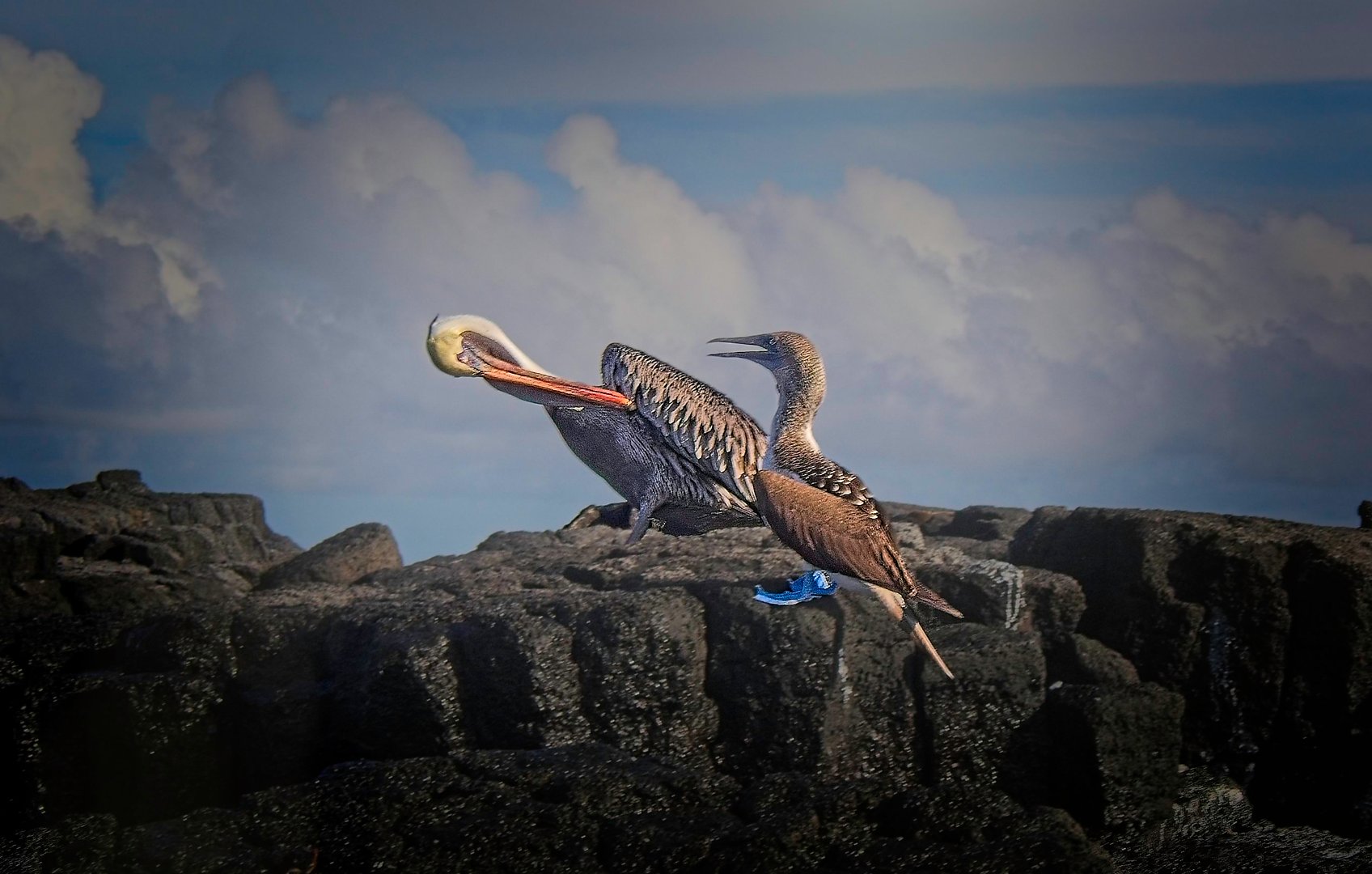
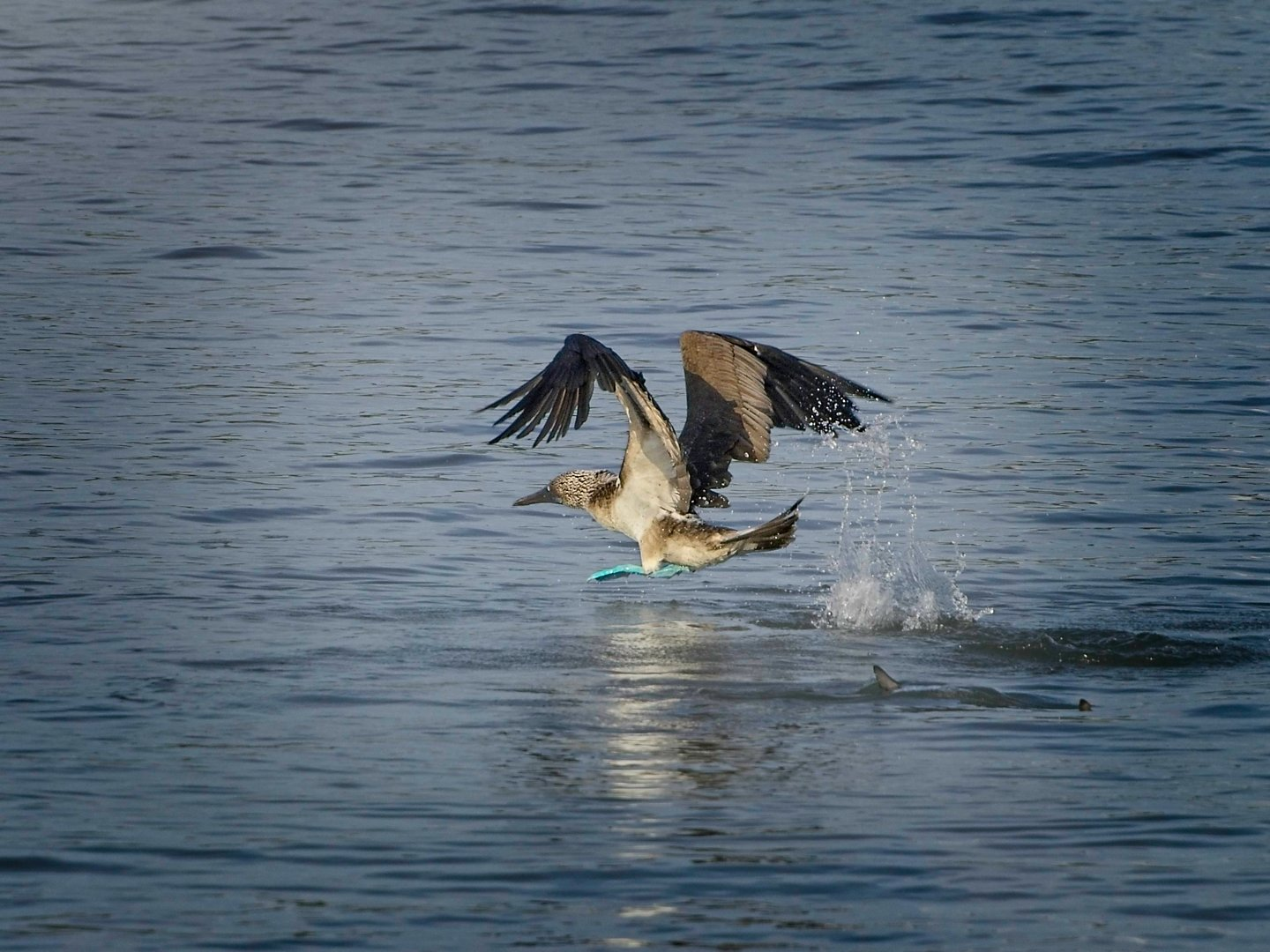
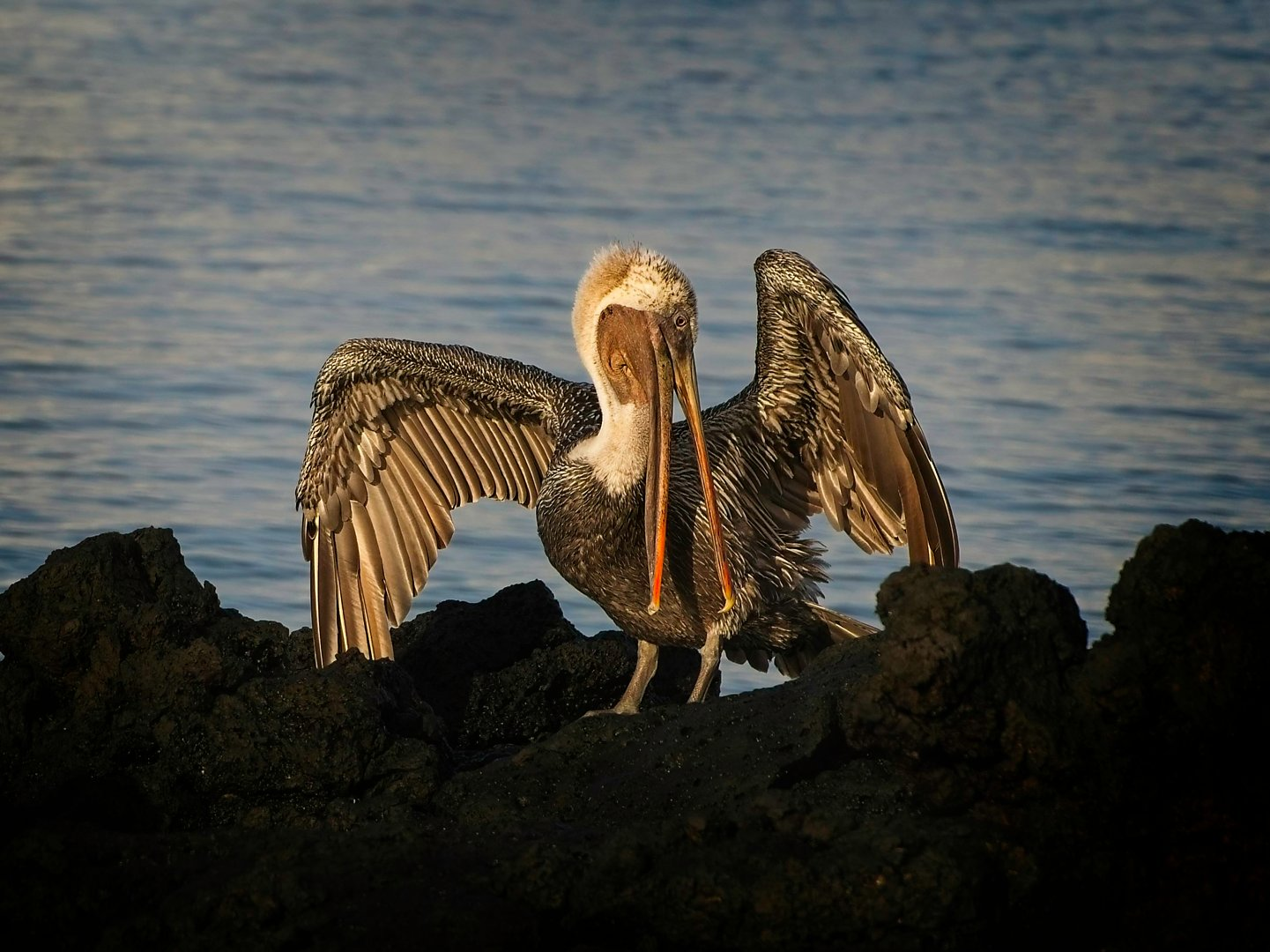
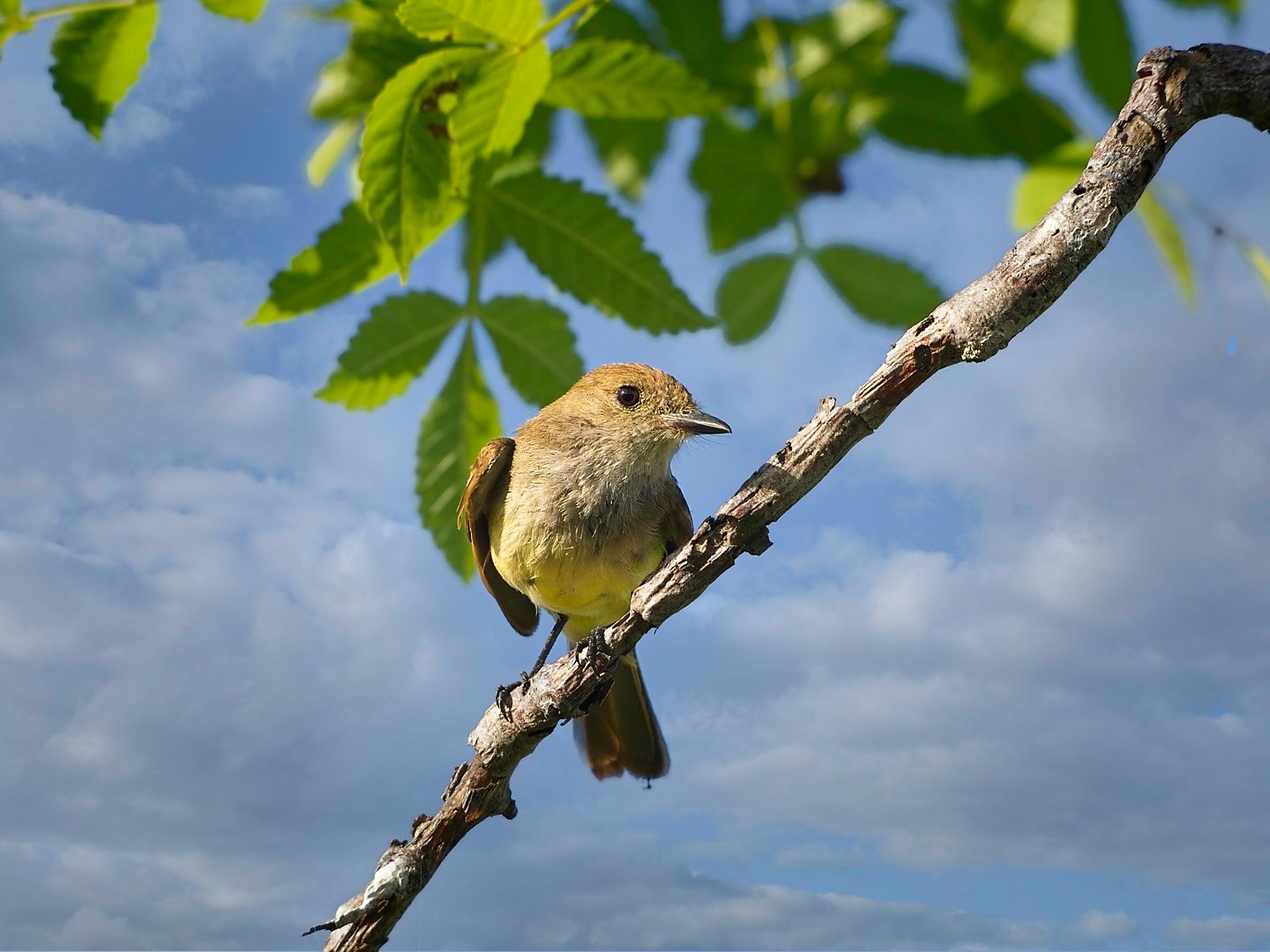
After visiting the flamingo lagoon we headed back toward the beach where I was able to photograph a Galapagos hawk and a yellow warbler that was working very hard to catch a meal. And more pelicans in action, including one that was not too pleased to share its rock with a blue-footed booby.
Select photos for enlargements.
Underwater
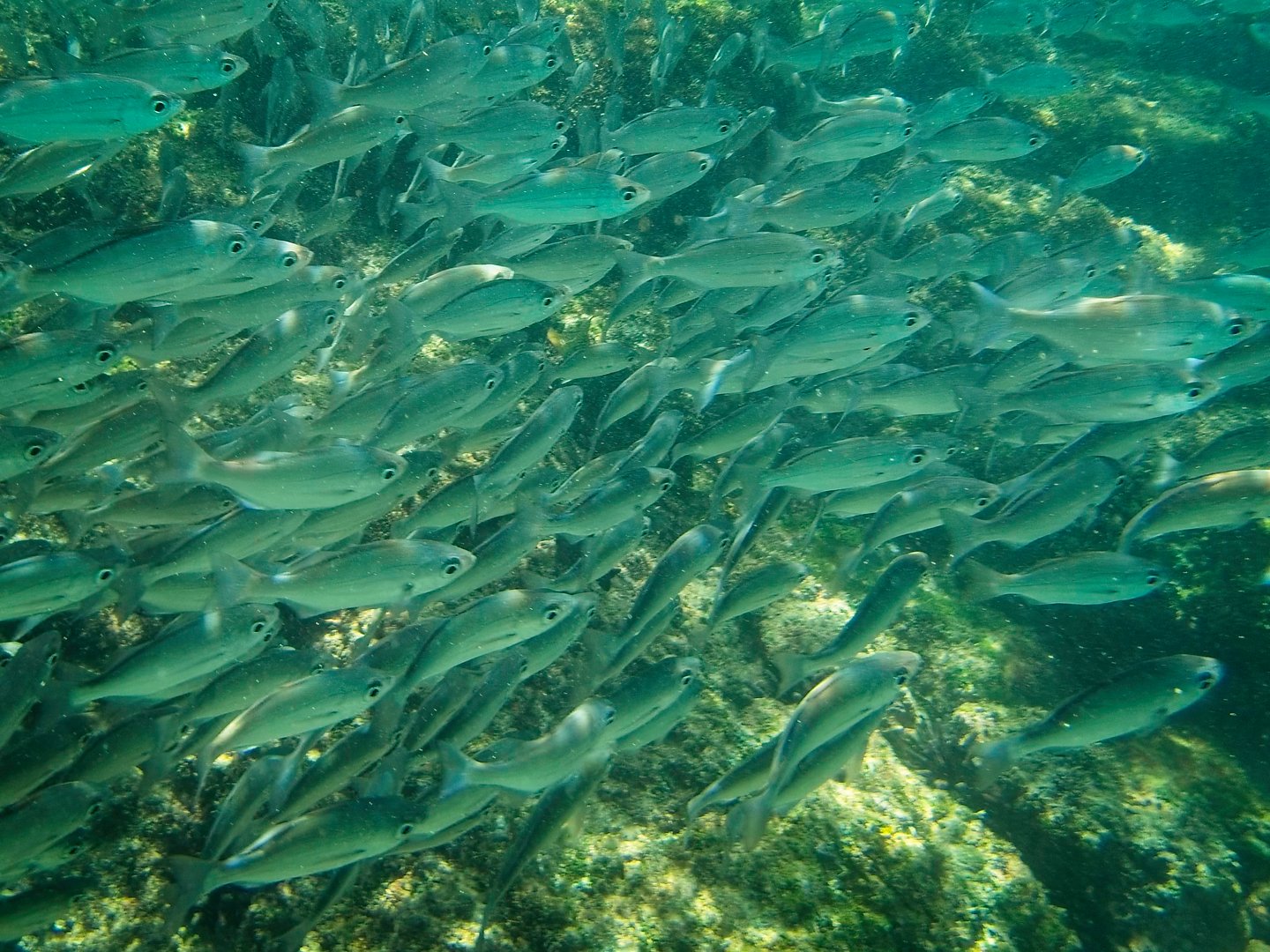
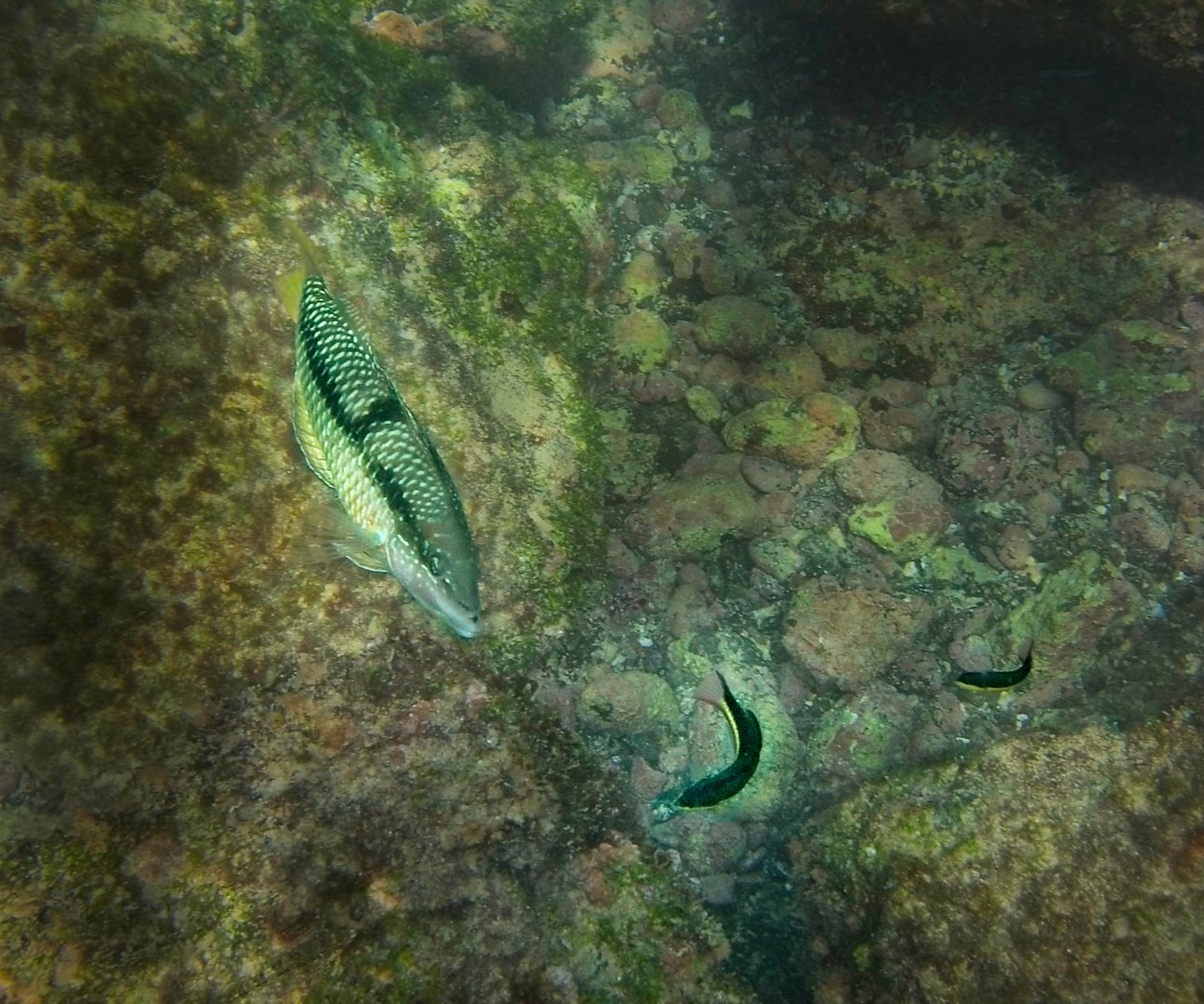
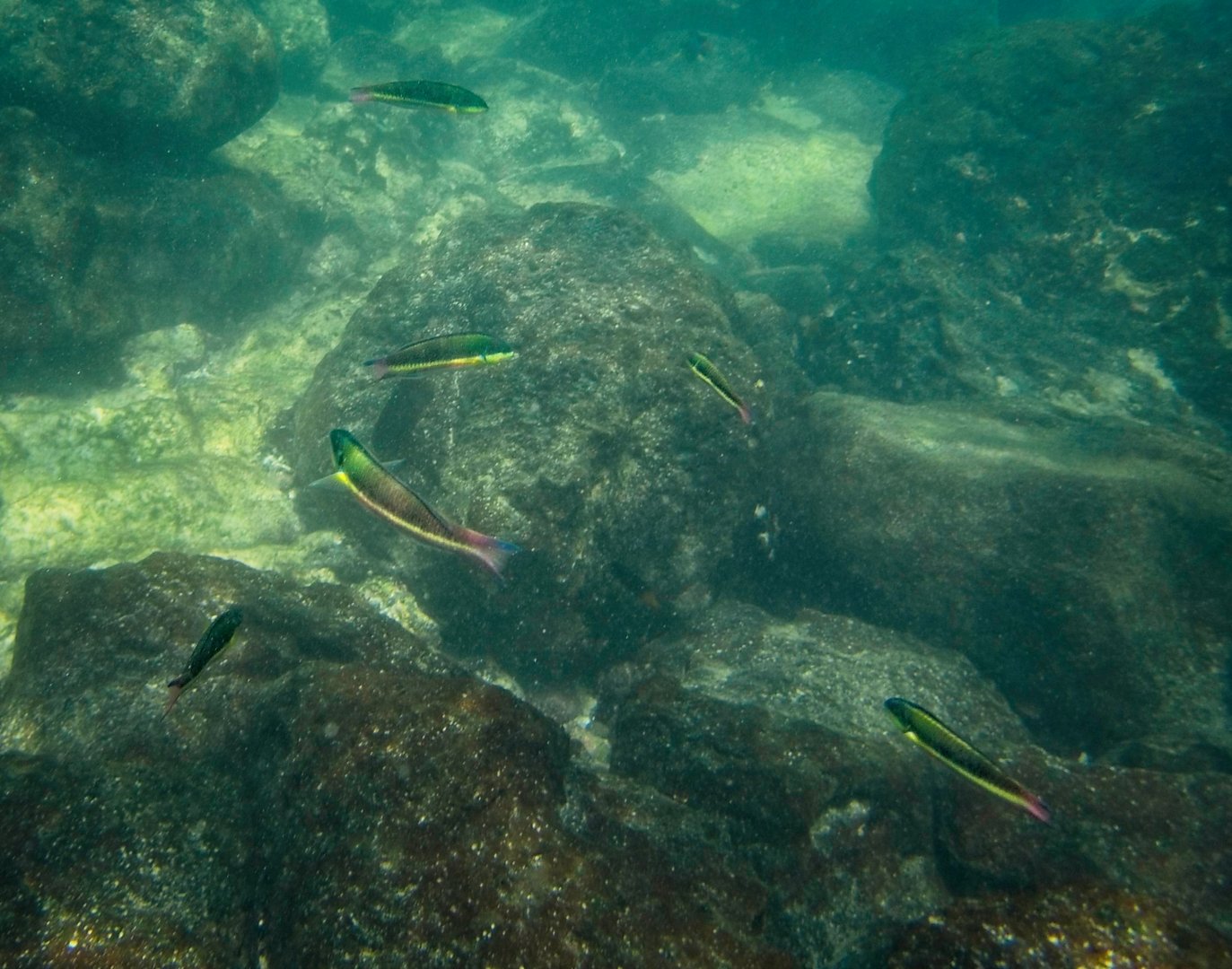
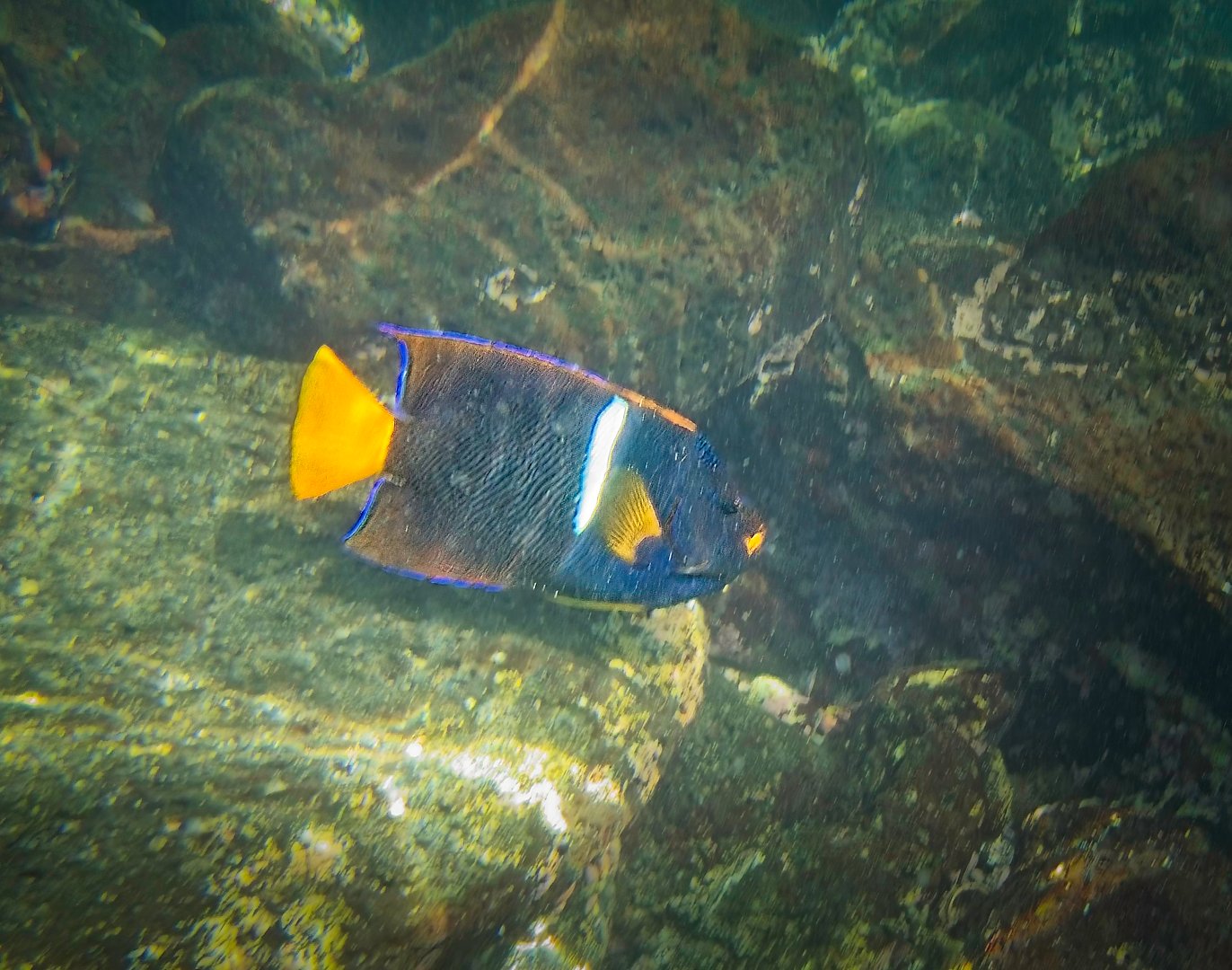
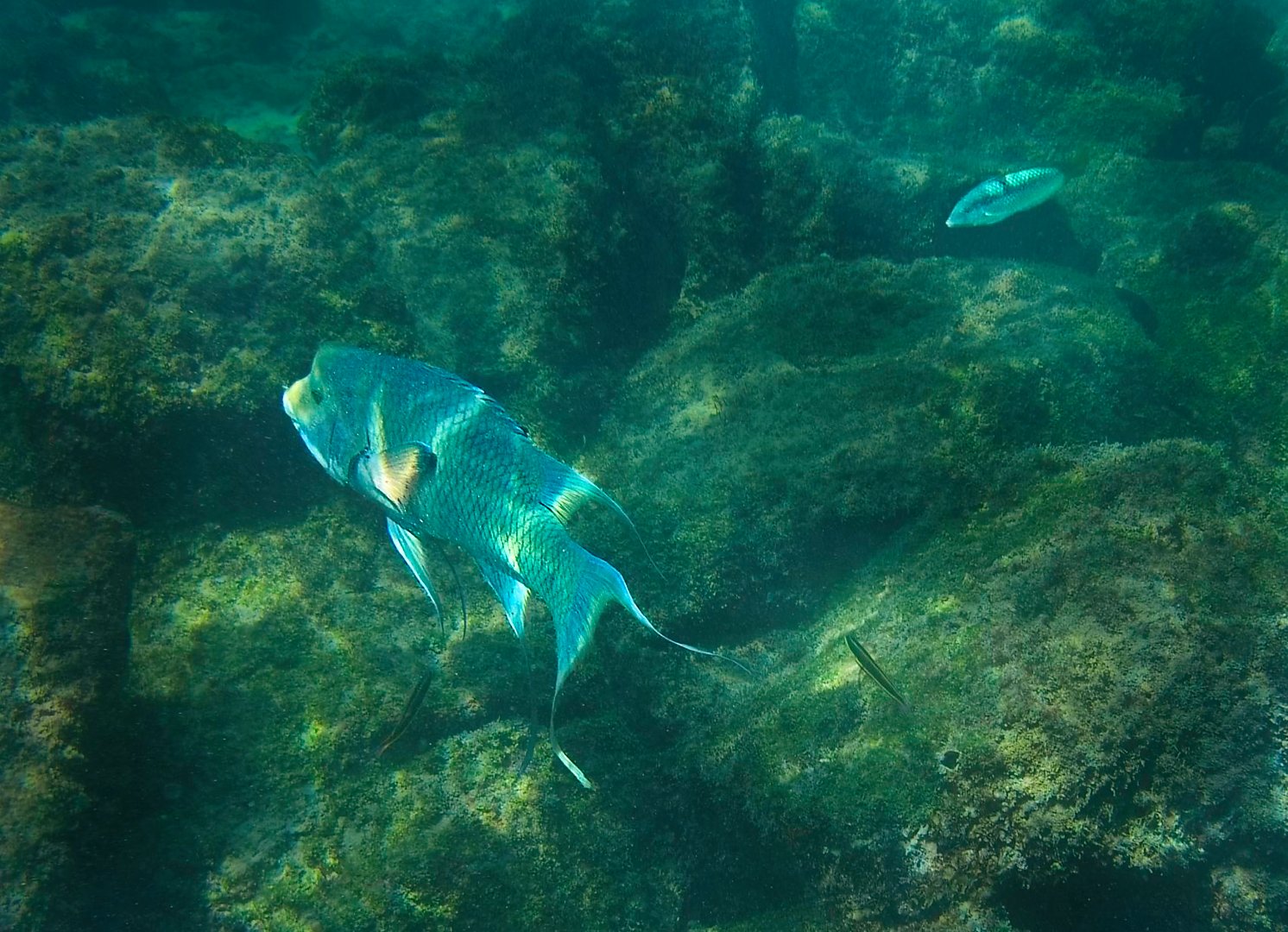
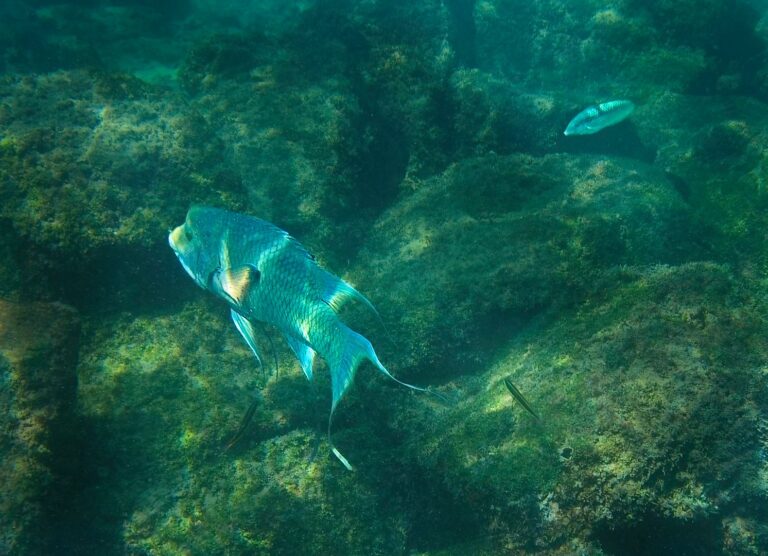
We did some snorkeling off the shore of Floreana Island which gave me another chance to use the rented Olympus TG-6. Learning to snorkel and juggle this unfamiliar camera was harder than I expected, and I should have prepared myself better. But I took some decent shots of the more well-known reef fishes, including a king angelfish.
Birds of Santa Cruz Island
Just as we landed by Zodiak on a rocky beach at Santa Cruz Island we were lucky to see a great blue heron fishing. Fortunately, I had packed my camera with the trusty 75-300 mm zoom in the waterproof bag, so I was already set up to click some interesting shots of the bird getting its breakfast. I waited around while the bird fished, and in the end both the heron and I were rewarded for our patience.
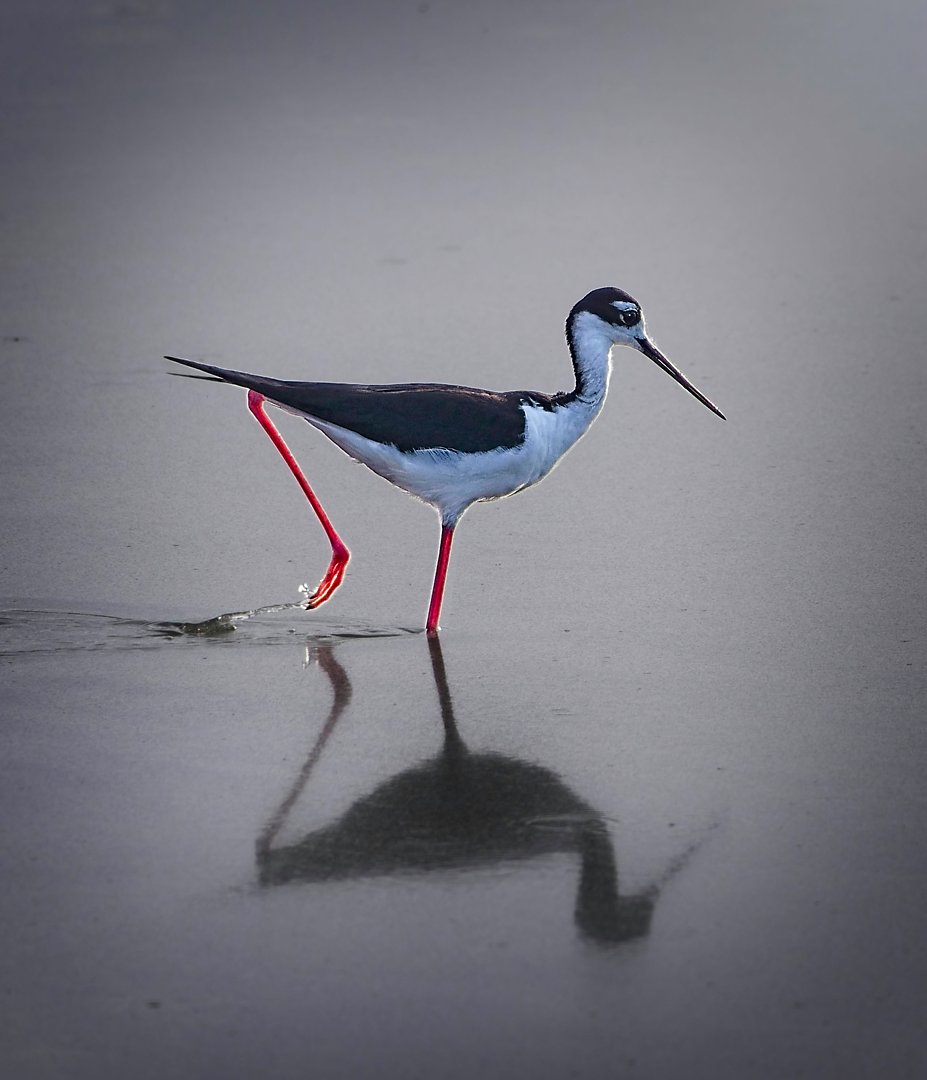
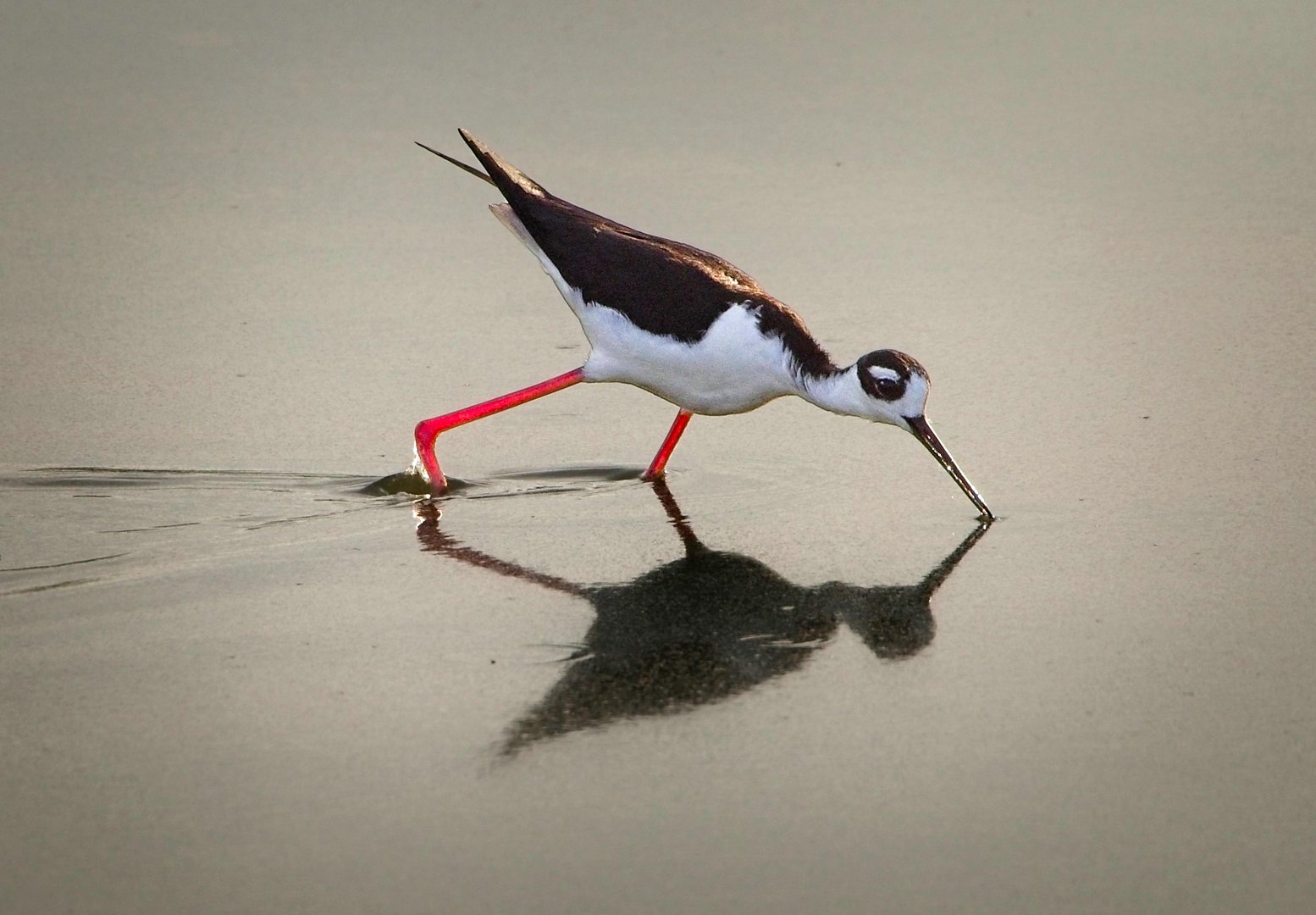
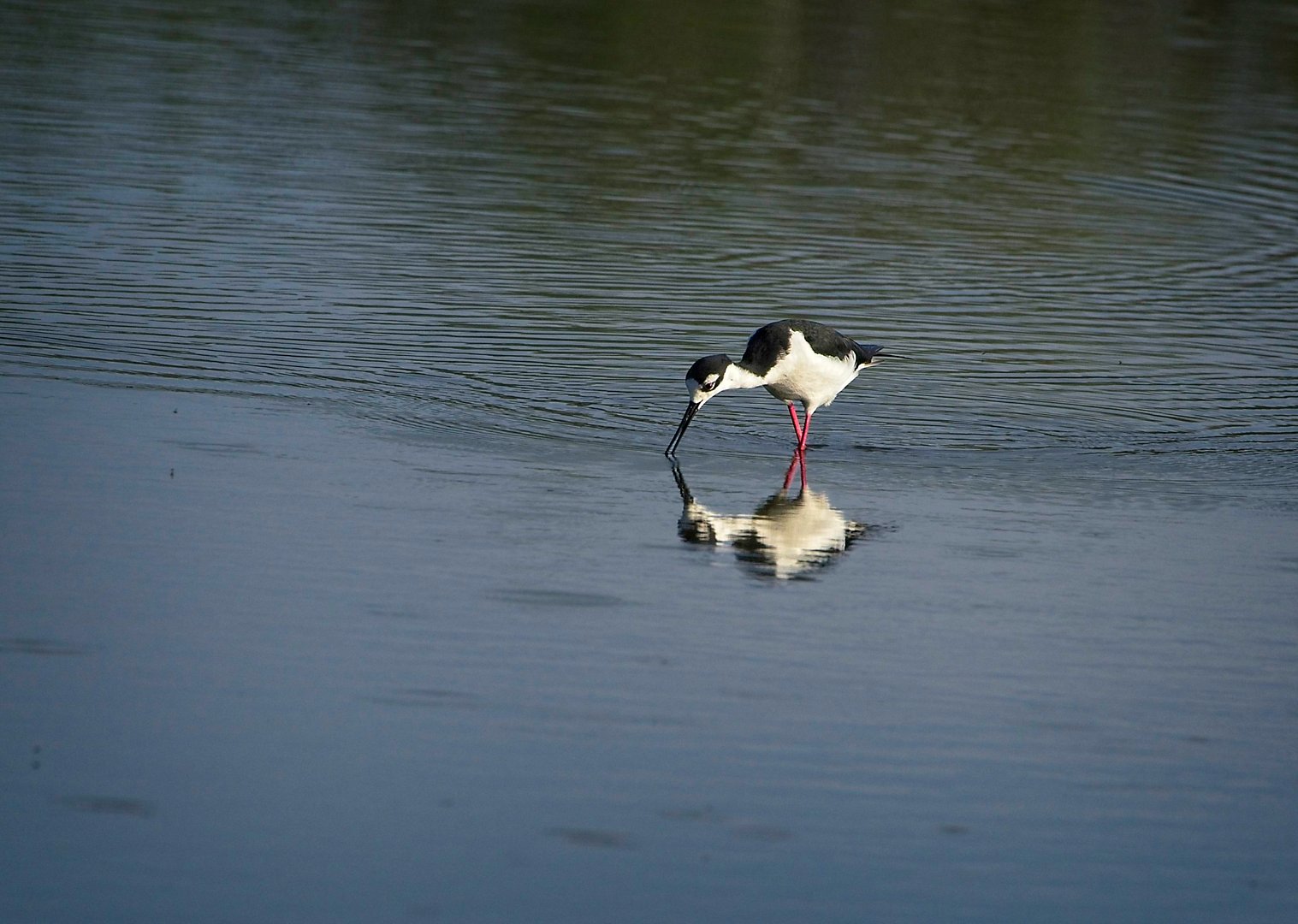
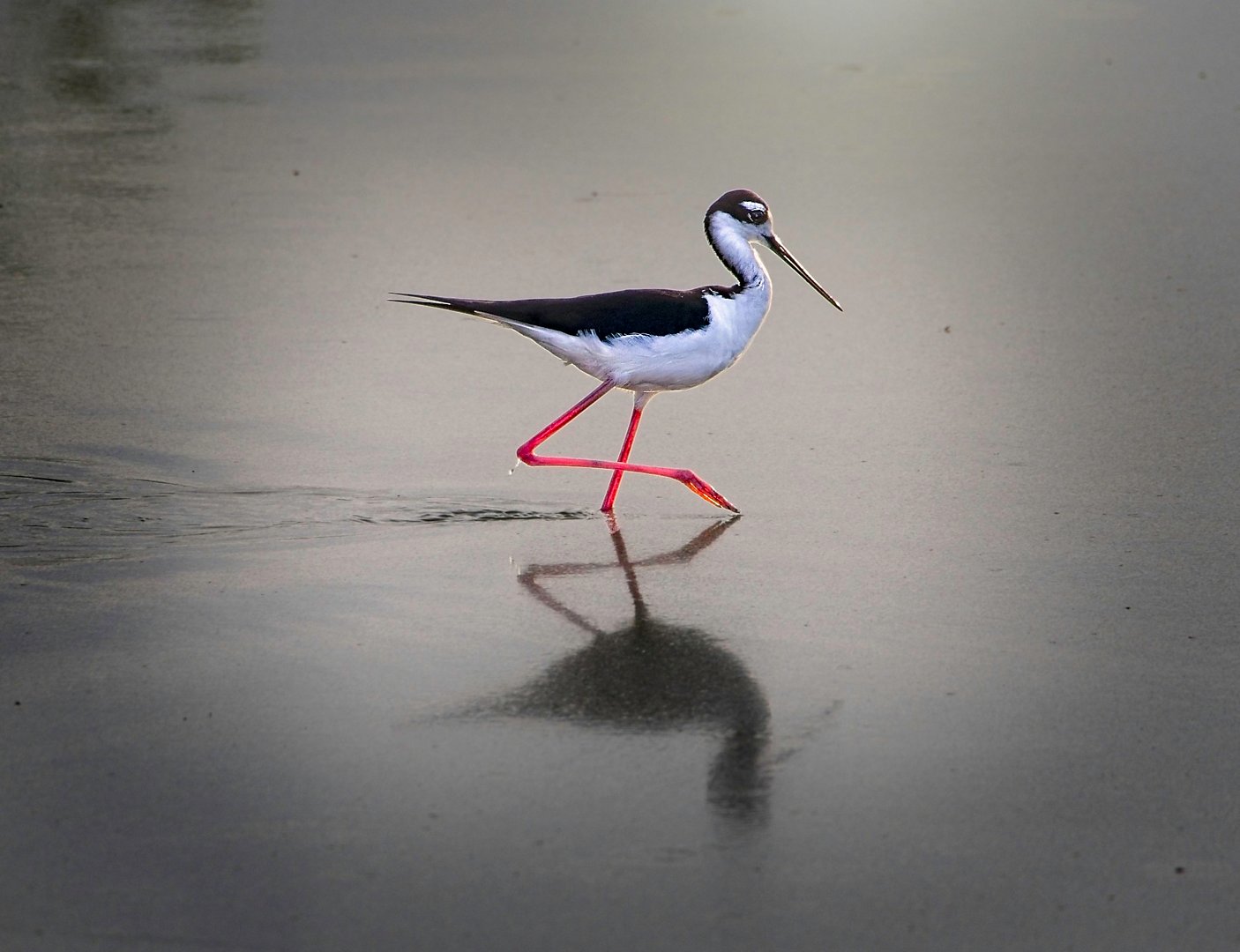
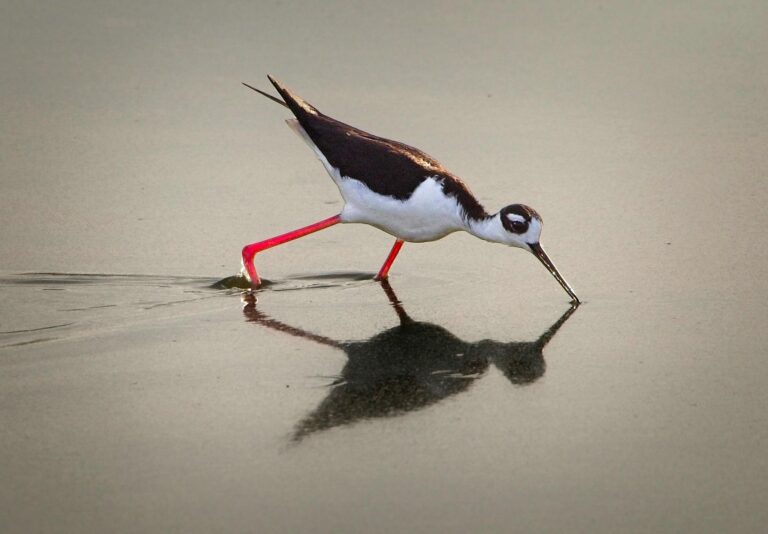
Later when we were exploring the beach I came upon some black-necked stilts strolling on the wet sand. This made for some of my favorite shots that day.
Tortoises and Iguanas
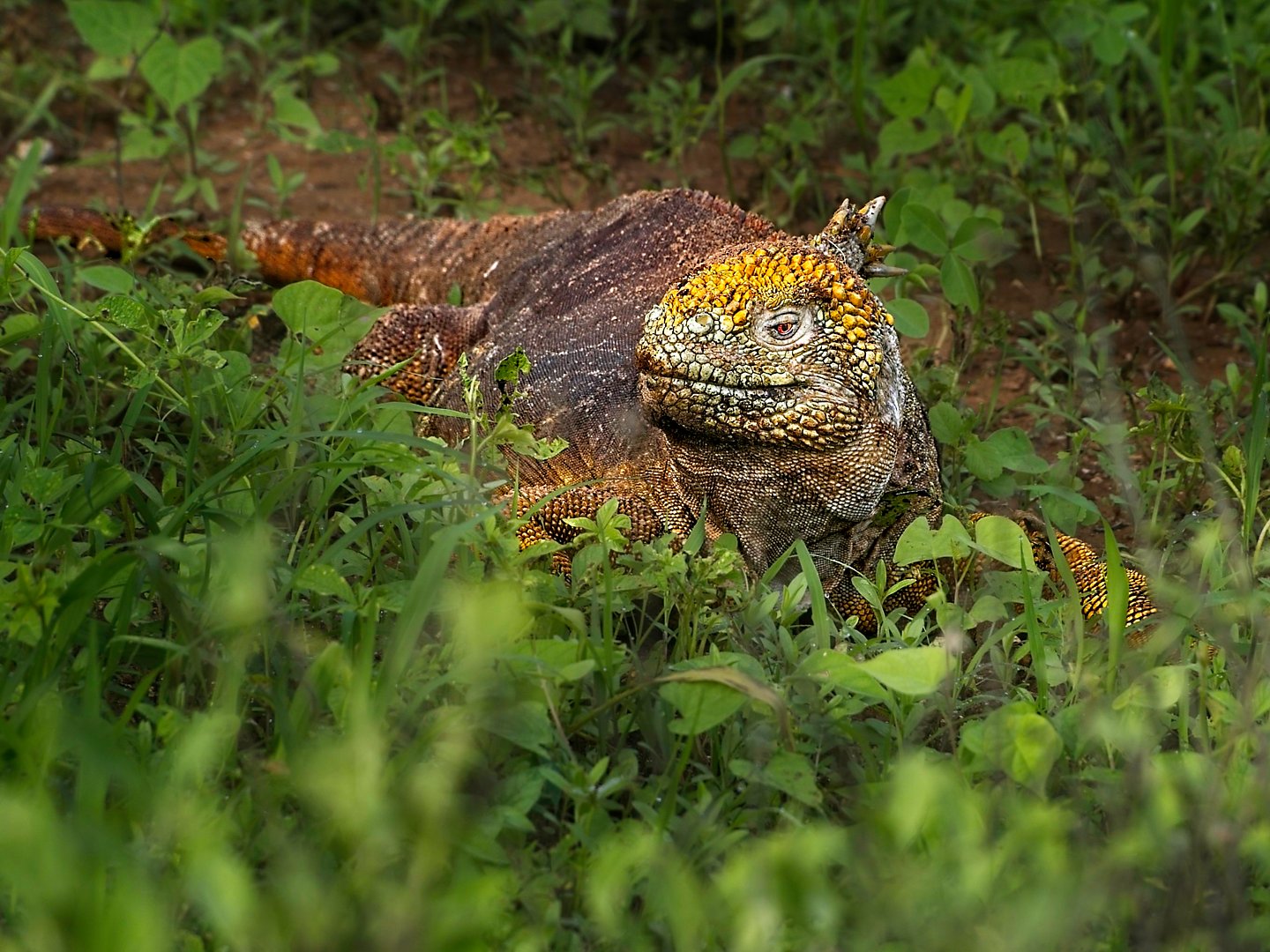
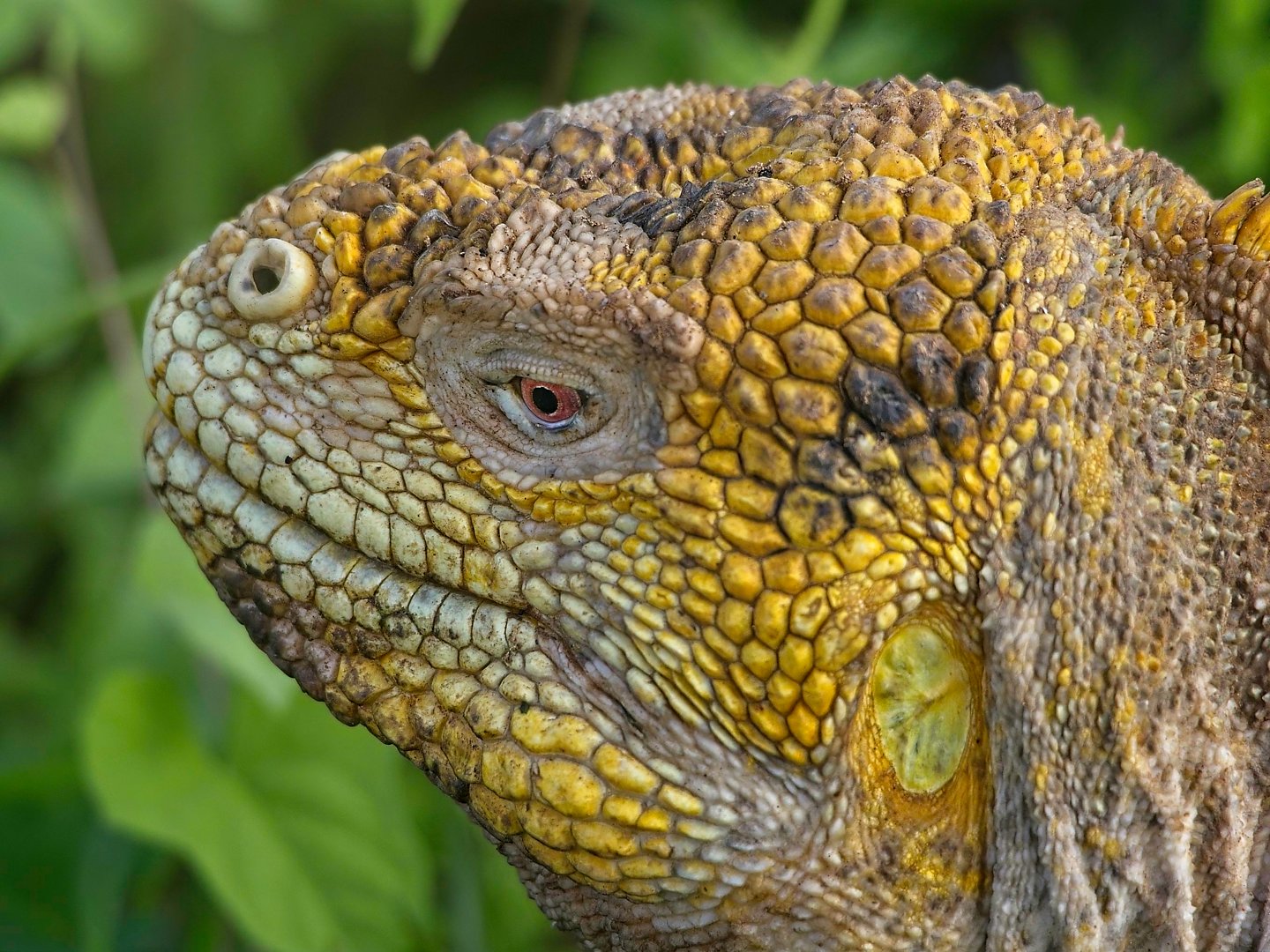
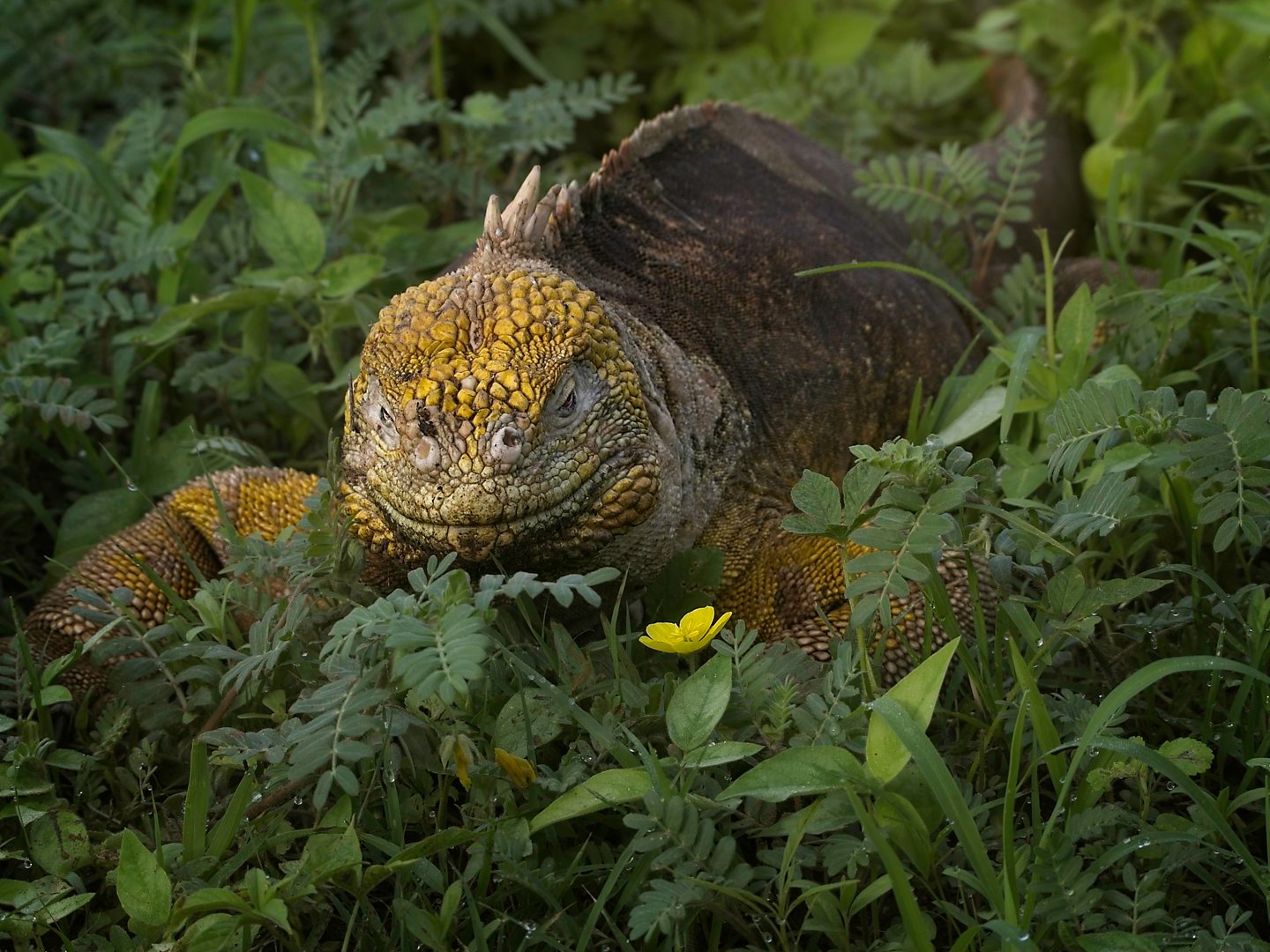
During our second afternoon on Santa Cruz Island we hiked in search of land iguanas. Although our naturalist guides cautioned that we might see only one or two, by the end we had come across seventeen! They were on the trail, next to the trail, hanging out near their burrows. So I was able to get nice close-ups of these herbivorous gentle monsters showing their interesting skin colors and textures.
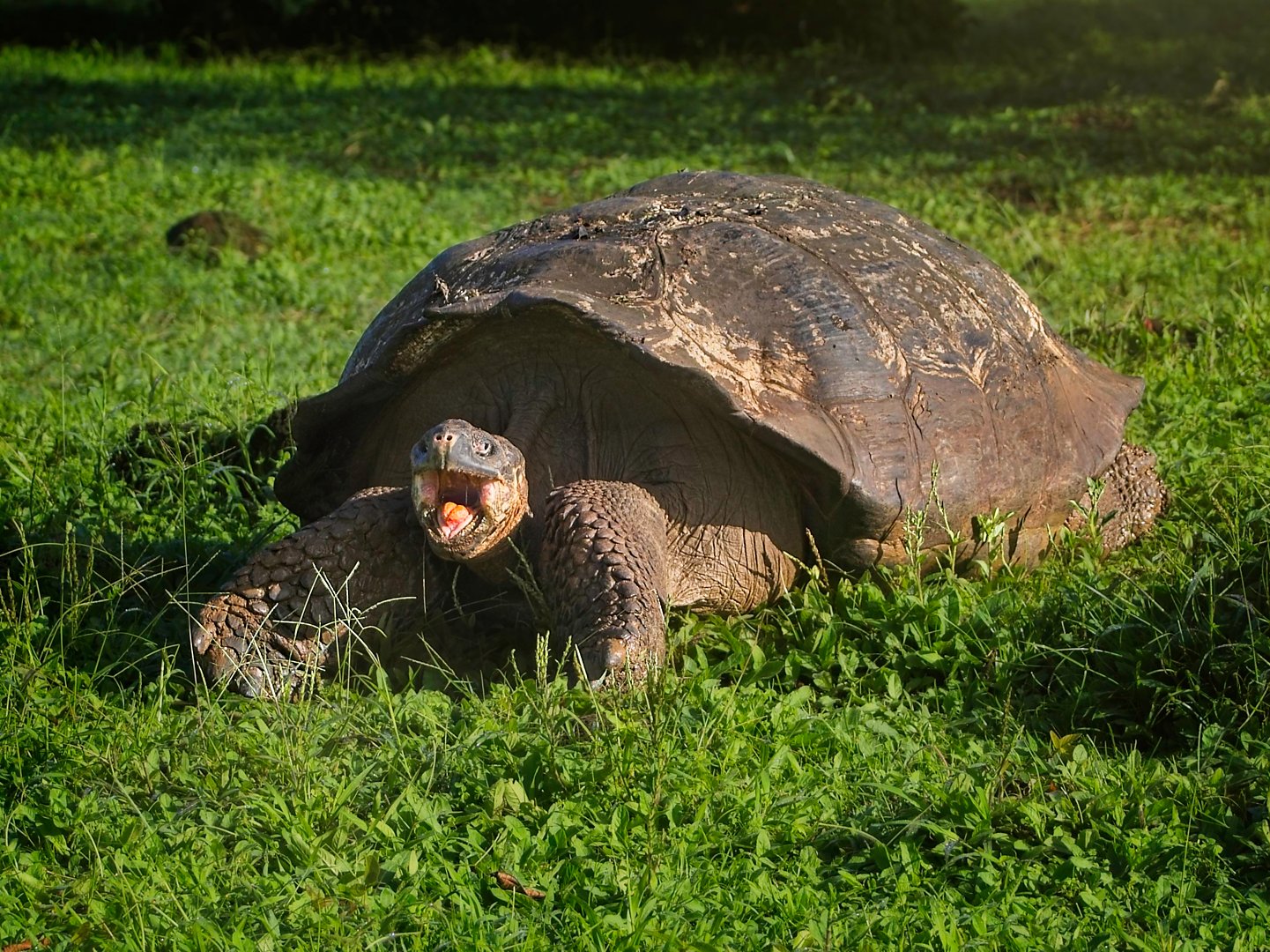
On the final day of our adventure on the Galapagos Islands we were given an intimate view of Galapagos giant tortoises living in the wild at the Highland Tortoise Reserve. Here the tortoises are free to migrate from the beach lowlands to the highland areas, following their food sources throughout the year. The tortoises were beyond impressive. It was a privilege to share our last hours on the Galapagos with these ancient animals in their native habitat.
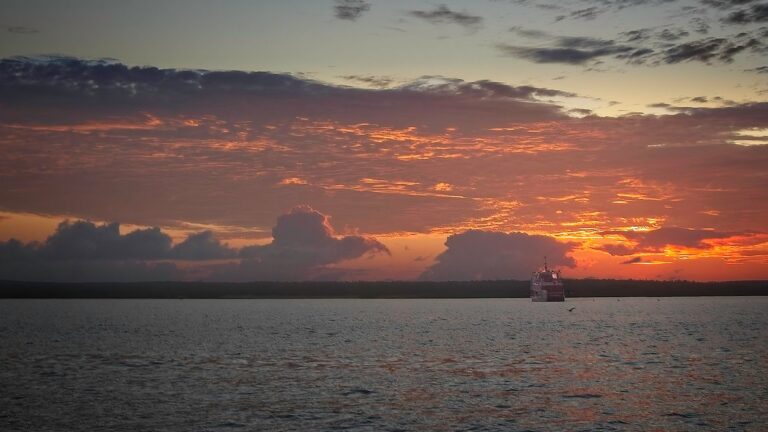
Sailing off into the Sunset
We truly had an adventure of a lifetime during our exploration of the Galapagos Islands. I hope you enjoyed the photos. It has been a pleasure to present them to you.